

LCGC Interviews
Latest News
August 1st 2015
By Bethany Degg
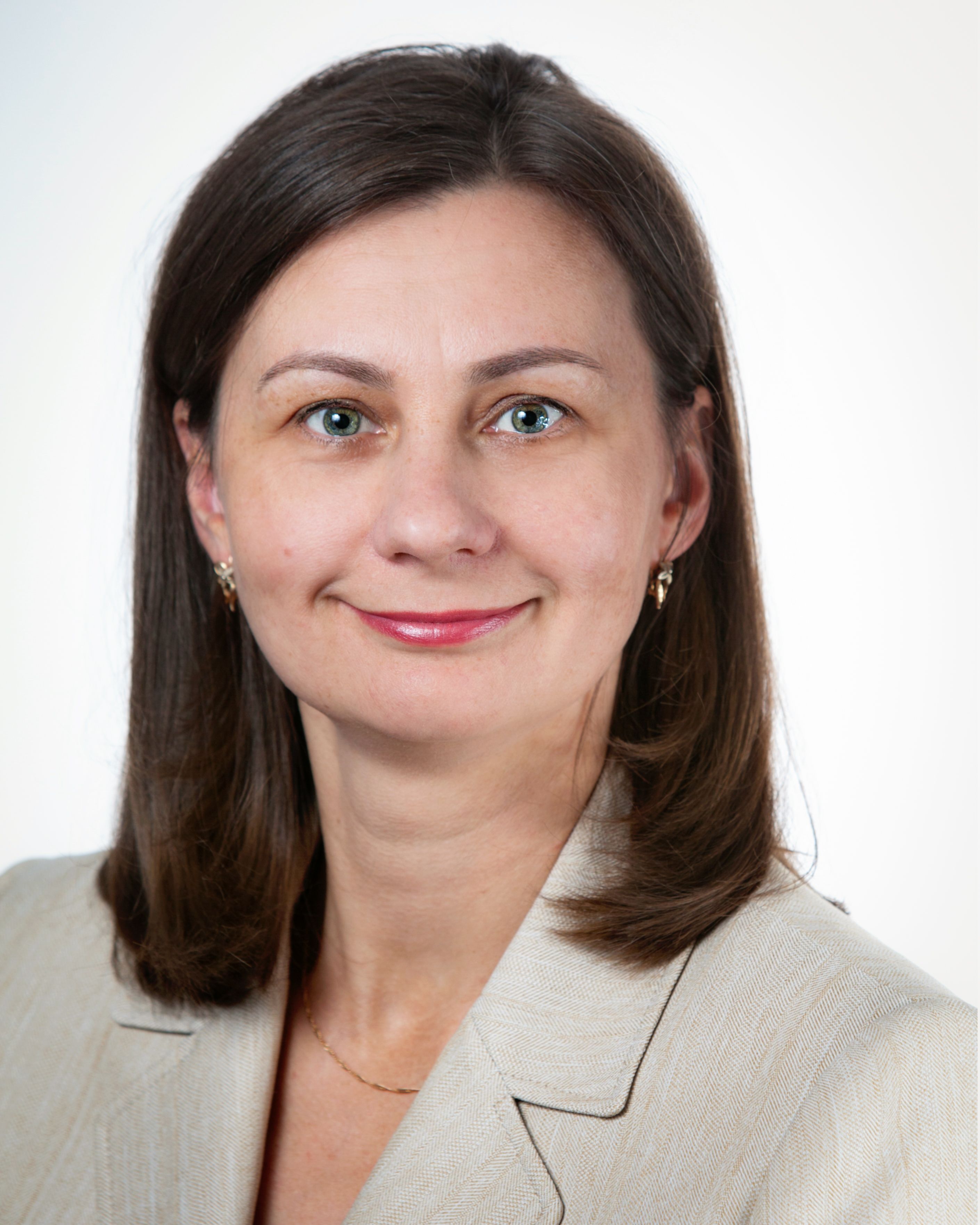
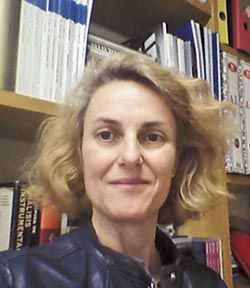
Persistent organic pollutants (POPs) pose an on-going threat to human health, but are often trapped within environmental samples, thereby making analysis challenging. Bethany Degg of The Column spoke to Lourdes Ramos from the Department of Instrumental Analysis and Environmental Chemistry Institute of Organic Chemistry of the CSIC (Madrid, Spain) about her innovative research on new sample preparation methods for POPs.
Advertisement
Latest Videos


Advertisement
More News

Jonathan V. Sweedler, a professor in the Department of Chemistry at the University of Illinois, and the 2015 ANACHEM Award winner, has focused his group’s major research efforts on analytical neurochemistry, developing new measurement tools to characterize small-volume samples for their cell–cell signaling molecules, and applying these technologies to the study of the distribution and dynamic release of neuropeptides, classical transmitters, and other cell–cell signaling molecules from the brain.

LCGC North America
Caroline West, the winner of the 2015 LCGC Emerging Leader in Chromatography award, has a diverse set of scientific interests-in high performance liquid chromatography (HPLC), supercritical fluid chromatography (SFC), hydrophilic-interaction chromatography (HILIC), and enantioselective separations-but all are primarily focused on the fundamentals of chromatographic selectivity.
The Column
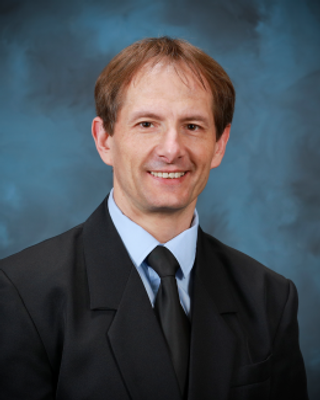
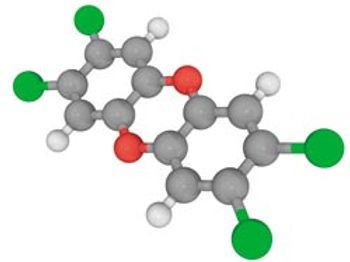
Bryan Vining from SGS Environmental Service (Wilmington, North Carolina, USA) reveals some of the cutting-edge research his team has performed involving dioxin analysis, and proposes some future possibilities for the direction of this field.
The Column
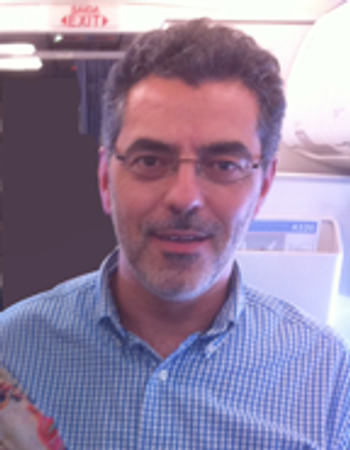
The biopharmaceutical industry continues to expand in response to a demand for novel biopharmaceuticals. José Paulo Mota from the Faculty of Science and Engineering (FCT-UNL) of Universidade Nova de Lisboa and the Institute of Experimental and Technological Biology (IBET), Portugal, has been working on the development of chromatographic techniques to speed up the purification of biopharmaceuticals, specifically adenoviruses. Bethany Degg of The Column spoke to him about his work.

LCGC North America
Joseph Jack Kirkland, considered by many to be one of fathers of high performance liquid chromatography (HPLC), is the winner of LCGC's 2015 Lifetime Achievement Award.
E-Separation Solutions
Metabolomics in Natural Product Analysis

The Column
Bethany Degg of The Column spoke to James Neal-Kababick, who is the Founder and Director of Flora Research Laboratories (FRL) in Oregon, USA, about phytoforensic science and his work on analyzing dietary supplements previously recalled by the US FDA.
The Column
Benedetto Natalini of the University of Perugia, Italy, spoke to Bethany Degg of The Column about the driving forces in pharmaceutical analysis, including the importance of regulation, chirality, and miniaturization.

The Column
Kate Mosford of The Column spoke to Miguel Herrero of the Institute of Food Science Research (CIAL-CSIC) at the Spanish National Research Council, in Madrid, Spain, about his research in foodomics-based approaches, the evolution of food analysis, and the benefits of 2D LC in this application.

The Column
Kate Mosford of The Column spoke to Rosa Perestrelo of Centro de Química da Madeira located in Madeira University, Portugal, about wine analysis. She reveals the science behind winemaking and offers her tips for selecting the best analytical method.

The Column
The Column spoke to Dr. Rob Haselberg from the VU University Amsterdam, The Netherlands, about his work characterizing proteins using capillary electrophoresis.

The Column
DNA can be analyzed by many techniques, including electrophoretic techniques such as gel, capillary, and microchip electrophoresis. In this interview Kevin Dorfman, an Associate Professor in the Department of Chemical Engineering and Materials Science at the University of Minnesota in Minneapolis, Minnesota, USA, discusses his research with polymer physics and microfluidic and nanofluidic technologies.

The Column
The Column spoke to Rajmund Michalski from the Polish Academy of Sciences, Institute of Environmental Engineering in Zabrze, Poland, about the application of ion chromatography in speciation analysis.

The Column
Dr Kevin Cooper of the Institute for Global Food Security at Queen's University Belfast, Northern Ireland, spoke to Kate Mosford of The Column about the importance of accuracy, reliability, and stability in food safety analysis and the role of ultrahigh-pressure liquid chromatography tandem mass spectrometry (UHPLC–MS–MS) in his research.

The Column
The Column spoke to Peter Kusch of the Bonn-Rhein-Sieg University of Applied Sciences in Rheinbach, Germany, about analyzing failure in the automotive industry.
The Column
The Column spoke to Tony Edge of Thermo Fisher Scientific about the development of a new type of stationary phase based on fractal-shaped particles.
E-Separation Solutions
LCGC spoke to Paul A. Sutton, a research fellow in the Petroleum and Environmental Geochemistry Group (PEGG) at Plymouth University, about the analysis of crude oil and how high temperature gas chromatography can be used to save millions of dollars for the oil industry.

E-Separation Solutions
LCGC recently spoke with Pauline Rudd of University College, Dublin, and The National Institute for Bioprocessing Research and Training (NIBRT) in Dublin, Ireland, about her work using ultrahigh-pressure liquid chromatography (UHPLC) for the characterization of protein glycosylation.
The Column
Is "green foodomics" another buzzword or a new direction in food analysis?
LCGC Europe eNews
John Hinshaw offers his insights into how the current helium shortage will affect gas chromatographers and answers some concerns of LCGC Europe readers selected from the CHROMmunity.
E-Separation Solutions
The HPLC 2012 conference was abuzz with talk of "slip flow" following the talk given by Mary Wirth of Purdue University about her groundbreaking work involving protein column efficiency. In this interview, Wirth explains how “slip flow†works and what this discovery can contribute to the application of LC-MS to disease research.
E-Separation Solutions
In a new paper to be published in the July issue of LCGC North America, Fabrice Gritti and Georges Guiochon of the Department of Chemistry at the University of Tennessee (Knoxville, Tennessee) present results from their latest studies in their research on the kinetic mechanisms of chromatography columns packed with core?shell particles.
E-Separation Solutions
A retention index tool called iMatch that aims to reduce the number of false positive results when using gas chromatography mass spectrometry (GC-MS ) and comprehensive two-dimensional gas chromatography mass spectrometry (GC×GC-MS) has been developed by a team of researchers from the University of Louisville. Alasdair Matheson, editor of LCGC Europe, spoke to Xiang Zhang to find out more.

E-Separation Solutions
High-temperature liquid chromatography (LC) is a hot topic in separation science at the moment. David Collins from the Irish Separation Science Cluster based at Dublin City University, Ireland, describes a new column heater design that aims to enhance the efficiency of high temperature separations.
E-Separation Solutions
LCGC recently interviewed Walter J. Krol, Ph.D., of the Connecticut Agricultural Experiment Station (New Haven, Connecticut) about his laboratory?s involvement in analyzing samples from the 2010 Deepwater Horizon oil spill in the Gulf of Mexico using a QuEChERS-based method.
Advertisement
Advertisement
Trending on LCGC International
1
Industry Roundup: Shimadzu Unveils New High-End UHPLC System Aimed at Reducing Laboratory Downtime
2
VASE-GC-MS Detects Personal Care Products in Fish
3
LC-MS/MS Compares Hair Hormone Sampling Methods
4
Industry Roundup: Gerstel Showcased New Twister Phases and Automated Liner Exchange Technology at EPRW 2026 in Rotterdam
5