
LCGC Interviews
Latest News
January 17th 2019
By Laura Bush
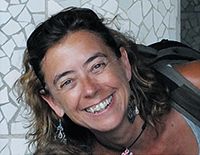
When analytical chemists apply green chemistry approaches, which seek to minimize negative environmental effects, an important area of focus is reducing the consumption of toxic solvents, such as those used in extraction steps in sample preparation. Developing and testing greener extraction processes for food analysis is a major focus of Elena Ibáñez, a research professor at the Institute of Food Science Research (CIAL-CSIC) in Madrid, Spain.
Advertisement
Latest Videos


Advertisement
More News
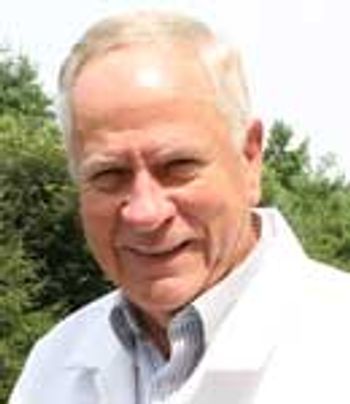
Ron Majors, the 2018 LCGC Lifetime Achievement in Chromatography award winner, is famous throughout the world for his work teaching short courses, presenting at conferences, and his columns in LCGC. Here, Majors discusses the challenges he faced travelling far and wide, some favorite memories of those trips, new found hobbies since his retirement, and advice for the next generation.

LCGC Europe
Craig Wheelock discusses the obstacles facing chromatographers involved in metabolomics and the benefits of data independent acquisition-mass spectrometry (DIA-MS) in this field.

The Column spoke to Erika Ribechini, Associate Professor of analytical chemistry in the Department of Chemistry and Industrial Chemistry of the University of Pisa, Italy, about her research into cereals in ancient diets and the role of chromatography in establishing their importance.

Zachary S. Breitbach, the 2018 winner of the LCGC Emerging Leader in Chromatography award, received his PhD in 2010 from the University of Texas at Arlington (UTA). Subsequently, he worked as a research scientist at UTA while simultaneously aiding in the launch of AZYP Separations and Analytics, a chromatographic materials company. Currently, he is a senior scientist at AbbVie. Breitbach has already made important contributions to both high performance liquid chromatography (HPLC) and gas chromatography (GC). In GC, he played a fundamental role in the development, synthesis, characterization, and utilization of highly thermally stable, high viscosity ionic liquids as new GC stationary phases. Two of the ionic liquids he developed were subsequently commercialized. In HPLC, his work covers enantiomeric separations, hydrophilic interaction chromatography (HILIC), ultrafast and high efficiency separations, supercritical and subcritical fluid separations, core–shell bonded phases, and interfacing HPLC to paired io
Ron Majors, the 2018 LCGC Lifetime Achievement in Chromatography award winner, has an outstanding reputation worldwide as a leader, teacher, and chromatography ambassador. Early in his career at Varian, Majors published his pioneering work on the successful packing of microparticulate (5-µm) high performance liquid chromatography (HPLC) columns and studies on the effect of particle size distribution. In fact, he was the first to efficiently pack and commercialize a 5-µm HPLC column. Later, Majors became well known as a columnist for LCGC and through his work teaching short courses worldwide. As a result, Majors is often one of the first names chromatographers come to know during their education, and he is quite famous in the chromatography community. Here, Majors discusses his humble beginnings, career highlights, and more.
The Column
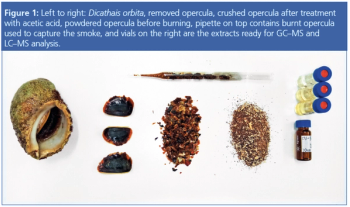
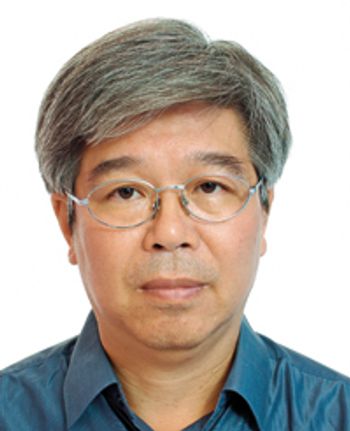
The Column spoke to Kirsten Benkendorff, an Associate Professor in Environment, Science, and Engineering and the Co-Deputy Director of the Marine Ecology Research Centre at Southern Cross University in Australia, about her work investigating Muricidae molluscs, their use in ceremonial incense and traditional medicines, and the role of chromatography in this research.
The Column
The benefits of an analytical quality by design (AQbD) approach to method development cannot be underestimated. The Column spoke to Changqin Hu and Xia Zhang from the National Institutes for Food Drug Control, in Beijing, China, about their work developing a dual-gradient elution stability-indicating method for cloxacillin within an AQbD framework.

Mira Petrovic from the Catalan Institute for Water Research (ICRA) in Girona, Spain, reveals the advantages and practical applications of a novel method she developed for the multiresidue trace analysis of pharmaceutical compounds and their corresponding metabolites and transformation products using dual-column liquid chromatography (LC) coupled to tandem mass spectrometry (MS/MS).

The Column
The durian fruit is notorious for its unpalatable aroma, and yet the fruit is incredibly popular throughout Southeast Asia and amongst travellers. Holding the title of “the world’s smelliest fruit” attracts attention including that of Martin Steinhaus from the Aroma Research Group at the Deutsche Forschungsanstalt für Lebensmittelchemie (German Research Center for Food Chemistry). He spoke to The Column about his group’s research into the compounds responsible for the fruit’s uniquely unpleasant aroma.

The Column
Polyphenols are a well-known group of antioxidants widely diffused as secondary metabolites in plants, vegetables, and fruit. The Column spoke to Nicola Marchetti from the Department of Chemistry and Pharmaceutical Sciences at the University of Ferrara in Ferrara, Italy, about his research into the characterization of polyphenols in red chicory using high performance liquid chromatography–tandem mass spectrometry (HPLC–MS/MS).

The chemical messages that animals use to communicate can trigger a range of responses in members of the same species. The Column spoke to Jorge Saiz from the Centre of Metabolomics and Bioanalysis (CEMBIO) at the University San Pablo CEU, Spain, about his research into the chemical secretions of lizards and the role of gas chromatography–tandem mass spectrometry (GC–MS/MS) in his work.

The Column
Monitoring the endocrine status of marine mammals can give valuable information to researchers. Overall health, health issues, and an animal’s pregnancy status can all be deduced from the careful analysis of steroid hormones. However, gaining such data is not easy. The difficulty of obtaining blood samples in the wild necessitates the use of alternative matrices, such as blubber, that in turn provide a number of analytical challenges. Aiming to solve these issues a team of researchers from the National Institute of Standards and Technology (NIST) have developed a novel method using liquid chromatography tandem mass spectrometry (LC–MS/MS) to analyze blubber obtained through remote sample collection. Ashley Boggs from NIST spoke to The Column about the benefits of this newly developed technique and its potential wider application in animal research and management.

The Column
There is a growing interest in polyphenols because of their noticeable antioxidant properties and their potential contribution to the defence against oxidative stress and protection against cardiovascular diseases and cancers. Oscar Núñez from the Department of Chemical Engineering and Analytical Chemistry at the University of Barcelona in Barcelona, Spain, has been working since 2010 in the analysis of polyphenols by capillary electrophoresis (CE), liquid chromatography (LC), mass spectrometry (MS), and chemometric techniques to achieve the characterization, classification, and authentication of natural products in the prevention of frauds. He recently spoke to The Column about this research.

Accurate quantification of sugars in saline solution is now possible using a new high performance liquid chromatography (HPLC) method. The Column spoke to Abdelrahman Saleh Zaky from the School of Biosciences at the University of Nottingham (Nottingham, UK) about this method.

The Column
Fresh fruit and vegetables have a limited shelf life and so there is a need to ensure that the products reach the shelf in a timely manner and with as little spoilage as possible. Volatile organic compounds (VOCs) are an easily accessible way of monitoring changes in fresh produce. Hilary J. Rogers and Carsten T. Müller from the School of Biosciences at Cardiff University, Cardiff, Wales, UK, investigate these VOCs in fruit and vegetables using gas chromatography–mass spectrometry (GC–MS). They recently spoke to The Column about this research.
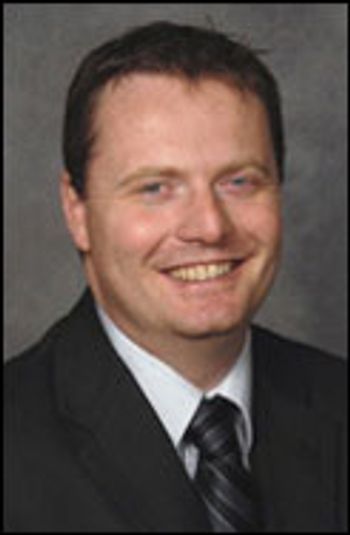
Capillary electrophoresis (CE) is routinely used for chemical and biochemical analysis methods, and recently the technique has been implemented on microchips. R. Scott Martin, a professor and chair of chemistry at Saint Louis University, has been investigating ways to improve these techniques for years. He recently spoke to us about his research coupling microchip electrophoresis with electrochemical detection, coupling continuous flow with microchip electrophoresis with valving, coupling microchip CE with microdialysis sampling and electrochemistry, and more.

The Column
The Column spoke to Ethel Eljarrat of the Institute of Environmental Assessment and Water Research (IDÆA), Spanish Council of Scientific Research (CSIC), in Barcelona, Spain, about her work in environmental analyses using turbulent flow chromatography (TFC).

Valentina D’Atri from the University of Geneva spoke to The Column about the evolving role of HILIC in biopharmaceutical analysis.
The Column
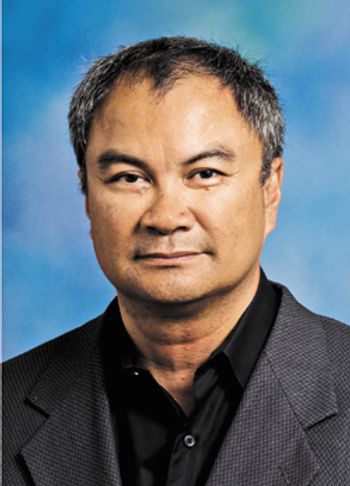
A novel quantitative method combining multiple reaction monitoring (MRM) and ultrahigh‑pressure liquid chromatography coupled to mass spectrometry (UHPLC–MS) has been developed by Carlito Lebrilla and his team to study site-specific glycosylation in manufactured recombinant monoclonal antibody drugs (rmAbs). He spoke to The Column about this research.

The Column
High quality, low cost is a standard mantra within the pharmaceutical industry, but with increasing structural complexity of drugs and drug candidates maintaining the core value of this mantra is becoming more difficult. Kanta Horie from Eisai Co., Ltd., recently spoke to The Column about the development of an intelligent peak deconvolution technique using multivariate curve resolution-alternating least squares (MCR-ALS) that allows accurate quantitation of multiple components with different absorbing spectra even if the peaks are not completely separated.

The Column spoke to Ashraf El-Sayed from the Plant and Food Research Institute in Lincoln, New Zealand, about his research into caterpillar-induced plant volatiles and the role of gas chromatography–mass spectrometry (GC–MS) in his work.

The Column
Adrian Tordiffe from the Veterinary Faculty of the University of Pretoria in South Africa, is working to establish baseline metabolic profiles for captive and free-ranging cheetahs to investigate the unusual medical conditions that the animals develop in captivity. He spoke to The Column about his work and about the role that chromatography plays.

LCGC North America
Eric Nelson discusses methods for analyzing halogenated transformation products of pharmaceuticals and other contaminants.

The Column
Separating and quantifying both volatile and nonvolatile compounds in complex mixtures is a costly and time-consuming process presenting significant technical challenges. Fabrice Gritti from the Instrument, Core Research, Fundamental Group at Waters Corporation discusses his team’s unique solution to this problem, combining high-vacuum technology and low-density fluid chromatography (LDFC) with carbon dioxide as a mobile phase for a rapid and complete baseline separation of both volatile and nonvolatile compounds on a single instrument, single column, and a single run without the associated loss of resolution.

Deirdre Cabooter is an emerging leader in chromatography known for her work exploring the possibilities and limitations of the kinetic plot method for comparing the kinetic performance of chromatographic separation methods and columns. Joining the University of Leuven (KU Leuven) in 2011, where she is currently an associate professor, Cabooter has continued her stellar research and taken on responsibilities in the organization of the popular symposium series HTC. She recently spoke to LCGC about her career and work so far.
Advertisement
Advertisement
Trending on LCGC International
1
Industry Roundup: Shimadzu Unveils New High-End UHPLC System Aimed at Reducing Laboratory Downtime
2
VASE-GC-MS Detects Personal Care Products in Fish
3
LC-MS/MS Compares Hair Hormone Sampling Methods
4
Industry Roundup: Gerstel Showcased New Twister Phases and Automated Liner Exchange Technology at EPRW 2026 in Rotterdam
5