




LCGC Interviews
Latest News
Advertisement
Latest Videos



Advertisement
More News

Stefan A. Pieconzonka and Philippe Schmitt-Kopplin have profiled diverse beer samples by rapid flow-injection analysis (FIA) Fourier transform ion cyclotron mass spectrometry (FTICR–MS). Here, they discuss their approach to this analysis, along with the significance of the Maillard Reaction (MR) in beer quality and analysis.
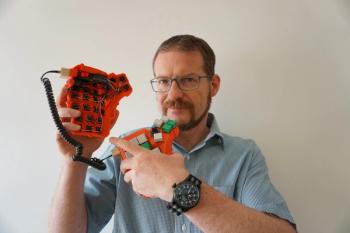
Interest in three-dimensional (3D) printing technology is expanding rapidly. What impact can it have in mass spectrometry? Robert Winkler, of the Center for Research and Advanced Studies Irapuato, in Guanajuato, Mexico, is exploring this question. We recently spoke with Prof. Winkler about this work.

LCGC Europe spoke to Christine Fisher about the challenges and solutions associated with developing non-targeted food analysis methods, why data quality is so important, and how data processing software and algorithms are helping to tackle the current challenges in food analysis.

LCGC Europe spoke to Irma Bongers from Wageningen Food Safety Research (WFSR) in The Netherlands, about a recent research project to analyze prohibited pharmaceutical active substances (PPAS) in milk.

Professor Paul Thomas from the Centre for Analytical Science at Loughborough University in Leicestershire, UK, discusses the role of a rapid breath diagnostic method for COVID-19 using GC–IMS and the wider impact and realities of field breath testing and analysis through the European Toxi-Triage project.

Mary Ellen McNally knows how to solve complex and pressing problems in the industry.

Lars Nilsson from the Department of Food Technology, Engineering and Nutrition, Faculty of Engineering, in Lund, Sweden, discusses the evolution of asymmetrical flow field-flow fractionation (AF4) in bioanalysis for the analysis of therapeutic proteins.

In the first of the series, Mariosimone Zoccali, discusses the development of a powerful analytical method to analyze important bioactive molecules using online SFE–SFC–QqQ-MS.

Erik Regalado is constantly developing and implementing enabling technologies for pharmaceutical development—such as automated methods, ultrafast and computer-assisted analysis, and multidimensional chromatography.

LCGC Europe spoke to Stefan Van Leeuwen and Bjorn Berendsen from Wageningen Food Safety Research, The Netherlands, about a novel non-targeted approach to analyze PFASs using LC–HRMS with fragment ion flagging (FIF).
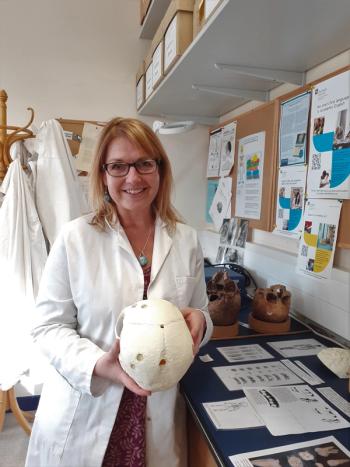
Rebecca Gowland and her colleagues in the Department of Archaeology at Durham University in the United Kingdom have tested, for the first time, the applicability of a new method of sex estimation utilizing enamel peptides from a sample of permanent and deciduous teeth at different stages of mineralization, from nonadults of unknown sex, including perinates, and using a minimally destructive acid etching procedure and subsequent nano liquid chromatography– tandem mass spectrometry. She spoke to us about her efforts.

News
Paul Haddad, of the University of Tasmania, is well known for developing mathematical models to improve fundamental understanding of chromatographic techniques. He recently spoke to us about his research work and career.

A novel chemical fingerprinting method has been developed using multidimensional chromatography and multivariate analysis to investigate potential arson attacks. The Column spoke to Oliver Jones and Jessica Pandohee of RMIT University in Melbourne, Australia, about their research in this field.

A panel discussion on the latest advances and future developments in liquid chromatography mass spectrometry (LC–MS).
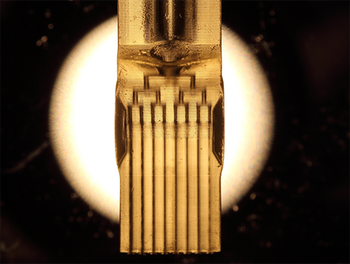
The Column spoke to Noor Abdulhussain from the University of Amsterdam, about her research on 3D-printing in separation science.

Filip Cuyckens from Janssen R&D in Belgium spoke to LCGC Europe about recent innovative approaches he and his team developed to support drug metabolism and pharmacokinetic studies, and the inventive role that two-dimensional liquid chromatography (2D-LC) plays in his laboratory to boost sensitivity, solve recovery issues, and increase overall efficiency.

Szabolcs Feketeis currently a scientific collaborator at the University of Geneva. He is actively investigating aspects of retention modeling and fundamental attributes of LC. He is the 2020 winner of the LCGC Emerging Leader in Chromatography Award which recognizes the achievements and aspirations of a talented young separation scientist who has made strides early in his or her career toward the advancement of chromatographic techniques and applications. He recently spoke to us about his current research work and his career aspirations.

The Column
Aogu Furusho from the Graduate School of Pharmaceutical Sciences in Kyushu University, Fukuoka, Japan, spoke to us about his development of a highly selective three-dimensional chiral high performance liquid chromatography (HPLC) system for the determination of extraterrestrial amino acids in carbonaceous chondrites.
LCGC Europe
In the second part of this interview on size-exclusion chromatography (SEC) André Striegel discusses the benefits of the technique to analyze nanoparticles and quantum dots, the complementary role of hydrodynamic chromatography (HDC), and the future of SEC in two-dimensional liquid chromatography (2D-LC) separations.

Special Issues
LCGC Europe interviewed Stefan van Leeuwen from Wageningen Food Safety Research (WFSR), in Wageningen, The Netherlands, on his novel multi-analyte approach to investigate bisphenol A (BPA), bisphenol A diglycidyl ether (BADGE), and their analogues using liquid chromatography–electrospray ionization tandem mass spectrometry (LC–ESI-MS/MS).

Special Issues
Carlos Sales and Joaquin Beltrán from The Research Institute for Pesticides and Water at the University Jaume I, in Castellón, Spain, discuss a novel untargeted gas chromatography–mass spectrometry (GC–MS) method, incorporating dynamic headspace (DHS) with thermal desorption and a novel deconvolution approach, to classify olive oil.
The Column
Heatwaves are significantly affecting the consistency and quality of wine production. The Column spoke to Julia C. Gouot from the National Wine and Grape Industry Centre in Australia about the importance of chromatography to understand the effects of temperature change on grape physiology and composition.

New developments in measurement science are providing chemical information on single cells. Single-cell chemical assays provide unique information on cell heterogeneity and allow detailed studies of the metabolome and proteome for both snapshot and time-resolved studies. Recent papers describe multimodal chemical imaging, single-cell MALDI-MS supervised by immunocytochemical classification, integrating mass spectrometry with microphysiological systems for improved neurochemical studies, high throughput approaches, and others. This interview with Jonathan Sweedler explores the latest developments in mass spectrometry and separations for single cell analysis.

LCGC Europe
André Striegel spoke to LCGC Europe about innovations in size-exclusion chromatography (SEC) in polymer analysis, including the benefits of hyphenating SEC with on-line multi-angle static light scattering (MALS) and differential refractometry (DRI) detection, the non-trivial nature of a “trivial” solution, the complementary value of “interaction” polymer liquid chromatography (LC) techniques, and the role of quintuple detection in practice.

LCGC Europe
Ten years since its official definition, foodomics continues to expand the scientific knowledge of food and nutrition while resolving many analytical challenges along the way. LCGC Europe spoke to Alejandro Cifuentes from the Institute of Food Science Research, in Madrid, Spain, about his current foodomics research projects, the overall state of the field, and the future of foodomics.
Advertisement
Advertisement
Trending on LCGC International
1
Industry Roundup: Shimadzu Unveils New High-End UHPLC System Aimed at Reducing Laboratory Downtime
2
VASE-GC-MS Detects Personal Care Products in Fish
3
LC-MS/MS Compares Hair Hormone Sampling Methods
4
Industry Roundup: Gerstel Showcased New Twister Phases and Automated Liner Exchange Technology at EPRW 2026 in Rotterdam
5