

LCGC Interviews
Latest News
Advertisement
Latest Videos


Advertisement
More News

Australia’s Great Barrier Reef (GBR) stretches over 2300 km and is composed of over 3000 individual reef systems. The health of the reef therefore often comes under international scrutiny. Hilton Swan from Southern Cross University in Australia has been investigating volatile organic compound (VOC) emissions from the Great Barrier Reef using gas chromatography–mass spectrometry (GC–MS). He recently spoke to us about this work.
The Column
Ion chromatography coupled to mass spectrometry (IC-MS) does not follow the same rules as coupling other modes of liquid chromatography to mass spectrometry (LC–MS). Leon Barron from the Analytical & Environmental Science Division, at King’s College London, UK, reveals some of the misconceptions surrounding IC and discusses contemporary trends and novel applications for this inventive technique.

A balanced diet is one step closer to a healthy lifestyle. Samantha Duong from the Australian Government’s National Measurement Institute (NMI) has used gas chromatography with flame ionization detection (GC–FID) to measure phytosterols in fortified food. She recently spoke to us about this research.
LCGC North America
Traditionally, the most common approach for protein quantification in bioanalysis (that is, analysis of a protein in a biological sample or system) has been to use ligand-binding assays. In recent years, however, liquid chromatography–tandem mass spectrometry (LC–MS-MS) methods have been increasingly adopted to monitor the fate of drugs in vivo, particularly for small-molecule drugs. The measurement of protein-based pharmaceuticals (biopharmaceuticals) is challenging, however, because proteins are susceptible to various modifications that can change their structure and biological activity. Rainer Bischoff of the University of Groningen in the Netherlands has been studying this challenge and exploring approaches to overcome it. He recently spoke to us about this work.

Discovering and identifying molecular biomarkers in large LC–MS data sets requires automation without loss of accuracy. Benjamin Van Mooy from the Wood Hole Oceanographic Institution reveals a lipidomics strategy using LOBSTAHS to identify lipid, oxidized lipid, and oxylipin biomarkers in high mass accuracy HPLC– MS data.

The Column
Biopharmaceutical purification techniques can be slow and cumbersome with poor scalability. A new device using laterally-fed membrane chromatography (LFMC) was developed to address these issues. Raja Ghosh from McMaster University in Hamilton, Ontario, Canada, spoke to The Column about this new device and its potential applications.
Babies and infants experience rapid growth within a short timeframe and the nutrition that they absorb is therefore of the utmost importance. María Mateos-Vivas from the Department of Analytical Chemistry, Nutrition, and Food Science at the University of Salamanca, Spain, has used hydrophilic interaction liquid chromatography (HILIC) coupled to tandem mass spectrometry (MS/MS) to investigate the role of nucleotides on infant health. She recently spoke to us about this research.

The future of biological and clinical research will depend on technological innovations and cross discipline co-operation as science seeks a deeper understanding of increasingly complex biological systems. The 2016 recipient of the AES Mid-Career Award, Amy Herr, and her team at the University of California Berkeley have explored these areas using a combination of chemical engineering, mechanical engineering, and electrical engineering with strong foundations in biology, material science, and analytical chemistry to innovate new microfluidic analytical technology. She recently spoke to LCGC about this work.
The Column
Ira Lurie describes the role of supercritical fluid chromatography (SFC) in forensic analysis and why the technique has not become a recognized technique for the analysis of seized drugs.

E-Separation Solutions
Water contamination has come to the forefront of global debate as a result of high profile cases such as those in Flint, Michigan, USA or the pollution of the Ganges River in India. Koji Kosaka of the National Institute of Public Health, Japan, has investigated the contamination of the Yodo River Basin in Japan, with the precursors of the carcinogen N-Nitrosodimethylamine (NDMA). He recently spoke to LCGC about his use of high performance liquid chromatography (HPLC) to uncover the source of contamination and the chemical precursors responsible.
E-Separation Solutions
Wine can be a very complex matrix to analyze. LCGC spoke to Alexandre Pons from Seguin-Moreau in Cognac, France, about his work analyzing volatile compounds in wine and why gas chromatography coupled to tandem mass spectrometry (GC–MS–MS) is his method of choice.

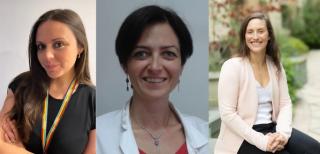
Debby Mangelings, the winner of the 2016 LCGC Emerging Leader in Chromatography award, is an associate professor in the Department of Analytical Chemistry and Pharmaceutical Technology at the Vrije Universiteit Brussel, in Brussels, Belgium. Mangelings’s work has focused primarily on chiral separations. Mangelings recently spoke to LCGC about her scientific background, interests, and recent work.

E-Separation Solutions
Ice cores contain an abundance of information about climate and the changes it is undergoing. Brett Paull and Estrella Sanz Rodriguez from the Australian Centre for Research on Separation Science (ACROSS) at the University of Tasmania, Hobart, Australia, spoke to Kate Mosford of The Column about their work on the analysis of Antarctic ice cores and the important role of capillary ion chromatography (cap-IC) in this area of research.
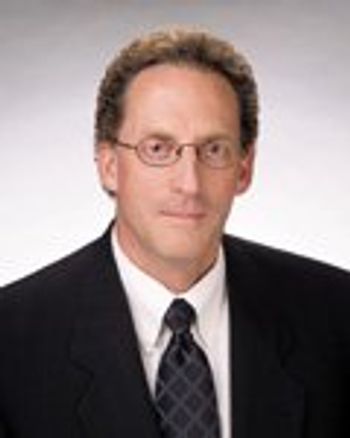
Milton L. Lee is best known for his achievements in capillary separation techniques (emphasis on column technology and instrumentation), his entrepreneurial activities in scientific instrument companies, and his tenure as a chemistry professor for almost 40 years at Brigham Young University (BYU), where he has held the position of H. Tracy Hall Professor of Chemistry from 1985 to the present. Lee recently spoke to LCGC about his career and work.

E-Separation Solutions
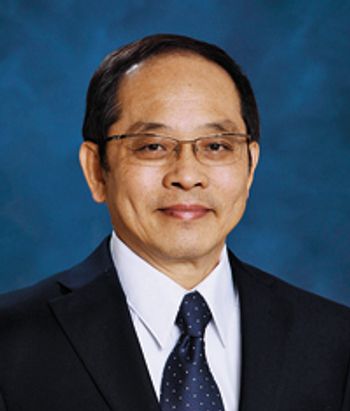
Subcritical water chromatography (SBWC) is seen as an increasingly enticing prospect to replace high performance liquid chromatography (HPLC) in industrial settings because of its low costs and environmental impact. Yu Yang of East Carolina University, in Greenville, North Carolina, USA, has conducted research into this process for two decades. He recently spoke to LCGC about his work, why companies should consider SBWC, and its role in pharmaceutical analysis.

E-Separation Solutions
Gas chromatography–atmospheric pressure chemical ionization (GC–APCI) offers increased limits of sensitivity in food analysis. Carlos Sales Martinez from the Research Institute of Pesticides and Water in the University Jaume I, Castellón, Spain, has been exploring the novelty of this technique for the analysis of food samples. He recently spoke to LCGC about this work.

E-Separation Solutions
Contaminants in surface water and drinking water supplies arising from pharmaceutical and personal care product use as well as other compound sources pose a difficult challenge for analytical chemists. Thomas Letzel from the Technical University of Munich in Germany spoke to LCGC to discuss collaborative research taking place in Europe to address contaminants of emerging concern in water analysis.

The Column
High performance thin-layer chromatography (HPTLC) offers many advantages over conventional separation techniques when applied to complex samples. The Column interviewed Gertrud Morlock from Justus Liebig University Giessen in Germany, on her current research, which involves hyphenating HPTLC with multiple analytical techniques.
E-Separation Solutions
Michael Dong offers advice on using UHPLC for method development in pharmaceutical analysis and the important distinction between method conversion and method transfer.

The Column
Populations worldwide are exposed to polychlorinated biphenyls (PCBs) that can be harmful to human health. The Column spoke to David Megson from Ryerson University in Toronto, Canada, about recent developments in assessing human exposure to PCBs and chiral enantiomer fractions (EFs) in the workplace.
E-Separation Solutions
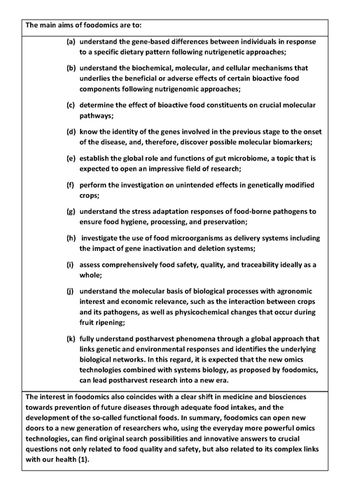
Foodomics can help to investigate and solve crucial topics in food science and nutrition from a short- and long-term perspective. LCGC spoke to Alejandro Cifuentes from the Laboratory of Foodomics at the Institute of Food Science Research (CIAL), National Research Council of Spain (CSIC) in Madrid, Spain, about the fundamental importance of foodomics and where the field of food analysis is heading.

The Column
Preventing environmental contaminants from getting in to the food chain is of paramount importance to us all. Yelena Sapozhnikova, a Research Chemist at the Agricultural Research Service, United States Department of Agriculture (USDA) in Wyndmoor, PA, USA, spoke to The Column about her research into the development and evaluation of analytical methods for persistent and emerging organic chemical contaminants in food samples.

The Column
Marine polychaetes are a common type of annelid worm widely spread in marine environments. Raquel Fernandez from the University of Copenhagen, Denmark, spoke to Aladair Matheson of The Column about her innovative approach to developing an untargeted method to monitor polychaetes and assess their potential use in environmental monitoring of oil spills.

The Column
The Kendrick mass defect combined with liquid chromatography quadrupole time-of-flight mass spectrometry (LC–QTOF-MS) can offer a variety of benefits to analysts investigating groundwater contamination. The Column spoke to Thomas Borch from Colorado State University in Colorado, USA, about his work in this area to find out more.

There is a growing demand in the pharmaceutical industry for fast and selective separation methods to monitor drug behaviour in small-volume biological samples. David S. Hage from the University of Nebraska–Lincoln, USA, has recently developed a series of methods using affinity chromatography and related techniques for this purpose. LCGC interviewed him on this work.
Advertisement
Advertisement
Trending on LCGC International
1
Industry Roundup: Shimadzu Unveils New High-End UHPLC System Aimed at Reducing Laboratory Downtime
2
VASE-GC-MS Detects Personal Care Products in Fish
3
LC-MS/MS Compares Hair Hormone Sampling Methods
4
Industry Roundup: Gerstel Showcased New Twister Phases and Automated Liner Exchange Technology at EPRW 2026 in Rotterdam
5