

LCGC Interviews
Latest News
Advertisement
Latest Videos



Advertisement
More News

E-Separation Solutions
Gas chromatography–atmospheric pressure chemical ionization (GC–APCI) offers increased limits of sensitivity in food analysis. Carlos Sales Martinez from the Research Institute of Pesticides and Water in the University Jaume I, Castellón, Spain, has been exploring the novelty of this technique for the analysis of food samples. He recently spoke to LCGC about this work.

E-Separation Solutions
Contaminants in surface water and drinking water supplies arising from pharmaceutical and personal care product use as well as other compound sources pose a difficult challenge for analytical chemists. Thomas Letzel from the Technical University of Munich in Germany spoke to LCGC to discuss collaborative research taking place in Europe to address contaminants of emerging concern in water analysis.

The Column
High performance thin-layer chromatography (HPTLC) offers many advantages over conventional separation techniques when applied to complex samples. The Column interviewed Gertrud Morlock from Justus Liebig University Giessen in Germany, on her current research, which involves hyphenating HPTLC with multiple analytical techniques.
E-Separation Solutions
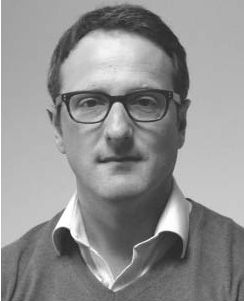
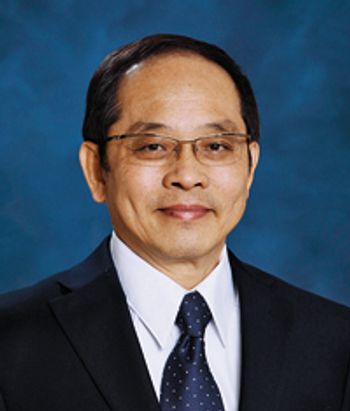
Michael Dong offers advice on using UHPLC for method development in pharmaceutical analysis and the important distinction between method conversion and method transfer.

The Column
Populations worldwide are exposed to polychlorinated biphenyls (PCBs) that can be harmful to human health. The Column spoke to David Megson from Ryerson University in Toronto, Canada, about recent developments in assessing human exposure to PCBs and chiral enantiomer fractions (EFs) in the workplace.
E-Separation Solutions
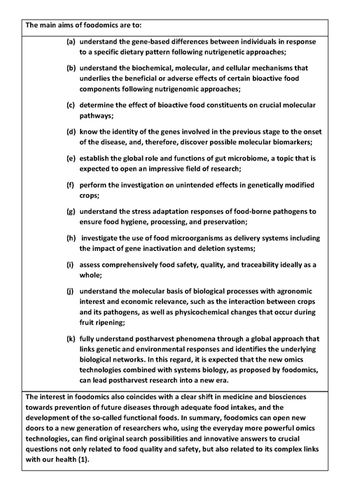
Foodomics can help to investigate and solve crucial topics in food science and nutrition from a short- and long-term perspective. LCGC spoke to Alejandro Cifuentes from the Laboratory of Foodomics at the Institute of Food Science Research (CIAL), National Research Council of Spain (CSIC) in Madrid, Spain, about the fundamental importance of foodomics and where the field of food analysis is heading.

The Column
Preventing environmental contaminants from getting in to the food chain is of paramount importance to us all. Yelena Sapozhnikova, a Research Chemist at the Agricultural Research Service, United States Department of Agriculture (USDA) in Wyndmoor, PA, USA, spoke to The Column about her research into the development and evaluation of analytical methods for persistent and emerging organic chemical contaminants in food samples.

The Column
Marine polychaetes are a common type of annelid worm widely spread in marine environments. Raquel Fernandez from the University of Copenhagen, Denmark, spoke to Aladair Matheson of The Column about her innovative approach to developing an untargeted method to monitor polychaetes and assess their potential use in environmental monitoring of oil spills.

The Column
The Kendrick mass defect combined with liquid chromatography quadrupole time-of-flight mass spectrometry (LC–QTOF-MS) can offer a variety of benefits to analysts investigating groundwater contamination. The Column spoke to Thomas Borch from Colorado State University in Colorado, USA, about his work in this area to find out more.

There is a growing demand in the pharmaceutical industry for fast and selective separation methods to monitor drug behaviour in small-volume biological samples. David S. Hage from the University of Nebraska–Lincoln, USA, has recently developed a series of methods using affinity chromatography and related techniques for this purpose. LCGC interviewed him on this work.

The Column
Persistent organic pollutants (POPs) pose an on-going threat to human health, but are often trapped within environmental samples, thereby making analysis challenging. Bethany Degg of The Column spoke to Lourdes Ramos from the Department of Instrumental Analysis and Environmental Chemistry Institute of Organic Chemistry of the CSIC (Madrid, Spain) about her innovative research on new sample preparation methods for POPs.

The Column
Researchers at the University of Waterloo in Canada are collaborating with clinicians at Toronto General Hospital to develop preclinical and clinical applications of solid-phase microextraction (SPME). Bethany Degg of The Column spoke to Barbara Bojko from the team to find out more.

E-Separation Solutions
Preventing environmental contaminants from getting in to the food chain is of paramount importance to us all. Yelena Sapozhnikova, a Research Chemist at the Agricultural Research Service, United States Department of Agriculture (USDA) in Wyndmoor, PA, USA, spoke to LCGC about her research into the development and evaluation of analytical methods for persistent and emerging organic chemical contaminants in food samples.
The Column
In developing countries, access to medicine is often limited. To make matters worse, widespread counterfeiting often means that even when patients get access to drugs, the drugs are of poor quality. Dr. Mélisande Bernard, of the Agence Générale des Equipements et Produits de Santé, the technical and pharmaceutical service of the public hospital system of Paris, France (Assistance Publique–Hôpitaux de Paris), is helping to address this problem by developing chromatographic methods to detect substandard cardiovascular drugs in Africa. She recently spoke to us about this work.

Jonathan V. Sweedler, a professor in the Department of Chemistry at the University of Illinois, and the 2015 ANACHEM Award winner, has focused his group’s major research efforts on analytical neurochemistry, developing new measurement tools to characterize small-volume samples for their cell–cell signaling molecules, and applying these technologies to the study of the distribution and dynamic release of neuropeptides, classical transmitters, and other cell–cell signaling molecules from the brain.

LCGC North America
Caroline West, the winner of the 2015 LCGC Emerging Leader in Chromatography award, has a diverse set of scientific interests-in high performance liquid chromatography (HPLC), supercritical fluid chromatography (SFC), hydrophilic-interaction chromatography (HILIC), and enantioselective separations-but all are primarily focused on the fundamentals of chromatographic selectivity.
The Column
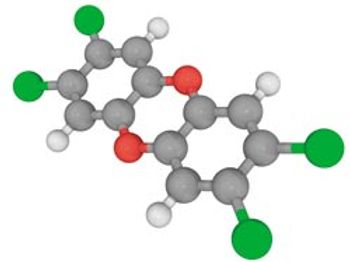
Bryan Vining from SGS Environmental Service (Wilmington, North Carolina, USA) reveals some of the cutting-edge research his team has performed involving dioxin analysis, and proposes some future possibilities for the direction of this field.
The Column
The biopharmaceutical industry continues to expand in response to a demand for novel biopharmaceuticals. José Paulo Mota from the Faculty of Science and Engineering (FCT-UNL) of Universidade Nova de Lisboa and the Institute of Experimental and Technological Biology (IBET), Portugal, has been working on the development of chromatographic techniques to speed up the purification of biopharmaceuticals, specifically adenoviruses. Bethany Degg of The Column spoke to him about his work.

LCGC North America
Joseph Jack Kirkland, considered by many to be one of fathers of high performance liquid chromatography (HPLC), is the winner of LCGC's 2015 Lifetime Achievement Award.
E-Separation Solutions
Metabolomics in Natural Product Analysis

The Column
Bethany Degg of The Column spoke to James Neal-Kababick, who is the Founder and Director of Flora Research Laboratories (FRL) in Oregon, USA, about phytoforensic science and his work on analyzing dietary supplements previously recalled by the US FDA.
The Column
Benedetto Natalini of the University of Perugia, Italy, spoke to Bethany Degg of The Column about the driving forces in pharmaceutical analysis, including the importance of regulation, chirality, and miniaturization.

The Column
Kate Mosford of The Column spoke to Miguel Herrero of the Institute of Food Science Research (CIAL-CSIC) at the Spanish National Research Council, in Madrid, Spain, about his research in foodomics-based approaches, the evolution of food analysis, and the benefits of 2D LC in this application.

The Column
Kate Mosford of The Column spoke to Rosa Perestrelo of Centro de Química da Madeira located in Madeira University, Portugal, about wine analysis. She reveals the science behind winemaking and offers her tips for selecting the best analytical method.
Advertisement
Advertisement
Trending on LCGC International
1
Peaks & Pioneers: Vanessa Abercrombie on Learning Chromatography’s “Why”
2
Water of Decades: Seven Decades of PFAS and Bisphenols in Emergency Drinking Water Cans
3
New LC–MS/MS Tagging Method Identifies Intact Hydrogen Peroxide
4
Does USP <665> Extraction Data Cover Antibody–Drug Conjugate Solvents?
5