




Mass Spectrometry
Latest News
Advertisement
Latest Videos


Advertisement
More News

This study reports a validated rapid, low-volume LC–MS/MS method capable of simultaneously quantifying remifentanil, etomidate, and rocuronium across a wide concentration range.

Best of the Week: Call for New Technology Submissions, Decoding Plant Stress Responses, Quantifying Cocoa Alkaloids
Published: | Updated:
In this article, you’ll find some of the top content that was published on LCGC this week, including calls for new chromatography technologies and interviews with rising stars in the field.

To create a new approach for monitoring and quantifying free fatty acids (FFAs), Chinese researchers combined stable isotope derivatization coupled with liquid chromatography–triple quadrupole mass spectrometry (ID-LC-QQQ-MS).

Researchers from Comenius University Bratislava used LC–MS/MS to analyze albendazole substances in plasma samples.

To better detect cardiovascular diseases in people, researchers used high-performance liquid chromatography–tandem mass spectrometry (HPLC–MS/MS) to simultaneously quantify metabolites in human plasma.

A recent study created a new technique for quantifying propylene glycol, a notable substance found in electronic cigarettes, using gas chromatography–mass spectrometry (GC–MS).
Best of the Week: Forensic Chromatography, Precision in Ethanol Testing, Analyzing Plant-Based Bioactives
Published: | Updated:
In this article, you’ll find some of the top content that was published on LCGC this week, including our upcoming forensic science content series and an interview on preanalytical factors for ethanol testing.

Researchers at the Institute of Marine Research in Bergen, Norway used liquid chromatography–mass spectrometry to analyze resolvins in fish and human cells.

Antiretroviral drug residues were monitored in breastmilk samples using ultrahigh-performance liquid chromatography–tandem mass spectrometry (UHPLC–MS/MS).

Bioactive compounds extracted from plants are revered for their abilities to enhance human health. However, due to the complex matrices of plant foods, the qualitative and quantitative analysis of metabolites in plant foods requires a prior separation step.
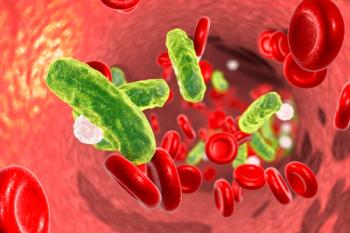
University of Barcelona researchers created a new method for detecting sepsis in patients, based on capillary electrophoresis-mass spectrometry (CE-MS).

During ASMS 2025, LCGC International covered the most notable news from corporate and individual attendees, highlighting the latest advancements in mass spectrometry.

Continued helium use in gas chromatography–mass spectrometry/flame ionization detection has proven problematic. To combat this, alternative efforts are being tested.

To better analyze polyphenols, scientists from Sapienza University of Rome examined the capabilities of supercritical fluid chromatography (SFC), comparing it to traditional methods.
In this article, you’ll find some of the top content that was published on LCGC this week, including details on the recent merger between Waters Corporation and BD Biosciences.

Salvia is an herb that is utilized in various industries. High-performance thin-layer chromatography was used to analyze different Salvia extracts.

To create a technique suited for analyzing proanthocyanidins and their properties, scientists combined high-speed countercurrent chromatography (HSCCC) and electrospray ionization–tandem mass spectrometry (ESI–MS/MS).

In a press release, the U.S. Department of Energy's Pacific Northwest National Laboratory announced that BaySpec, an optical instrument manufacturer company, will be commercializing their VaporID device later this year.

LCGC International interviewed Torgny Fornstedt, Professor in Analytical Chemistry & Leader of the Fundamental Separation Science Group at Karlstad University, Sweden at HPLC 2025 in Bruges, Belgium on modern separation methods to analyse oligonucleotides.

To better conduct the analysis of nucleoside analogues, hydrophilic interaction liquid chromatography–tandem mass spectrometry (HILIC-MS/MS) was used to quantify antitumor prodrugs and their metabolites.

A new cancer detection test to analyze volatile organic compounds through urine analysis, was granted the Breakthrough Device Designation status by the U.S. FDA. The system, which is built on gas chromatography–mass spectrometry (GC–MS) and proprietary AI, generates real-time cancer risk scores.

Using two-dimensional liquid chromatography–mass spectrometry, a new workflow was developed to characterize phosphorodiamidate morpholino oligomers, which can help treat infectious diseases.

To better detect polycyclic aromatic hydrocarbons in the human body, a UHPLC–MS/MS method was developed and tested on urine samples from workers exposed to diesel exhaust.

Gas chromatography–mass spectrometry was used alongside quality control systems to analyze amino acids present in urine samples.

To quantify antibiotics in ICU patients’ blood, dried blood spot analysis was sued alongside UHPLC–MS/MS to monitor these substances in a more convenient matter.
Advertisement
Advertisement