





Latest from LCGC International
12 days ago
The Gas Chromatographer’s ToolkitLatest Content


Advertisement
Shorts
0:35
The Shift in Proteomics
14 hours ago
by
Georg Wallman
1:02
Non-Targeted PFAS Analysis
2 days ago
by
Christine M. Fisher
1:16
Persistent Analytical Challenges for PAHs
5 days ago
by
Antonio Ferracane
0:42
Looking to the Future of FFF
12 days ago
by
Susanne Boye
0:36
FFF and the Importance of Hands-On Lab Expertise
15 days ago
by
Claudia Zielke

0:38
Will FFF Become Mainstream?
17 days ago
by
Lars Nilsson
1:25
Why You Should Never Fear New Challenges
19 days ago
by
Bingchuan Wei

0:36
Is FFF the Michelin Star of Analytical Techniques?
22 days ago
by
Valentina Marassi
1:10
How Smart Risks Can Lead to Innovation in Biopharmaceutical Analysis
23 days ago
by
Bingchuan Wei
0:56
Simplified ADC Mass Spec Analysis
25 days ago
by
Bingchuan Wei
Survey on Liquid Phase Separation Instruments and Trends
Please help by completing a 10-min survey on liquid phase separation instruments and trends. Enter to win one of five $250 Amazon gift cards—or donate to charity. Responses are confidential; contact info is only for prize notification.
Switching from Helium as a Carrier Gas: Can You Afford Not To?
Is It Time For You To Think About It?

LCGC International April Issue
Read the Latest Cutting-Edge Articles from LCGC
HPLC 2026 Preview
What to Expect at HPLC 2026

The Column March Issue
A Look at the Latest Applications, Articles, and Interviews from the World of Chromatography

Podcasts

Videos


Advertisement
All Content
Advertisement
Christine Fisher describes her method using mass defect filtering at the data acquisition stage to improve non-targeted PFAS detection in complex food matrices.

Headspace-gas chromatography-ion mobility spectrometry (HS-GC-IMS) combined with machine learning accurately detected fruit juice adulteration.

Blood markers reliably shifted toward healthy diet patterns after counseling.
Antonio Ferracane explains how each sample prep step adds error and can strip target PAHs, so skipping cleanup can improve recovery, accuracy, and precision.

Color imaging and high-performance liquid chromatography (HPLC) reliably predicted pigment levels in carrots.

Hydrophilic interaction chromatography-mass spectrometry (HILIC-MS) profiling tied a senescence gene region to chlorophyll loss and seed protein in sunflowers.
Antonio Ferracane discusses moving to minimal sample preparation for PAH analysis, and why matrix-matched calibration can replace cleanup steps.

Gas chromatography-mass spectrometry (GC-MS) revealed exercise-driven metabolic reprogramming supporting neurogenesis.

For scientists who depend on accurate, traceable data every day, the tools they use matter enormously. Sartorius, a global leader in biopharma research and manufacturing solutions, has introduced its latest generation of laboratory balance—the Cubis III—and it reflects how much the expectations placed on such instruments have changed in recent years.

Gas chromatography with flame ionization detection (GC-FID) showed fermented cassava peel added to chicken feed optimized yolk fatty acid profile in eggs produced.
Advertisement
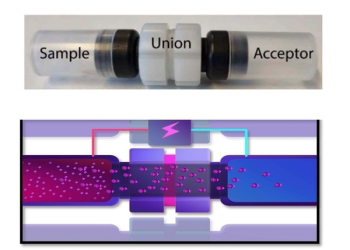
Electromembrane extraction (EME) uses electric fields and liquid membranes for selective, green microextraction compatible with chromatography.
Antonio Ferracane outlines a combined technique using cryogenic peak compression and pseudo-MRM to sharply boost sensitivity for trace PAHs.
Advancing Miniaturized Column and Instrument Technologies for Capillary Liquid Chromatography
Published: | Updated:
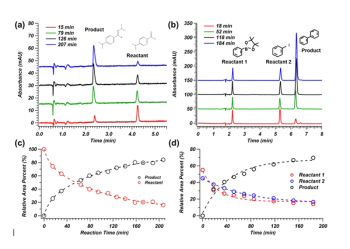
Recent developments in column technology and instrumentation for use in capillary-scale liquid chromatography are discussed. Key motivating factors for the increase in capillary liquid chromatography (LC) usage include a desire for more sustainable analytical methods (including reductions in solvent usage and waste generation) and the need for compact, field-portable systems that can be used in point-of-need settings. To achieve these goals, miniaturization strategies for both column and instrument designs have been required. The impact of these innovations in a variety of application areas—including environmental analysis, forensic testing, and pharmaceutical and biopharmaceutical manufacturing—is described. As the need for greener analytical methods continues to grow, the implementation of low-flow capillary-scale separations will also increase.

Isotope dilution liquid chromatography-tandem mass spectrometry (ID-LC-MS/MS) linked higher sleep apnea risk to lower testosterone and sex hormone-binding globulin (SHBG) levels.
HPLC pharmaceutical analysis sometimes requires wavelengths beyond a drug's maximum UV absorption for optimal detection.
Advertisement
Advertisement