

The Application Notebook
Erythropoietin protein (EPO) is a glycoprotein hormone found in plasma. It is a cytokine for erythrocyte (red blood cell) precursors in the bone marrow.
The Application Notebook
Erythropoietin protein (EPO) is a glycoprotein hormone found in plasma. It is a cytokine for erythrocyte (red blood cell) precursors in the bone marrow.
The Application Notebook
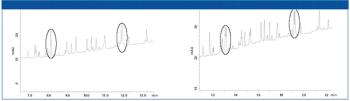
A new 3.6 µm 100 Å HPLC–UHPLC column (Aeris PEPTIDE) has been introduced that is specifically designed to improve separations of peptide and peptide mapping applications.
The Application Notebook
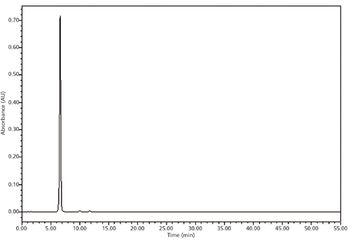
The United States Pharmacopeial Convention (USP) publishes the Food Chemicals Codex (FCC), which is a compendium of food ingredient documentary standards (monographs) that provide tests, procedures, and acceptance criteria to indicate the safety and quality of a food ingredient. Physical reference standards can be associated with the procedures of an FCC monograph and the reference standards are needed for conducting the procedures. This article describes characterization and collaborative testing of new USP rebaudioside A and stevioside reference standards and their suitability for intended uses in the FCC rebaudioside A monograph.

The Application Notebook
The purpose of this study is to determine how the Direct-to-GC vial concentrator tube and the DryVap ® Concentrator System can optimize the recoveries for both low and high boiling point semi-volatile compounds.

The Application Notebook
U.S. EPA Method 531.2 describes the determination of widely used carbamate pesticides in raw surface water using HPLC with fluorescence detection following postcolumn derivatization, which enhances method sensitivity and selectivity as compared to UV absorbance detection.
The Application Notebook
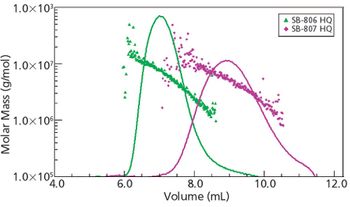
Size exclusion chromatography (SEC) is a simple HPLC technique used for the molecular weight (MW) distribution analysis of polymers. Several manufacturers provide SEC columns with different base materials and various pore sizes to cover a wide range of polymer analysis.
The Application Notebook
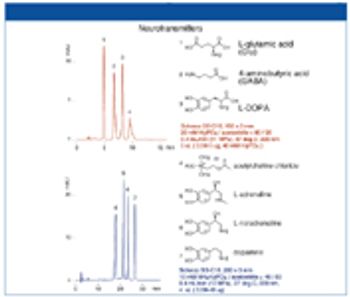
Simultaneous HPLC analysis of neurotransmitters can be challenging due to the similarity of their structures.
The Application Notebook
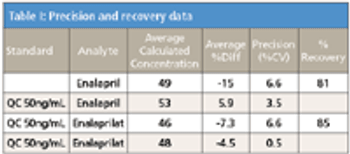
A liquid chromatography tandem mass spectrometry method for enalapril and enalaprilat from human plasma has been developed using Thermo Scientific SOLA cartridges. Sample preparation is fast, efficient, and reproducible giving excellent recovery levels for each compound.

The Application Notebook
The paralytic shellfish toxins are a group of 18 secondary metabolites deposited in bivalve mollusks by dinoflagelates. Dinoflagelate blooms are seasonal, occurring during warm months.

The Application Notebook
Microwave assisted extraction (MAE) offers significant benefits over traditional soxhlet extraction for dioxins and furans determination from environmental samples including higher sample throughput, time savings, reduced solvent and great reproducibility.
The Application Notebook
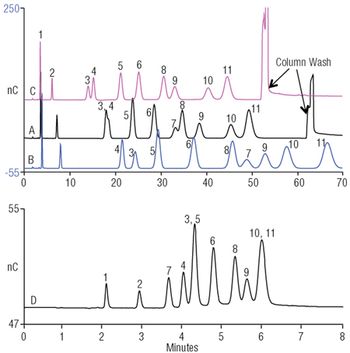
Coffee carbohydrates constitute the major part (at least 50% of the dry weight) of raw coffee beans, and are good tracers for assessing the authenticity of instant coffee.
The Application Notebook
LCGC is planning to publish the next issue of The Application Notebook special supplement in June.

The Application Notebook
The determination of common inorganic anions and cations in drinking water is important due to the toxicity of anions (e.g., fluoride, nitrite, and nitrate) and secondary contaminants (e.g., chloride and sulfate) which can affect the water's aesthetics.
The Application Notebook
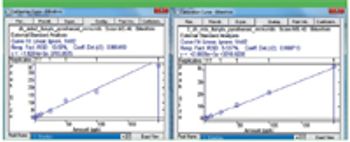
A simple screening method for Pyrethroid insecticides in sediment samples is described. Electron impact ionization (EI) with tandem MS-MS in combination with programmed temperature vaporization injection (PTV) were used in order to obtain excellent specificity and low limits of detection.
The Application Notebook
Omega-3 and -6 fatty acids are essential compounds required for normal growth. Omega-3 consumption is purported to have a number of health benefits, e.g., cancer prevention, cardiovascular disease prevention, and improved immune function. Although both omega-3 and -6 fatty acids can give rise to eicosanoid-signaling molecules (prostaglandins, prostacyclins, thromboxanes, and leukotrienes), the omega-6 eicosanoids are generally proinflammatory. A person's diet requires a balance of omega fatty acids at suitable levels.

The Application Notebook
A new widepore core-shell HPLC–UHPLC column (aeris WIDEPORE) has been introduced that is specifically designed to improve protein separations.

The Application Notebook
GCxGC-TOFMS provided a comprehensive analysis of tobacco smoke. Individual smoke constituents across several target compound classes were extracted, chromatographically resolved, then identified and quantified with mass spectral detection.
The Application Notebook
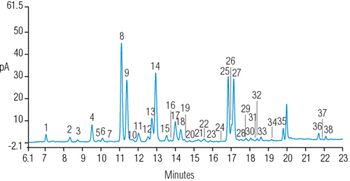
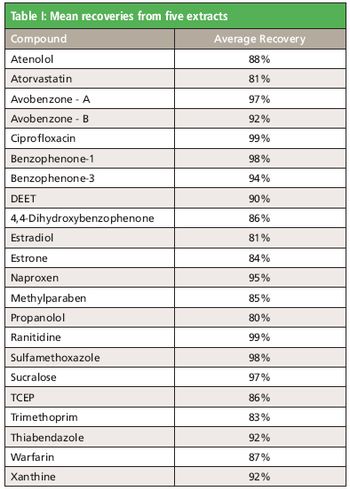
Over the last decade the use of Pharmaceuticals and Personal Care Products (PPCPs) has doubled in the United States. As a result, PPCPs have entered the environment through both human activity and as by-products from manufacturing, agricultural activities, medical use and veterinarian facilities.

The Application Notebook
Volatile organic compounds (VOCs) in soil were rapidly extracted and concentrated using solid phase microextraction (SPME) followed by on-site analysis and identification with the TRIDION-9 portable gas chromatograph – toroidal ion trap mass spectrometer (GC-TMS). 37 VOCs were resolved and analyzed quickly in under 3 min.

The Application Notebook
Shale gas reservoirs, such as the Marcellus shale reserve in Pennsylvania and Barnett shale reserve in Texas are a growing source of natural gas in the United States.
The Application Notebook
Detection, analysis, and characterization of low-abundant metabolites remain an unresolved problem in metabolic studies. In this study, we report a novel approach to address this challenge. The current methodology is derived from the predictive multiple reaction monitoring (pMRM) mode available on triple-quadrupole linear ion trap mass spectrometry (MS) systems. The pMRM mode offers the highest sensitivity among various acquisition modes for studying trace levels of metabolites of the herbicide clomazone in plants. Additionally, this method allows for the identification of positional isomers of metabolites.

The Application Notebook
Using a novel new-design monolithic silica column (Chromolith? HighResolution RP-18e), fast, high resolution separations were achieved for various drug mixtures without the high pressures characteristic of modern particulate technology.
The Application Notebook
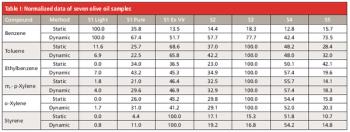
The benefits of olive oil as part of a healthy diet reaches back to the 1950's. Methods were developed to determine benzene, toluene, ethylbenzene, xylenes and styrene (BTEXS) by static headspace methods.

The Application Notebook
Agarose is a polysaccharide produced from seaweed that forms a gel at room temperature. The characteristics of agarose gels depend on the agarose concentration, solvent, weight-average molar mass, and molar mass distribution.
The Application Notebook
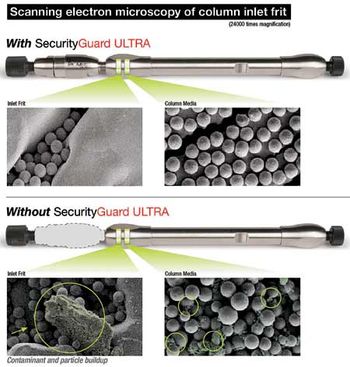
UHPLC columns can significantly improve chromatographic separations, but they also present unique challenges. Once the UHPLC system components are optimized, perhaps your greatest concern is protecting the column from the damaging effects of microparticulates and sample contaminants.

The Application Notebook
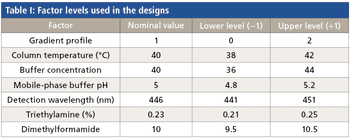
Tetracycline (TC), a common antibiotic used to treat urinary tract infections, acne, gonorrhea, and other conditions, yields a toxic degradation product, 4-epianhydrotetracycline (EATC). General Chapter 226 of the U.S. Pharmacopeia and National Formulary (USP-NF), referred to by monographs for epitetracycline and drug products containing tetracycline hydrochloride (TC-HCl), prescribes an antiquated assay for EATC impurity in TC.

The Application Notebook
For the analysis of biotherapeutics, size-exclusion and ion-exchange chromatography are typically conducted under native separation conditions, requiring high ionic strength, 100% aqueous eluents.
The Application Notebook
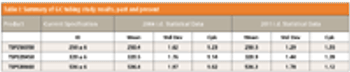
Synthetic fused silica capillary tubing is used in the manufacture of most gas chromatography (GC) columns. In this note, we discuss recent advances in the dimensional control of the most popular tubing sizes.
The Application Notebook
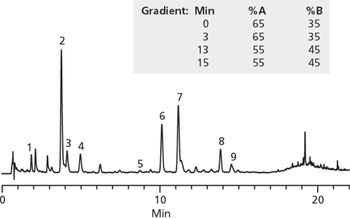
Silymarin, derived from the milk thistle plant, has been used as a natural remedy for the treatment of a number of liver diseases as well as in the protection of the liver from potential toxins. More recently, silymarin has been connected to antitumor promoting activity (1). It is therefore of interest to have available analytical methods for the analysis of silymarin components in various matrices.

The Application Notebook
Various triarylmethane and fluorescent dyes are used in aquaculture as antibacterial, antifungal, and anthelmintic agents for the treatment of fish disease. The FDA has banned the importation of certain fish from several countries due to possible contamination of these food products.