

The Column
Click the title above to open The Column October 10, 2017 Europe & Asia issue, Volume 13, Number 14, in an interactive PDF format.
The Column
Click the title above to open The Column October 10, 2017 Europe & Asia issue, Volume 13, Number 14, in an interactive PDF format.

Data validity and a thorough understanding of the results that we produce should be of great interest to us all. Here's why.
Special Issues
Click the title above to open the LCGC Europe October 2017 supplement, Vol 30, No s10, in an interactive PDF format.
Special Issues
Click the title above to open the LCGC North America October 2017 Advancing Environmental Analysis, Vol 35 No s10, in an interactive PDF format.

LCGC North America
To resolve and quantitate monoclonal antibodies and antibody–drug conjugates, analytical scientists need various chromatographic modes, such as sizeexclusion, ion-exchange, hydrophobic interaction, and hydrophilic interaction chromatography. Here, we provide advice for making the most of each mode.

Special Issues
Systematic toxicological analysis is an important step in medicolegal investigations of death, poisoning, and drug use. The primary goal is the detection and confirmation of potentially toxic compounds in evidence. This article describes a workflow using nontargeted liquid chromatography–tandem mass spectrometry (LC–MS/MS) for reliable compound identification.

LCGC Europe
In his final column before retirement, John Dolan reminisces about his years as the author of “LC Troubleshooting”, and some of the changes that have taken place in liquid chromatography (LC) technology during that time.

LCGC Europe
Separating proteins and antibodies is a unique analytical challenge because of the complexity of the analytes. Both sample heterogeneity, because of a number of chemical modifications to the analyte, and nonspecific binding to the silica surface often result in chromatographic peak broadening and tailing. This instalment of “Column Watch” focuses on several different chromatographic strategies that analytical scientists can use to resolve and quantitate various biomacromolecules, including monoclobal antibodies (mAbs) and antibody–drug conjugates (ADCs). Selected aspects of size-exclusion, hydrophobic interaction, ion-exchange, hydrophilic interaction, and reversed-phase chromatography are discussed.

LCGC Europe
The Petroleum, Refining, and Environmental Monitoring Technologies Conference (PEFTEC 2017) will be held in the Antwerp Expo, Antwerp, Belgium, from 29–30 November 2017.
LCGC E-Books
LCGC Europe
Click the title above to open the LCGC Europe October 2017 regular issue, Vol 30, No 10, in an interactive PDF format.
LCGC North America
Click the title above to open the LCGC North America October 2017 regular issue, Vol 35 No 10, in an interactive PDF format.
Special Issues
Click the title above to open the October 2017 issue of Current Trends in Mass Spectrometry, Volume 15, Number 4, in an interactive PDF format.

Internal standards (IS) are commonly incorporated into quantitative methods to increase accuracy and precision. An IS is a compound that is different than the analyte of interest, has similar physicochemical properties to the analyte, and is added to samples, calibration standards, and quality control samples in a known quantity. It should not be present in the sample, it should be available in high purity, and it should be easily differentiable from the analyte of interest.
The Chinese American Chromatography Association (CACA) invites nominations for three awards: the 2018 CACA Young Investigator Award; the 2018 CACA Student Excellence Award; and the HPLC 2018 Student Travel Award.

The Column
Incognito wonders where we are, where we have been, and where we are going digitally in the analytical laboratory.
The Column
Peak Scientific has announced a new partnership with SEKO logistics intended to optimize its supply chains across the Chinese and U.S. markets.

The Column
Researchers from the Japanese Institute of Neuroscience have identified differences in the low-molecular-weight metabolite profiles of the brains of schizophrenia patients using CE–TOF-MS.
The Column
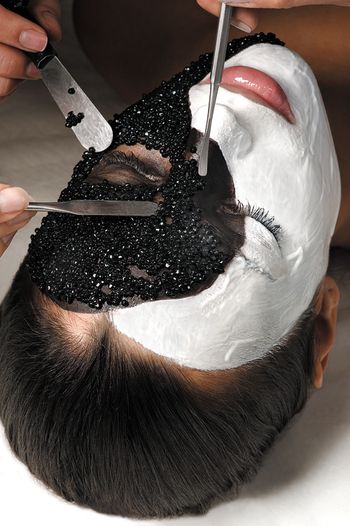
Researchers from the University of Torino have developed a novel HPLC–HRMS application for evaluating cosmetic ingredient composition. The application was used to analyze and compare sturgeon eggs, commonly known as caviar, and brill eggs, and their use in beauty creams as lipid sources.

The Column
Capillary electrophoresis (CE) is routinely used for chemical and biochemical analysis methods, and recently the technique has been implemented on microchips. R. Scott Martin, a professor and chair of chemistry at Saint Louis University, St. Louis, Missouri, USA, has been investigating ways to improve these techniques for years. He recently spoke to us about his research coupling microchip electrophoresis with electrochemical detection, coupling continuous flow with microchip electrophoresis with valving, coupling microchip CE with microdialysis sampling and electrochemistry, and more.

The Column
The ability to rapidly screen stationary phases through column-switching capabilities provides significantly greater efficiency in method development than was previously possible. The approach does require some additional hardware and software. And, while such capabilities may limit the ability to expand one’s literary knowledge during excessive months in the laboratory developing separation methods, real progress to key decision points for method optimization can be realized instead.

With the increasing proliferation of UHPLC, with its very much reduced extra column volumes, is the concept of dwell volume still relevant? Indeed, in your world, was it ever relevant at all?
The Column
Click the title above to open The Column September 12, 2017 North American issue, Volume 13, Number 13, in an interactive PDF format.
Nominate a colleague or yourself for the 2019 LCGC Emerging Leader in Chromatography AwardSubmission Deadline: October 16, 2017
Nominate a colleage or yourself for the 2019 Lifetime Achievement in Chromatography AwardSubmission Deadline: October 16, 2017