The Column
Click the title above to open The Column August 22, 2017 North American issue, Volume 13, Number 12, in an interactive PDF format.
The Column
Click the title above to open The Column August 22, 2017 North American issue, Volume 13, Number 12, in an interactive PDF format.
The Column
Peak Scientific has celebrated 20 years since its foundation.

The Column
Ram Sasisekharan has received the 2017 Agilent Thought Leader Award in recognition of his contributions in the field of biologics characterization.
The Column
Thermo Fisher Scientific Inc. and SRI International have announced they will be collaborating to enhance small molecule research.

The Column
Researchers from ANSES have investigated the human health risks related to the consumption of foodstuffs produced on sites polluted by munitions from the First World War using GC–MS, HPLC–ICP-MS, and UHPLC–MS.

The Column
Combinations of detectors are often used in gel permeation chromatography/size-exclusion chromatography (GPC/SEC) to measure absolute molar masses or chemical compositions as a function of elution volume. Such multidetector setups require the correction of the delay volume between the detectors for correct data processing. This instalment of Tips & Tricks explains more.
The Column
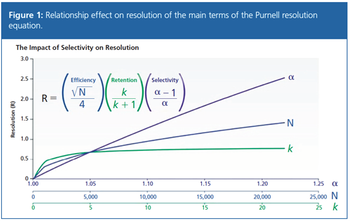
Do you understand the benefits of selectivity as a method development opportunity?
The Column
Click the title above to open The Column August 08, 2017 North American issue, Volume 13, Number 11, in an interactive PDF format.
The Column
Click the title above to open The Column August 08, 2017 Europe & Asia issue, Volume 13, Number 11, in an interactive PDF format.

The ability to rapidly screen stationary phases through column-switching capabilities provides significantly greater efficiency in method development than was previously possible. The approach does require some additional hardware and software. And, while such capabilities may limit the ability to expand one’s literary knowledge during excessive months in the laboratory developing separation methods, real progress to key decision points for method optimization can be realized instead.
Special Issues
Click the title above to open the LCGC North America August 2017 Annual Industry Trends and Directory Issue, Vol 35 No s8, in an interactive PDF format.

LCGC Europe
You have to be careful to avoid unwanted results when adjusting gradient conditions.

LCGC Europe
Dual flow chromatography (DFC) separations are performed with back and forth flow for rapid method development, design of experiments (DOE), quality-by-design (QbD), or high-throughput chromatographic purification. Although different than conventional unidirectional flow through chromatography, chromatographic principles still control the separations. Selectivity coefficients and Langmuir adsorption isotherms control the separation chemistry properties of the column and dictate the mobile phase conditions needed to achieve separation. However, the kinetic rates of diffusion and interaction of mobile phase molecules with the stationary phase, column channeling, and other column properties are not germane to the practice of DFC. Chromatographic conditions developed with DFC can be scaled to any size, including laboratory and industrial preparative columns.

LCGC Europe
The 11th Balaton Symposium on High Performance Separation Methods will be held on 6–8 September 2017 at the Hotel AzЬr in SiЧfok, Hungary.

LCGC North America
This month marks another major milestone for LCGC: 35 years of successfully publishing “solutions for separation scientists.” I would be remiss if I did not thank you, our readers, as well as the tireless staff that work so hard to bring you this publication every month. In kind, I would also like to thank our columnists for their helpful contributions and willingness to share their expertise with our audience. Our advertisers also deserve a round of applause for supporting our business and counting on us to deliver successful products across the industry.

LCGC North America
For this 35th anniversary issue of LCGC North America, we asked leading separation scientists what they foresee for the future. Their essays are insightful and thought provoking.


Special Issues

Special Issues

Special Issues