

All News
Advertisement

Advertisement


Special Issues
We present our analysis of LCGC’s first reader survey on salary, workload, job satisfaction, and the job market in general. The survey shows that workloads and stress levels have increased for many. Nevertheless, most view the employment outlook as good, if not excellent, and indicate a high level of satisfaction with their present jobs.

LCGC Europe
Click the title above to open the LCGC Europe August 2017 regular issue, Vol 30, No 8, in an interactive PDF format.
LCGC North America
Click the title above to open the LCGC North America August 2017 regular issue, Vol 35 No 8, in an interactive PDF format.
Advertisement
The National Science Foundation (NSF) awarded a Small Business Innovation Research (SBIR) grant to Activated Research Company.

Until recently, I hadn’t heard of ternary or quaternary gradients being used for many years. They have gained a reputation for being somewhat difficult to reproduce-less robust, if you like.
Advertisement
Gary J. Patti is the recipient of the 2017 Agilent Early Career Professor Award.

LCGC Europe
ChromSoc’s Advances in Gas Chromatography meeting will take place at The Heath Business and Technical Park, Runcorn, Cheshire, UK, on the 18 October 2017.
The Column
Eurofins Scientific has announced the acquisition of Nab Labs Group, one of the largest independent environment testing laboratories in Finland.
The Column
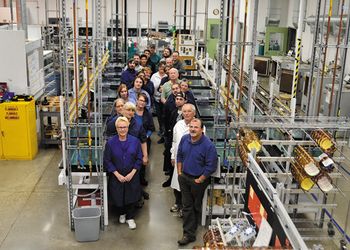
Phenomenex Inc. has announced the opening of a new manufacturing and development facility dedicated to the company’s gas chromatography columns.
The Column
Shigeru Terabe has received the Arnold O. Beckman Medal and Award for Outstanding Scientific Achievements in the Field of Electro-Drive Separation Techniques. The Sciex sponsored award was presented to Terabe as part of a Special Award Plenary Session at the 33rd International Symposium on Microscale Bioseparations (MSB 2017).

The Column
Researchers investigating fragments of black organic matter found scattered at the 7th century ship-burial at Sutton Hoo, Suffolk, UK, have discovered the material is not what it was originally identified as.

The Column
How do you deal with problems that arise in the laboratory?

The Column
Recent developments in the miniaturization of gas chromatography–mass spectrometry (GC–MS) instrumentation are making the technique available for field-based investigations, offering a simple, onsite identification of drug substances. This article describes the identification of sixteen drugs compounds in less than 10 min using portable gas chromatograph-toroidal ion trap mass spectrometry combined with a coiled-wire-filament (CWF) sampling injector to provide an effective tool for the rapid analysis of illicit drug substances.

The Column
ITP 2017 will be held 10–13 September 2017 at the Sheraton Hotel in Sopot, Poland. This preview offers a flavour of what to expect.
The Column
Click the title above to open The Column July 11, 2017 Europe & Asia issue, Volume 13, Number 10, in an interactive PDF format.
The Column
Click the title above to open The Column July 11, 2017 North American issue, Volume 13, Number 10, in an interactive PDF format.
The LCGC Blog
Hydrophilic Interaction Chromatography can be a very useful tool in our analytical armory, however there are some practical peculiarities to this chromatographic mode which need to be understood in order to ensure success.
LCGC E-Books

Special Issues
• Raptor C18 SPP 5 μm core-shell silica particle columns offer excellent resolution for fluorochemicals with short total cycle times. For even faster analysis, 2.7 μm core-shell particles are available. • Meets EPA Method 537 requirements. • Unique, robust Raptor C18 column design increases instrument uptime.
Special Issues
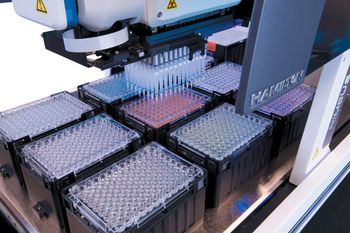
Utilizing Hamilton’s CO-RE® disposable tips with DPX technology provides a fast, accurate, and simple extraction method for analyzing drugs of abuse in urine. The Microlab NIMBUS equipped with a CO-RE 96-channel Multi-Probe Head (MPH) allows for high-throughput, automated sample processing.

Special Issues
The US EPA monitors a variety of chemicals in water that may cause harm to humans or wildlife to minimize exposure.
LCGC North America
Get the most from your method by considering what you want it to do and setting appropriate chromatographic parameters.

LCGC North America
Fabrice Gritti discusses how to separate and quantify both volatile and nonvolatile compounds in complex mixtures.
Advertisement
Advertisement
Trending on LCGC International
1
Detecting Anabolic-Androgenic Steroids in E-cigarettes Seized from Scottish Prisons using GC–MS
2
Automated Sample Preparation for Oligonucleotide Bioanalysis Using Magnetic SPE
3
Using UHPLC-MS/MS to Help Pinpoint Time of Death
4
GC-MS Uncovers Cocoa Variety's Chocolate Aroma
5