

All News
Advertisement
Advertisement
The Column
The Column spoke to Kirsten Benkendorff, an Associate Professor in Environment, Science, and Engineering and the Co-Deputy Director of the Marine Ecology Research Centre at Southern Cross University in Australia about her work investigating Muricidae molluscs, their use in ceremonial incense and traditional medicines, and the role of chromatography in this research.
The Column
Analytica will take place from 10–13 April 2018 at the Messe München, in Munich, Germany. The Analytica conference is Analytica’s scientific highlight and will take place at the International Congress Center (ICM) from 10–12 April 2018. The increasing digitization in the laboratory and the handling of the resulting flood of data are big focus this year. This preview will shed more light on what to expect.
The Column
Waters Corporation and Malvern Panalytical have announced a co-marketing agreement to advance the analysis of polymers.
The Column
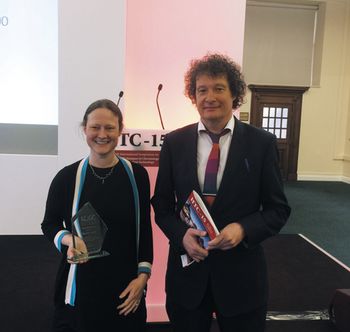
Carolin Huhn was awarded the inaugural 2018 LCGC Europe/HTC Innovation Award on 25 January 2018 at the 15th International Symposium on Hyphenated Techniques in Chromatography (HTC-15) in Cardiff, UK.
Advertisement

The Column
Researchers from the University of Seville have developed a method for the determination of pollutants in leafy and root vegetables using UAE, d-SPE, and LC–MS/MS.
The Column
PharmaFluidics has announced it has raised 7.3 million euros in its bid to expand commercialization of its novel micro-chip device.

The Column
A HILIC–MS/MS method to separate and quantify the polar bioactive molecules present in royal jelly has been developed by researchers from the Aristotle University of Thessaloniki, in Greece.
The Column
Eurofins Scientific has announced the acquisition of Tsing Hua Testing & Analysis Co., Ltd. (Tsing Hua), a leading environmental testing company in Taiwan.
Advertisement

The Column
Analytica will take place from 10–13 April 2018 at the Messe München, in Munich, Germany. The Analytica conference is a highlight of Analytica and will take place at the International Congress Center (ICM) from 10–12 April 2018. The increasing digitization in the laboratory and the handling of the resulting flood of data are the big focus this year. This preview will shed more light on what to expect.

The Column
Terpenes contribute heavily to the senses of smell and taste and thus are integral to industries like herb and spice producers, essential oil manufacturers, cannabis growers and distributors, breweries, and distilleries, among countless others. Current terpene analysis is performed using gas chromatography–flame ionization detection (GC–FID) and GC–mass spectrometry (MS); however, baseline separation is needed for quantification because many terpenes of interest are isomers, which can lead to relatively long run times. Vacuum ultraviolet (VUV) spectroscopy can spectrally distinguish isomers and quantitatively deconvolve coeluting peaks, allowing for significant reduction in GC run time. This article outlines a method for the analysis of 21 terpenes in a variety of samples with a sub 9-min elution time.
The Column
The 10th conference of The World Mycotoxin Forum will take place in Amsterdam, the Netherlands, on 12–14 March 2018. This preview offers a glimpse of what can be expected.
The Column
Click the title above to open The Column February 2018 Europe & Asia issue, Volume 14, Number 2, in an interactive PDF format.
The Column
Click the title above to open The Column February 2018 North American issue, Volume 14, Number 2, in an interactive PDF format.
The American Chemical Society (ACS) 2018 National Awards will be presented at a ceremony on March 20 in conjunction with the 255th ACS National Meeting in New Orleans.

I'm often asked to help with the development of column "screening" platforms and automated development systems. While this covers a large amount of analytical science there are some common elements to this type of approach, perhaps the most important of which is column selection. Unsurprising given that "selectivity" is the most powerful tool we have in chromatography and we all know that the best way to optimize selectivity is to choose the most appropriate stationary phase.
LCGC Europe
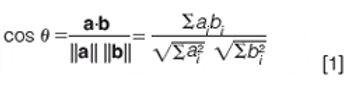
Is that peak “pure”? How do I know if there might be something hiding under there?

LCGC Europe
Analytica will take place at the Messe München, Munich, Germany from 10–13 April 2018, alongside the Analytica conference that will take place at the International Congress Center (ICM) from 10–12 April 2018.
LCGC Europe
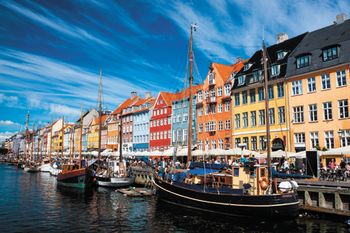
The 2nd Copenhagen Symposium on Separation Sciences (CSSS 2018) will be held at DGI-Byen Hotel, Copenhagen, Denmark, from 26–27 June 2018.

LCGC North America
In advance of Pittcon 2018, leading scientists-Ronald Majors, Richard Henry, John W. Dolan, Zachary S. Breitbach, and Daniel W. Armstrong-who will be speaking at the LCGC awards symposium give us a preview of their talks.

LCGC North America
In advance of Pittcon 2018, leading scientists-Ronald Majors, Richard Henry, John W. Dolan, Zachary S. Breitbach, and Daniel W. Armstrong-who will be speaking at the LCGC awards symposium give us a preview of their talks.

LCGC North America
In advance of PittconIn advance of Pittcon 2018, leading scientists-Ronald Majors, Richard Henry, John W. Dolan, Zachary S. Breitbach, and Daniel W. Armstrong-who will be speaking at the LCGC awards symposium give us a preview of their talks.

LCGC North America
In advance of PittconIn advance of Pittcon 2018, leading scientists-Ronald Majors, Richard Henry, John W. Dolan, Zachary S. Breitbach, and Daniel W. Armstrong-who will be speaking at the LCGC awards symposium give us a preview of their talks.
LCGC North America
In advance of PittconIn advance of Pittcon 2018, leading scientists-Ronald Majors, Richard Henry, John W. Dolan, Zachary S. Breitbach, and Daniel W. Armstrong-who will be speaking at the LCGC awards symposium give us a preview of their talks.

LCGC North America
Despite the theoretical promise of reduced plate heights (h) < 1, most modern UHPLC columns can only deliver plate heights in the range from 1.4 to 2.5. However, improved packing procedures, a better understanding of the colloidal properties of particle suspensions, and the study of the rheological behavior of packed beds and the final bed structure should lead us to practical solutions that can double the column efficiencies.

LCGC North America
Is that peak “pure”? How do I know if there might be something hiding under there? In part I of this series, we explore some of the concepts behind peak purity assessments, describe some tools that are used in commercially available software for these assessments,

LCGC North America
Five tips to help you get the most out of your LC–MS instruments and methods

LCGC North America
We explore the careers and achievements of the winners of LCGC’s 11th annual awards: Ronald E. Majors and Zachary S. Breitbach.
Advertisement
Advertisement
Trending on LCGC International
1
Using UHPLC-MS/MS to Help Pinpoint Time of Death
2
GC-MS Uncovers Cocoa Variety's Chocolate Aroma
3
Detecting Anabolic-Androgenic Steroids in E-cigarettes Seized from Scottish Prisons using GC–MS
4
Automated Sample Preparation for Oligonucleotide Bioanalysis Using Magnetic SPE
5