
All News
Advertisement

Special Issues
Dwight Stoll, the new editor of “LC Troubleshooting,” asks John Dolan about the current state of chromatography training, John’s toughest troubleshooting challenge, the most common chromatographic mistakes, and what he foresees for the future.
Advertisement

LCGC Europe
LCGC Europe is celebrating a glorious past and looking ahead to a buoyant future.

LCGC Europe
The 15th International Symposium on Hyphenated Techniques in Chromatography and Separation Technology (HTC-15) will be held at Cardiff City Hall, Cardiff, United Kingdom, from 24–26 January 2018.

LCGC Europe
Looking back, there are a great many names immortalized across all fields of science and technology, which we first hear about in the undergraduate lecture halls, and perhaps only later learn to truly appreciate as the innovators and inventors of an impactful technology that has lasted the test of time. A couple of names that at present are probably not yet commonplace in the undergraduate science class are those of Hideo Kodama and Chuck Hull.

LCGC Europe
Fast gas chromatography (GC) has received new attention recently in the form of available enhanced instrument capabilities. What can fast GC do for separations, and how can laboratories take advantage of enhanced separation speeds?
Advertisement

LCGC Europe
Perhaps the largest source of error with sampling and sample preparation, especially with solid and semisolid samples, is the sample heterogeneity. Generally, sample heterogeneity is managed by sample homogenization, such as grinding and mixing, as well as use of an appropriately large sample size. Incremental sampling methodology (ISM) involves structured composite sampling and a processing method to create an unbiased estimate of the mean concentration of soil contaminants. Hence, ISM is emerging as a preferred methodology for conducting field environmental sampling. In this month’s instalment of “Sample Preparation Perspectives”, we describe the application of ISM to laboratory subsampling protocols.
LCGC Europe
Leading chromatography vendors offer their view of the most important developments in separation science in the past 30 years.
LCGC Europe
So, what’s not in your standard operating procedure? Documenting details can prevent headaches associated with method transfers between laboratories.
LCGC Asia Pacific
Click the title above to open the LCGC Asia Pacific November 2017 regular issue, Vol 20, No 4, in an interactive PDF format.
Advertisement
LCGC Europe
Click the title above to open the LCGC Europe November 2017 regular issue, Vol 30, No 11, in an interactive PDF format.
LCGC North America
Click the title above to open the LCGC North America November 2017 regular issue, Vol 35 No 11, in an interactive PDF format.
A new nonprofit laboratory in Wilmington, Delaware, will provide laboratory space and access to experienced laboratory staff for entrepreneurs.

The Column
Lab Innovations has announced that science writer and broadcaster Adam Rutherford will be a keynote speaker at this year’s event held at the NEC in Birmingham, UK.
The Column
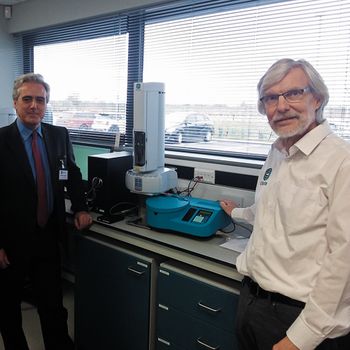
Ellutia Chromatography Solutions has opened a new dedicated training centre in Ely, Cambridgeshire, UK.

The Column
Researchers from The First Institute of Oceanography in Qingdao, China, have developed an exact mass suspect screening approach for identifying multiple lipophilic marine toxins in seawater, suspended particulate matter (SPM), and marine sediment using LC–TOF-MS.

The Column
Restek has been awarded company of the year by The Pennsylvania/Delaware Chapter of the ESOP Association during its annual conference on 14 September 2017.
The Column
Click the title above to open The Column October 24, 2017 Europe & Asia issue, Volume 13, Number 15, in an interactive PDF format.
The Column
Click the title above to open The Column October 24, 2017 North American issue, Volume 13, Number 15, in an interactive PDF format.

Subscribe to LCGC podcasts:

The Column
Markes International has announced the opening of a new subsidiary in Shanghai, China.

The Column
Researchers from the University of Minnesota have investigated the effects of cold water immersion on athlete recovery in combat sports training using SCX HPLC and ELISA.

The Column
Incognito wonders if chromatographers are just plain lazy.

The Column
Pharmafluidics has announced the appointment of Fasha Mahjoor as an independent director.
The Column
Phenomenex Inc. has announced that it will begin to directly serve customers in Switzerland following the mutually agreed upon end of its 26-year-old partnership with local distributor Brechbühler AG.

The Column
The intensity of the light scattering signal depends on concentration, molar mass, and the specific refractive index increment, dn/dc, of the sample. dn/dc therefore usually needs to be known to derive molar masses by gel permeation chromatography/size-exclusion chromatography-light scattering (GPC/SEC-LS). How to overcome the issue of unknown refractive index increments is outlined in this instalment of Tips & Tricks. In particular, a new approach to derive molar masses by GPC/SEC-LS that requires only the molar mass of a reference material, and not the dn/dc of the sample or of the reference material, is introduced.

The Column
A preview of HTC-15, which will be held at Cardiff City Hall, Cardiff, United Kingdom, from 24–26 January 2018.

The Column
The three-day Chromatographic Society meeting was held on Monday 15th until Wednesday 17th May 2017 and was hosted by Pfizer at Discovery Park in Sandwich, Kent, UK. This comprehensive symposium featured oral presentations from leading practitioners of supercritical fluid chromatography (SFC) and ultrahigh-pressure liquid chromatography (UHPLC) from across Europe. Some of the latest innovations and applications were described and the lectures were augmented and supported by a comprehensive exhibition of instrumentation and consumables. The attendees gained insight into practical application of these techniques across a variety of industries, particularly the pharmaceutical industry. The comprehensive programme had a significant focus on SFC for chiral and preparative-scale analysis.
The Column
Click the title above to open The Column October 10, 2017 North American issue, Volume 13, Number 14, in an interactive PDF format.
Advertisement
Advertisement
Trending on LCGC International
1
Detecting Anabolic-Androgenic Steroids in E-cigarettes Seized from Scottish Prisons using GC–MS
2
Automated Sample Preparation for Oligonucleotide Bioanalysis Using Magnetic SPE
3
LC-MS/MS Method Detects Rat Poison in Cats
4
The Case for Radical Cations: Bringing EI-Style Spectra to LC–MS
5