All News

Figure1_web-1.jpg

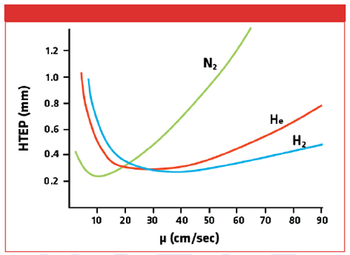
In his final “Column Watch” article, Ron Majors looks into his crystal ball and discusses future needs in the area of HPLC/UHPLC column technology and related instrumentation. He looks at where current technology may be heading and makes a prediction that monolith-based columns may still have a rightful place in the HPLC/UHPLC laboratory .This article concludes his duration as a monthly columnist for LCGC.

David Hage with Oscar Liu.JPG

Professor David S. Hage was awarded the Outstanding Achievements in Separation Science Award at this year’s Eastern Analytical Symposium and Exposition (EAS). The award honours analytical chemists who have distinguished career achievements and advanced their fields of study with superior work by developing theory, technique or instrumentation.

Chris_Enke with Anne Francois Aubry and Oscar Liu.JPG

Professor Chris Enke won the Outstanding Achievements in the Fields of Analytical Chemistry Award at The Eastern Analytical Symposium and Exposition (EAS) this year. The award honours analytical chemists who have distinguished career achievements and advanced their fields of study with superior work by developing theory, technique or instrumentation.

Apryll_Stallcup with Robert Vetrecin.JPG

The 2015 American Microchemical Society Benedetti Pichler Award has been presented to Apryll Stalcup, Director of the Irish Separation Science Cluster and Professor of Chemical Sciences at Dublin City University, Ireland.

figure 31450177376131.jpg

In his final “Column Watch” instalment, Ron Majors looks into his crystal ball and discusses future needs in the areas of high performance liquid chromatography (HPLC) and ultrahigh-pressure liquid chromatography (UHPLC) column technology and related instrumentation.

figure 11450189484212.jpg

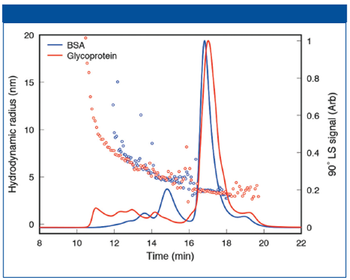
Gel filtration chromatography (GFC) is the most widely used method for quantitating protein aggregates in therapeutic drugs. It is a simple method, but prone to error as a result of poor method development and column selection. GFC columns tend to non-specifically adsorb large proteins and aggregates resulting in poor quantitation of “true” aggregate amount. Sample “priming” and mobile phase optimization can help reduce such irregularities. Simple method development rules using new column technologies are presented that demonstrate improved accuracy for these methods.

figure 11450190903276.jpg

In an era where “more data in less time” is expected, bioanalytical scientists have had to become more resourceful. Consequently, bioanalytical laboratories are adopting and extending the use of high-resolution mass spectrometry (HRMS) and, in particular, time-of-flight high-resolution mass spectrometry (TOF-HRMS). One of the key benefits of TOF-HRMS is consistent resolution, sensitivity, and mass accuracy - even at high scan speeds with large molecules being analyzed.

It is with great sadness we announce the death of Professor Michel Dreux. Professor Dreux was a professor at the University of Orléans, France.

Screen Shot 2015-12-17 at 14.19.37.png

Generally speaking, chromate - Cr(VI) - is classified as allergenic, carcinogenic, and extremely toxic and is subject to strict monitoring. Cr(VI) can occur in various concentrations in different areas, for example, drinking water, toys, or textile and leather products. Metrohm has developed ion chromatographic determination methods for determining Cr(VI) in various concentration ranges (ng/L to mg/L) with inline sample preparation techniques for various matrices. The method can be almost entirely automated. In the following application note, we present the analysis of hexavalent chromium in toys, leather, and drinking water.

figure 1.jpg

Herbs and spices are used in many food preparations, and identifying the differences between samples is of particular interest to manufacturers, both for ongoing quality control and to compare their products against competitors. However, the volatile organic compound (VOC) profiles of such samples often differ in the relative abundance of key components, and these differences can be difficult to assess by traditional methods such as solvent extraction, equilibrium headspace, or solid-phase microextraction (SPME).

figure 3.jpg

Although pesticides protect crops and plants, they are known to be harmful and of toxicological significance. In order to ensure the safety of the food chain and to protect consumers, fast and reliable methods for the qualification and quantification of residual chemicals, contaminants, and pesticides in food and feed are essential. This article describes the method development and optimization of a fast and simple high performance liquid chromatography-mass spectrometry (HPLC-MS) assay for the separation, qualification, and quantification of common pesticides.