

Special Issues
Click the title above to open the March 2017 issue of Current Trends in Mass Spectrometry, Volume 15, Number 1, in an interactive PDF format.
Special Issues
Click the title above to open the March 2017 issue of Current Trends in Mass Spectrometry, Volume 15, Number 1, in an interactive PDF format.
The 2017 Chromatography Forum of the Delaware Valley Dal Nogare Award will be presented Monday morning at Pittcon 2017 to Professor Andras Guttman from the Csaba Horváth Laboratory of Bioseparation Sciences at the University of Debrecen in Hungary.

The Application Notebook
Wyatt TechnologyReversed-phase chromatography represents one of the most popular applications of high performance liquid chromatography (HPLC), with particular importance for protein characterization. Because elution depends on the hydrophobicity of the sample, it is generally impossible to identify the separated products on the basis of their elution time (volume). Frequently, each eluted fraction must be isolated further and analyzed with other techniques to gain some understanding of the molecular behaviour of the protein.

Students who have an internship on their resume, and are seeking jobs in a particular sector, are doing so with an informed opinion. While an internship comes in many forms, that real-world experience has provided a clear touchstone of understanding of what it would be like to work in a given sector.
The Satinder Ahuja Award for Young Investigator in Separation Sciences has been presented to Omar K. Farha, a research professor of chemistry at Northwestern University, Distinguished Adjunct Professor at King Abdulaziz University, and president of NuMat Technologies.
The 2017 Chromatography Forum of the Delaware Valley Dal Nogare Award has been presented to András Guttman, head of the Horváth Csaba Laboratory of Bioseparation Sciences at the University of Debrecen in Hungary, at Pittcon 2017, held this year in Chicago, Illinois, USA.
The Column
The 2017 Pittsburgh Analytical Chemistry Award has been presented to Janusz Pawliszyn of the University of Waterloo, Canada.
The Column
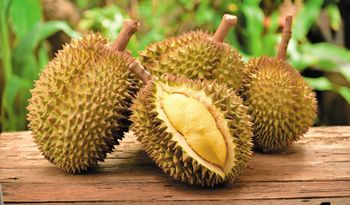
Few fruits are as notorious as the Durian fruit. Native to Southeast Asia but fast becoming available around the globe, these fruits hold the unsavoury title of “the world’s smelliest fruit”. The compounds responsible for such a complex and at times difficult to stomach aroma have intrigued scientists for decades, but until recently the data relating to those chemicals was inconsistent.
The Column
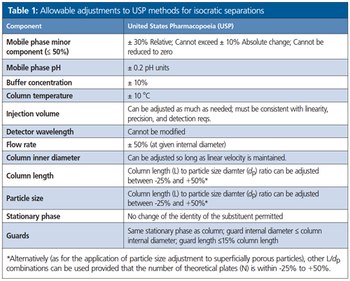
The implementation of the FSMA (Food Safety Modernization Act) and the continued globalization of the food supply have increased the need for improved analytical methods for quality and safety testing. Food safety and quality requirements are increasingly stringent, as are consumer expectations. In addition to new methods, the industry continues to look for improvements in laboratory productivity and new ways to reduce costs. These trends extend to dietary supplements and natural products. This article discusses the current state of efforts to modernize US Pharmacopeia (USP) compendial methods to take advantage of new chromatography technology, including the use of “allowable adjustments”.

The Column
A preview of RAFA 2017, which will be held 7–10 November 2017 in Prague, Czech Republic.

The Column
Luigi Mondello spoke to The Column about his group’s research into characterizing pigments in bell peppers using offline multidimensional supercritical fluid chromatography (SFC) combined with reversed-phase liquid chromatography (LC).
The Column
Click the title above to open The Column February 21, 2017 Europe & Asia issue, Volume 13, Number 3, in an interactive PDF format.
The Column
Click the title above to open The Column February 21, 2017 North American issue, Volume 13, Number 3, in an interactive PDF format.
The 2017 Guiochon Fellowship will be awarded to Dwight Stoll, an Associate Professor and Co-Chair of Chemistry at Gustavus Adolphus College in St. Peter, Minnesota, USA.
LCGC Europe
Delivering samples to the analytical column in “clean” mobile phase is important for robust methods and high-quality results.
LCGC Europe
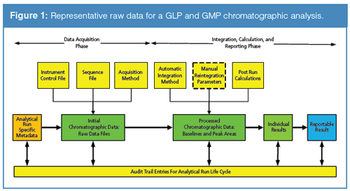
Raw data is a term that is used in both good manufacturing practice (GMP) and good laboratory practice (GLP) laboratories but it can create misunderstanding. What exactly does raw data mean and what electronic records are within the scope of the term?

LCGC Europe
The carotenoid test allows one to build a simple classification map of stationary phases used in reversed‑phase liquid chromatography, on the basis of the shape recognition (plotted on the x axis), the polar surface activity (plotted on the y axis), and the phase hydrophobicity (related by the bubble size).
The Column
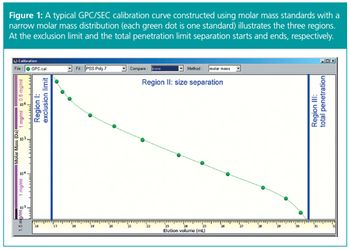
Gel permeation chromatography/size-exclusion chromatography (GPC/SEC) is used to determine molar mass averages and the complete molar mass distribution with just one injection. This is possible because GPC/SEC is a fractionating technique. The fractionation power allows the higher molar mass fraction to be characterized and more about low molar mass compounds such as oligomers, additives, or residual educts to be learned.
The Column
Bruker (Bremen, Germany) has announced the acquisition of SCiLS GmbH in Bremen, Germany. Founded as a spin‑off from the University of Bremen, SCiLS develops software tools such as statistical analysis software, sophisticated visualization viewers, and secure cloud-based services for collaborative interpretation of complex mass spectrometry imaging (MSI) data sets. Currently, 95% of all MSI data is acquired by label-free MALDI imaging systems.
The Column
Thermo Fisher Scientific (Sunnyvale, California, USA) and the American Society for Testing and Materials (ASTM) have developed an ion chromatography-based method for the simultaneous determination of nitrogen and phosphorous levels in water.
The Column
Agilent Technologies Inc. (Santa Clara, California, USA) and Multiplicom N.V. (Niel, Belgium) have announced that they have signed a definitive agreement for Agilent to acquire Multiplicom, a European diagnostics company involved in genetic testing. Agilent is acquiring Multiplicom for approximately €68 million in cash.
The Column
Eurofins Scientific (Luxembourg) has acquired ASL Análises Ambientais (“ASL”), an environment testing service provider in Rio Claro, São Paulo, Brazil.
The Column
Click the title above to open The Column February 07, 2017 North American issue, Volume 13, Number 2, in an interactive PDF format.
The Column
Click the title above to open The Column February 07, 2017 Europe & Asia issue, Volume 13, Number 2, in an interactive PDF format.

This time I’m going to be looking at how to get the most from your GC–MS (Gas Chromatography–Mass Spectrometry) system, and I intend to keep things as simple as possible, however I also make no apology in the fact that some of the concepts may be beyond your current understanding. My intention here is to explain some of the basics so that you will be able to use your instrumentation to best effect.
The Application Notebook
Click the title above to open the LCGC North America February 2017 Application Notebook Supplement, Vol 35 No s2, in an interactive PDF format.
LCGC North America
Discovering and identifying molecular biomarkers in large liquid chromatography–mass spectrometry (LC–MS) data sets requires automation without loss of accuracy.

LCGC North America
John Dolan’s final LCGC column will appear in October. We are sad to see him go! Fortunately, we have just the person to follow in his footsteps: Dwight Stoll.

LCGC North America
Peter Myers on the past, present, and future of stationary phases