

The Column
Luis A. Colón and Purnendu (Sandy) Dasgupta have been honoured at the Eastern Analytical Symposium in Somerset, New Jersey, USA, for achievements in their respective fields.
The Column
Luis A. Colón and Purnendu (Sandy) Dasgupta have been honoured at the Eastern Analytical Symposium in Somerset, New Jersey, USA, for achievements in their respective fields.

The Column
Following their successful “Grass Roots” educational event held in the Lake District, The Chromatography Society (ChromSoc) has announced plans for further events in the same format for 2017.

The Column
Researchers from the Scientific Institute of Public Health, in Brussels, Belgium, have devised a simple dilute and shoot methodology for the identification and quantification of illegal insulin (1).

The Column
Peak Scientific has been awarded the “Best New Exporter to China Award” at the British Business Awards, held in Shanghai by the British Chamber of Commerce.

The Column
In recent years, liquid chromatography–tandem mass spectrometry (LC–MS/MS) methods have been increasingly adopted as a replacement for ligand‑binding assays to monitor the fate of drugs in vivo. Such bioanalysis of protein-based pharmaceuticals (biopharmaceuticals) is more challenging, however, than it is for small-molecule drugs. Rainer Bischoff of the University of Groningen in the Netherlands has been exploring approaches to overcome these challenges. He recently spoke to us about this work.

In 2011, when we first began field and laboratory studies to help assess the potential environmental impacts of unconventional oil and gas extraction (UOG), there was very little literature on the subject. Further, the polarizing nature of the topic made it quite difficult to navigate the middle ground. While some voices contended that UOG was perfectly safe, others insisted that it should be banned in its entirety because it is destroying the environment. As with any topic that is both complex and elicits the attention of a large number of people (like our past election or politics, in general), my skepticism forces me to believe that the answer actually lies somewhere in the middle of extreme views.
The Column
Click the title above to open The Column December 07, 2016 Europe & Asia issue, Volume 12, Number 22, in an interactive PDF format.
The Column
Click the title above to open The Column December 07, 2016 North American issue, Volume 12, Number 22, in an interactive PDF format.
LCGC E-Books
Special Issues
Click the title above to open the LCGC North America December 2016 Corporate Capabilities, Vol 34 No s12, in an interactive PDF format.
LCGC North America
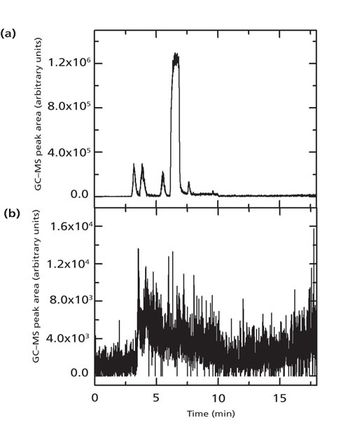
Solid-phase microextraction (SPME) in conjunction with gas chromatography–mass spectrometry (GC–MS) is a simple and effective way to sample analytes. Ordinarily the coated fiber is rid of compounds during desorption in the GC, allowing for the analysis of a new sample. Carryover of the analyte between samples, however, is a problem with many chemicals. Our data shows that heating the fiber in a high temperature injection port for only 2 min between runs prevents carryover. The short heating between samples improves the linearity of the peak area versus concentration relationship over four orders of magnitude of concentration, with a limit of detection below 10-7 M in every case. Although carryover is an acknowledged problem with SPME fibers, such short conditioning steps are rarely considered as a means to eliminate it; this study suggests that they should be evaluated as an option.

LCGC North America
Interest in chromatography using hydrophilic interaction liquid chromatography (HILIC) has continued to build in recent years. Adoption of the technique has been slowed by experiences of poor reproducibility. In particular, re-equilibration times in HILIC have been reported as being exceptionally long as compared to reversed-phase chromatography. In this study, re-equilibration times in HILIC, for both aqueous–organic gradients and buffer gradients are systematically explored. The results not only promise to improve method development practices, but also provide insight into HILIC retention mechanisms across mechanistically differing polar stationary phases.
LCGC North America
Lawrence W. Potts, Emeritus Prof. of Chemistry, Gustavus Adolphus College reviews Mark F. Vitha's new book from Wiley, "Chromatography: Principles and Instrumentation."
LCGC Europe
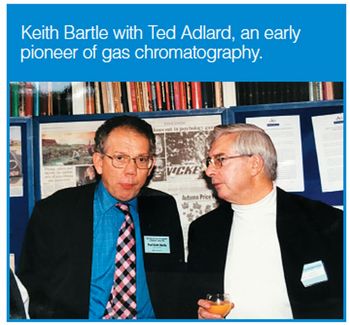
Keith Bartle, Emeritus Professor of Physical Chemistry and Visiting Professor in the Energy Centre of the University of Leeds, UK, has been a creative catalyst in a wide range of chromatographic collaborations stretching from the analysis of methane in air to printing inks. He spoke to Caroline West from the University of Orléans, in Orléans, France, about his career in chromatography and his proudest scientific achievements in separation science, including his research in supercritical fluid chromatography (SFC), gas chromatography (GC), and “the unified chromatograph”.
LCGC Europe
A reader’s problem of a method that fails the repeatability requirement of the system suitability test serves as an example of how to approach liquid chromatography (LC) method troubleshooting.

LCGC Europe
The 23rd International Symposium on Separation Sciences (ISSS 2017) will be held from 19–22 September 2017 at the Vienna University of Technology, located in the heart of the historic Vienna city centre in Austria.

LCGC Europe
Interest in chromatography using hydrophilic interaction liquid chromatography (HILIC) has continued to build in recent years. Adoption of the technique has been slowed by experiences of poor reproducibility. In particular, reequilibration times in HILIC have been reported as being exceptionally long as compared to reversed-phase chromatography. In this study, reequilibration times in HILIC for both aqueous–organic gradients and buffer gradients are systematically explored. The results not only promise to improve method development practices, but also provide insight into HILIC retention mechanisms across mechanistically differing polar stationary phases.

The Application Notebook
Opiate abuse is drastically on the rise in the United States. In addition to traditional naturally occurring opiate compounds, forensic toxicologists also need to be able to rapidly identify synthetic opioid-like drugs. A rapid, three-step solid-phase extraction (SPE) procedure for the identification and quantification of fentanyl and its major urinary metabolite norfentanyl, in addition to four “designer” compounds, U-47700, W-18, W-15, and furanyl fentanyl, is presented here. As a result of the rapid use and abuse of fentanyl in medical and recreational settings, respectively, it is important to develop a method that can accurately extract this Schedule II drug from any other novel compounds that may be present.
Researchers investigating paper mill effluents and their impact on surface waters in Slovenia have identified endocrine disrupting compounds (EDCs) and their mutagenic and genotoxic properties using gas chromatography–mass spectrometry (GC–MS).

The Column
The vast majority of macromolecules exhibit a molar mass distribution that is often described by the polydispersity index (PDI). This Tips & Tricks instalment offers practical advice to consider when analyzing macromolecules using liquid chromatography (LC).

The Column
The degree and strength of self-association are critical quality attributes for insulin and its analogues. In this article we present the label-free determination of these quantities using composition-gradient multi-angle light scattering (CG-MALS), enabling the formulation of engineered insulin optimized for stability and efficacy.

The Column
A preview of the 8th International Symposium on the Separation and Characterization of Natural and Synthetic Macromolecules (SCM-8).

The Column
The ability of size-exclusion chromatography (SEC) to measure critical protein characteristics, such as molecular weight and size, makes the technique valuable from the early stages of novel protein research and development through to formulation and manufacturing support, especially in oligomeric purity and aggregation studies. However, informational output, ease of analysis, and sample requirements all vary considerably depending on whether a system has been truly optimized for protein characterization. This article examines how SEC works and considers how to maximize the productivity, sensitivity, and value of an SEC setup for biopharmaceutical development.

Special Issues

Special Issues

Special Issues
Special Issues