The Column
Click the title above to open The Column November 07, 2016 North American issue, Volume 12, Number 20, in an interactive PDF format.
The Column
Click the title above to open The Column November 07, 2016 North American issue, Volume 12, Number 20, in an interactive PDF format.
LCGC North America
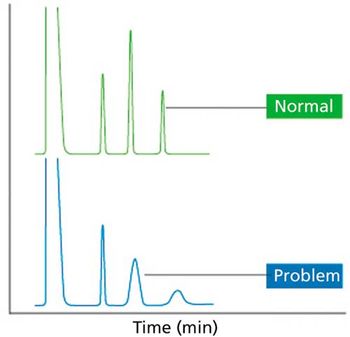
Five simple pictures that reveal problems with your GC analysis – and how to fix them!
LCGC Asia Pacific
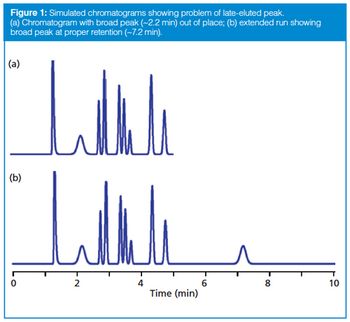
What could be causing a peak to be eluted before the column dead time?

LCGC Asia Pacific
The use of antibodies in “bottom-up” LC–MS workflows to determine low abundant biological active proteins in complex human samples has increased in recent years: immuno-capture analysis combines the workflow of conventional immunological assays with LC–MS analysis. This paper describes typical challenges, such as cross reactivity and the mass spectrometer’s dynamic range, as well as the advantages of isoform differentiation and multiplexing. Additionally, some experimental formats of immuno-capture bottom-up LC–MS analysis of biological active proteins in complex human samples will be discussed.
LCGC Asia Pacific
The 44th International Symposium of High Performance Liquid Phase Separations and Related Techniques (HPLC 2016), chaired by Professor Robert Kennedy, was held 19–24 June in San Francisco, California, USA, at the Marriott San Francisco Marquis. This instalment of “Column Watch” covers some of the highlights observed at the symposium, including stationary-phase developments, particle technology, and areas of growing application of high performance liquid chromatography (HPLC). In addition, trends and perspectives on future developments in HPLC noted from the conference are presented.

LCGC Europe
A chiral ionic liquid, namely 1-ethyl-3-methyl imidazole L-tartrate ([EMIM][L-Tar]), was applied as a new chiral ligand for the separation of tryptophan, tyrosine, and phenylalanine enantiomers by chiral ligand exchange capillary electrophoresis (CE). To validate the unique behaviour of [EMIM][L-Tar], the performance of L-tartaric acid and 1-ethyl-3-methyl imidazole L-proline as chiral ligands was investigated to make a comparison with [EMIM][L-Tar]. Then the separation mechanism was further discussed. It was proven that [EMIM][L-Tar] was a good chiral ligand and would have good application prospects in separation science.

LCGC Europe
What could be causing a peak to be eluted before the column dead time?

LCGC Europe
Blood is perhaps the most widely used sample fluid in bioanalysis. Dried blood spot (DBS) sampling has been used in clinical applications for more than 50 years, but it is recently seeing a resurgence of interest. DBS sampling holds several advantages associated with the use of small sample sizes obtained via finger pricks, including simplicity and biohazard reduction. In the previous instalment, we gave an overview of microsampling in bioanalysis (1). This month, we dig deeper into bioanalysis using DBS sampling.
LCGC Europe
This month’s “GC Connections” continues the discussion of procedures for safe setup, use, and disposal of compressed gas cylinders in the chromatography laboratory.

LCGC Europe
Although enzyme immunoassay (EIA) is a prevalent screening technique, it is also prone to issues such as high false positive rates because of lack of analyte specificity. Mass spectrometry was therefore investigated as an alternative screening technique for the ability to improve analyte specificity on a comparable time scale. In this study, a rapid on-line sample preparation and injection (ROSPI) method was developed using a commercially available guard cartridge on a conventional liquid chromatography–tandem mass spectrometry (LC–MS/MS) system. Using a two-point calibration curve to provide semi-quantitation, a robust method was developed and validated that improved upon the high false positive rate observed in immunoassay screening.

LCGC Europe
The 41st International Symposium on Capillary Chromatography (ISCC) and the 14th GC×GC Symposium will return to the city of Fort Worth “Gateway to the West”, Texas, USA, in 2017.

Special Issues
An introduction from the guest editors of this special supplement

Special Issues
This article presents a selection of state-of-the-art analytical tools for mAb characterization and comparability assessment.
LCGC Asia Pacific
Click the title above to open the LCGC Asia Pacific November 2016 regular issue, Vol 19, No 4, in an interactive PDF format.
LCGC Europe
Click the title above to open the LCGC Europe November 2016 regular issue, Vol 29, No 11, in an interactive PDF format.
Special Issues
Click the title above to open the LCGC North America November 2016 Advances in Biopharmaceutical Analysis Supplement, Vol 34 No s11, in an interactive PDF format.
LCGC North America
Click the title above to open the LCGC North America November 2016 regular issue, Vol 34 No 11, in an interactive PDF format.
LCGC Asia Pacific
Many gas chromatographers are not fully aware of safe practices for handling high-pressure gas cylinders. Gas chromatography (GC) operators should be trained to properly transport, install, connect, and maintain their gas supplies, as well as to deal with emergencies. In the first of a two-part series, this month’s “GC Connections” examines the principal hazards and safety issues surrounding the compressed gas cylinder. Next month’s instalment will present safe procedures for routine cylinder use.
The Column
A group of researchers have characterized carotenoid and chlorophyll in different sweet bell peppers using offline multidimensional supercritical fluid chromatography (SFC) combined with reversed-phase liquid chromatography (LC) for the first time.
The Column
Phenomenex has announced that it will be acquired by Danaher Corporation, a Fortune 150 science and technology company. Phenomenex will continue to operate as a standalone company, and will retain the Phenomenex brand, its personnel, and site locations.

The Column
Discovering and identifying molecular biomarkers in large liquid chromatography–mass spectrometry (LC–MS) data sets requires automation without loss of accuracy. Benjamin Van Mooy from the Wood Hole Oceanographic Institution reveals a lipidomics strategy using LOBSTAHS to identify lipid, oxidized lipid, and oxylipin biomarkers in high mass accuracy high performance (HP) LC–MS data.