The Bio-analytical contract testing company Eurofins Scientific (Luxembourg) has started a new program of start-up openings to further enlarge its footprint in its fastest-growing markets.

The Bio-analytical contract testing company Eurofins Scientific (Luxembourg) has started a new program of start-up openings to further enlarge its footprint in its fastest-growing markets.

If you want to improve analytical methods to make them better, the sample preparation step is probably one of the best steps to target.

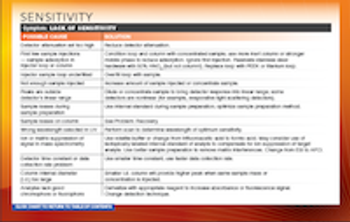
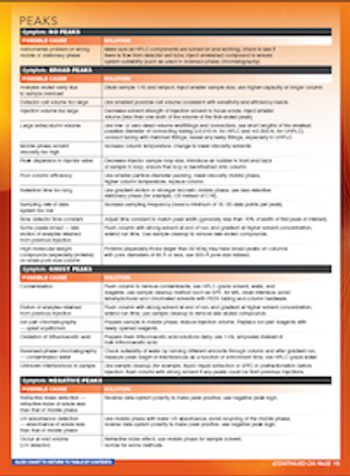
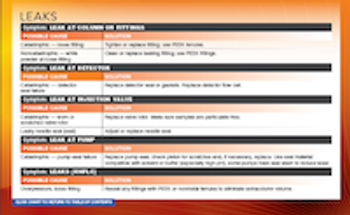
Tips & Tricks GPC/SEC: How to Care for your GPC/SEC Instrument

Extracts of wild blueberries (Vaccinium angustifolium Ait.) contain bioactive molecules that could be used in the development of new therapeutic treatments for the dental disease periodontitis.

Gas chromatography–mass spectrometry (GC–MS) could be used to aid the characterization of breast cancer cells.

Click the title above to open The Column October 05, 2015 Europe & Asia issue, Volume 11, Number 18, in an interactive PDF format.

Click the title above to open The Column October 05, 2015 North American issue, Volume 11, Number 18, in an interactive PDF format.

Advances in Biopharmaceutical Analysis

With the top-selling mAbs evolving out of patent there has been a growing interest in the development of biosimilars. In demonstrating comparability to the originator product, biosimilar developers are confronted with an enormous analytical challenge. This article presents a selection of state-of-the-art analytical tools for mAb characterisation and comparability assessment.

Click the title above to open the LCGC Europe October 2015 Advances in Biopharmaceutical Analysis Supplement, Vol 28, No s10, in an interactive PDF format.

Here in the second part of this series, the key system architecture requirements for a CDS in a regulated environment are discussed.

Gas chromatography, ICP-MS, ICP-OES, and other bulk analysis methods applied to groundwater in proximity to unconventional oil and natural gas extraction activities.

The connection of a quantum spectral fingerprint to molecular structure makes spectroscopy ideal for chemical detection. Even with the broad utility of chromatography and mass spectrometry, there is still a rigor to expand the applicability of high resolution spectroscopy by miniaturizing FT-NMR and enhancing the performance of mid-IR techniques. While IR instrumentation experts have been incorporating the latest diode lasers, molecular rotational resonance (MRR) spectroscopists have designed a digital, solid-state approach to reach subTerahertz (millimeter/submillimeter-wave) molecular spectroscopy from the radio regime. Recent innovations for FT-MRR techniques have finally brought millimeter-wave spectroscopy into the modern age. FT-MRR spectroscopy is applied here to gas analyses, air analysis, and headspace analysis for sensitive, chemically specific detection of VOCs without the need for lasers, chemometrics, or chromatography.

Sample pre-treatment is one of the bottlenecks in analytical chemistry specially when dealing with complex matrices like environmental samples. When performed in a batch mode, sample handling methods are tedious and time consuming. Therefore, the hyphenation of these methods with flow injection techniques yields many advantages. The possibility of automation not only increases the determination rate, but also decreases sample and reagent consumption. As a consequence, analyte separation, enrichment, and elimination of sample matrix becomes possible with an increase in selectivity and sensitivity. This is a significant contribution for the analysis of environmental samples as the analyte is usually present at trace levels in a complex matrix. In this scenario, the state of the art of solid phase spectrometry (SPS) with a focus on the lab-on-valve (LOV) platform is discussed. LOV facilitates the manipulation of bead suspension for SPS with lower reagents consumption and waste production.

This article describes a cost-effective and sensitive approach for quantifying waterborne arsenic based on gas-phase chemiluminescence. The approach centers on the use of laboratory-built instruments-one for laboratory use and one field-deployable version-that can quantify total arsenic as well as individually measure As(III) and As(V). The regulatory limit for arsenic in drinking water is 10 μg/L. The limits of detection of the gas-phase chemiluminescence instruments are well below 1 μg As/L and the linear range extends to >100 μg As/L. Total arsenic analysis using this approach requires 3 min.

Here we highlight some of the opportunities associated with combining advanced sample preparation techniques with state-of-the-art chemical analysis techniques. This article considers the unique combination of selective pressurized liquid extraction (SPLE) with gas chromatography coupled with mass spectrometry (MS) and ultra-performance liquid chromatography coupled with tandem MS-MS (UPLC-MS-MS). We use this powerful combination to develop a novel analytical technique capable of measuring hormones and organic contaminants in whale earwax plugs. We explore the analytical challenges with such combinations and the advantages of focusing both on sample preparation as well as instrumentation associated with chemical analysis.


Proper implementation is key to the performance of your SPE analyses. Look out for the common mistakes explained here.

An excerpt from LCGC’s e-learning tutorial on solid-phase extraction at CHROMacademy.com

In GC split injection systems as much as 99% or more of the injected sample never enters the column: It is released downstream of the inlet where it can encounter and possibly perturb precision gas control devices. The split-vent trap acts to prevent or at least moderate such effects. This month’s instalment addresses the operation and maintenance of split-vent traps.

Given some recent, significant safety incidents, this month we step back and take a quick refresher on safety concerns to be aware of during our sample preparation activities.

The 40th International Symposium on Capillary Chromatography (ISCC) and the 13th GC×GC Symposium will once again be held in Riva del Garda, Italy, from 29 May to 3 June 2016.

Are your solvent costs too high? Here are some ideas about how to decrease the amount of mobile phase you use.


Are your solvent costs too high? Here are some ideas about how to decrease the amount of mobile phase you use.

Click the title above to open the LCGC Europe October 2015 regular issue, Vol 28, No 10, in an interactive PDF format.

Click the title above to open the LCGC North America October 2015 regular issue, Vol 33 No 10, in an interactive PDF format.