This is the final instalment of a series of articles exploring current topics in separation science that will be addressed at the HPLC 2017 conference in Prague, Czech Republic, from 18–22 June.
This is the final instalment of a series of articles exploring current topics in separation science that will be addressed at the HPLC 2017 conference in Prague, Czech Republic, from 18–22 June.

Eurofins Scientific (Luxembourg), an international group of laboratories, has plans to establish a new pharmaceutical chemistry and microbiology facility in Livingston, Scotland.
The Column
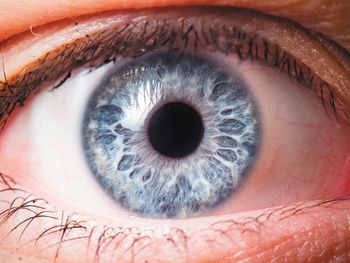
Researchers from the Medical University of Bialystok, Poland, have used metabolomics and liquid chromatography quadrupole time‑of‑flight mass spectrometry (LC–QTOF‑MS) to study human ocular fluids.

The Column
Incognito offers his advice on how to be a leader rather than a manager.
The Column
Waters Corporation has announced the opening of a new Solution Centre in Petaling Jaya, Selangor, Malaysia. The new facility is designed to advance liquid chromatography and mass spectrometry analytical capabilities, developing new applications and offering training to scientists within its demonstration and training facilities.
The Column
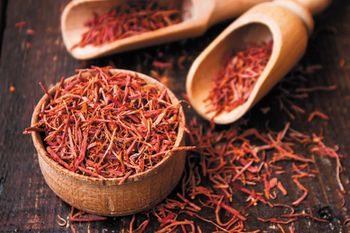
Researchers from the University of Chemistry and Technology in Prague, Czech Republic, have developed a saffron authentication process based on ultrahigh-performance liquid chromatography coupled to high resolution tandem mass spectrometry (UHPLC–HRMS/MS) and multivariate data analysis.
The Column
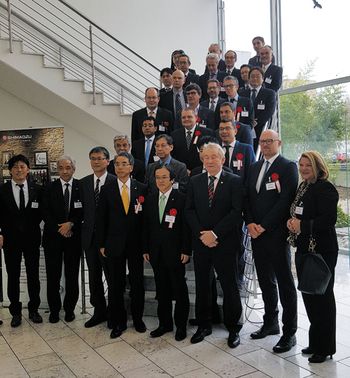
Shimadzu Corporation has opened a new European Innovation Center in Duisburg, Germany. The new facility will merge Shimadzu’s state-of-the-art analytical technologies with prominent topics, market expertise, and scientific research guided by some key opinion leaders.
The Column
Reach Separations is celebrating its 5th anniversary with a record year of growth.
The Column
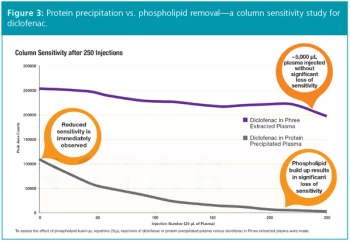
This article describes the evolution of traditional solid-phase extraction (SPE) into new techniques that are customized to the characteristics of specific matrices, including the removal of β-glucuronidase from urine samples and the removal of phospholipids and proteins from plasma samples.

The Column
The 41st International Symposium on Capillary Chromatography (ISCC) and the 14th GC×GC Symposium will be held in Fort Worth, Texas, USA, on the 14–19 May 2017. This preview offers a flavour of what to expect.
The Column
Click the title above to open The Column April 11, 2017 Europe & Asia issue, Volume 13, Number 5, in an interactive PDF format.
The Column
Click the title above to open The Column April 11, 2017 North American issue, Volume 13, Number 5, in an interactive PDF format.

The Column
Ellutia Chromatography Solutions has opened a new state‑of‑the-art facility in Ely, Cambridgeshire, UK, consolidating Ellutia’s offices, laboratories, production, and warehouse on one 15,000 sq. ft. site.

As I’ve written previously, our Nirvana in HPLC column selection would be to enter the structures of our analytes and have a database tell us the column and mobile phase conditions that we should use to carry out the separation successfully. Although I know of several groups who are working on this, in practice we are still a long way from realizing this goal.

LCGC North America
Our annual review of new liquid chromatography (LC) columns and accessories introduced at Pittcon and throughout the previous year.

LCGC North America
The approach described here will help chromatographers produce highly efficient method development strategies for reversed-phase LC separations in a relatively short time frame.

LCGC Europe
We will discover how to find the “sweet spot” in terms of retention for a liquid chromatographic separation as well as how much retention change can be expected for a selected change in organic mobile-phase percentage or column temperature.

LCGC Europe
Our annual review of new liquid chromatography (LC) columns and accessories introduced at Pittcon and throughout the previous year.

LCGC Europe
The 30th International Symposium on Polymer Analysis and Characterization (ISPAC) will take place in Linz, Austria, on 11–14 June 2017.
LCGC Europe
Click the title above to open the LCGC Europe April 2017 regular issue, Vol 30, No 4, in an interactive PDF format.
LCGC North America
Click the title above to open the LCGC North America April 2017 regular issue, Vol 35 No 4, in an interactive PDF format.

I have written previously about occupying the middle ground in the debate over the environmental implications of unconventional oil and gas extraction operations. It seems we are just in the right place, when we are criticized and praised at separate times by proponents of both extreme views-namely those who think UOG is perfectly safe and those who think it cannot be done without ruining the environment.
This is the first in a series of articles exploring current topics in separation science that will be addressed at the HPLC 2017 conference in Prague, Czech Republic, from 18–22 June.
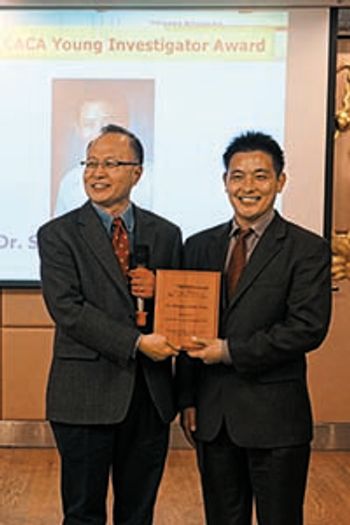
Shuang (Jake) Yang was presented with the Chinese American Chromatography Association (CACA) 2017 Young Investigator Award on Tuesday, March 7, at a networking dinner event in Chicago, Illinois.

Researchers from the University of Chemistry and Technology in Prague, Czech Republic, have developed a saffron authentication process based on ultrahigh-performance liquid chromatography coupled to high resolution tandem mass spectrometry (UHPLC–HRMS/MS) and multivariate data analysis.