

The Column
Waters Corporation and BioCity have celebrated the opening of a new open access analytical laboratory located in the BioHub at Alderley Park, Cheshire, UK.
The Column
Waters Corporation and BioCity have celebrated the opening of a new open access analytical laboratory located in the BioHub at Alderley Park, Cheshire, UK.

The Column
A preview of The Chromatographic Society’s first meeting in 2016, which will take place on Tuesday 22 March in London, UK.
The Column
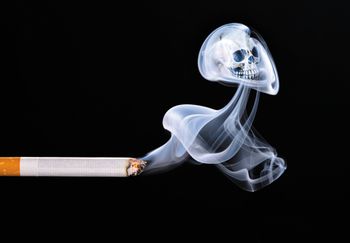
Researchers studying necrophargous blowflies for forensic investigations have developed a novel gas chromatography–mass spectrometry (GC–MS) method for the detection of nicotine. Nicotine has been attributed to a number of accidental or sudden, suicidal, and homicidal deaths.

The Column
A team of researchers from China and the USA has developed a LC–MS–MS method for quantifying methylergonovine, a semi-synthetic ergot alkaloid used for the treatment and prevention of postpartum haemorrhage in human plasma.
The Column
Click the title above to open The Column March 09, 2016 Europe & Asia issue, Volume 12, Number 4, in an interactive PDF format.
The Column
Click the title above to open The Column March 09, 2016 North American issue, Volume 12, Number 4, in an interactive PDF format.
LCGC Asia Pacific
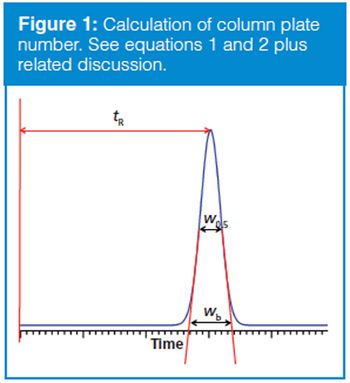
How suitable is the column plate number for system suitability testing?
LCGC Asia Pacific
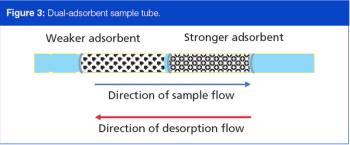
Thermal desorption sampling often provides a means for bringing otherwise intractable samples to a gas chromatography (GC) column for separation and detection. In this instalment, John Hinshaw describes the principles of thermal desorption sampling in relationship to other analysis techniques for volatile solutes.

The literature on reversed-phase liquid chromatography of proteins is reasonably well developed, but not taught in the college classroom to a significant degree. So I would like to focus on a stoichiometric displacement model for reversed-phase LC of proteins that I found to be particularly insightful from a practical standpoint.
This afternoon, the winners of the LCGC Awards will be honored in an oral symposium at Pittcon. Milton L. Lee of Brigham Young University will receive the 2016 LCGC Lifetime Achievement Award at 1:30, and Debby Mangelings of the Free University of Brussels (Vrie Universiteit Brussel), will receive the 2016 LCGC Emerging Leader Award at 3:45 pm, just after the break. The symposium will be held in room B314.
The 2016 Chromatography Forum of the Delaware Valley Dal Nogare Award will be presented to Stephen Weber, who is a Professor of Chemistry and Clinical Translational Science at the University of Pittsburgh, on Monday morning at Pittcon 2016. The award will be presented by Mary Ellen McNally of EI DuPont de Nemours and Company. The Chromatography Forum of the Delaware Valley chooses award recipients based on their contributions to the fundamental understanding of the chromatographic process. The award was established in honor of Stephen Dal Nogare, who died in 1968 after serving for six months as president of the Chromatography Forum.
This Monday morning session will be presided over by Archana Kumar of Genentech (San Francisco, California).
The 2016 Pittsburgh Conference Achievement Award will be presented to Jared L. Anderson, who is a Professor in the Department of Chemistry at Iowa State University, on Monday morning at Pittcon 2016. The award will be presented by Elias S. Absey, the chair of the Society for Analytical Chemists of Pittsburgh (SACP). The Pittsburgh Conference Achievement Award is presented annually by the SACP at Pittcon to recognize individuals for outstanding achievements in the fields of analytical chemistry or applied spectroscopy within 10 years after completion of their PhD work.
Special Issues
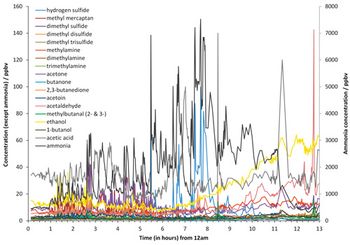
The sensitive, selective, and real-time analysis characteristic of the SIFT-MS technique provides simple, robust, and continuous analysis of extremely diverse odor compounds at trace levels in air. This application note illustrates instantaneous, broad spectrum odor analysis with monitoring data from a chicken meat production facility.

LCGC Europe
How suitable is the column plate number for system suitability testing?
LCGC Europe
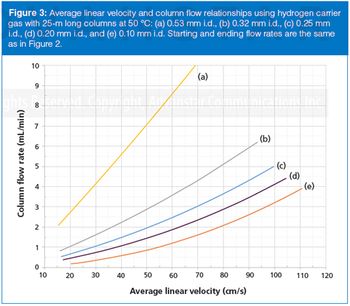
Chromatographers often use the terms carrier-gas flow and velocity interchangeably when discussing column parameters. In liquid chromatography, the two terms scale together, but in gas chromatography they do not. This month’s “GC Connections” investigates the reasons for this non-intuitive behaviour and how it affects best practices for gas chromatographers.
LCGC Europe
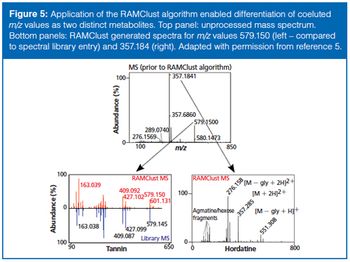
The power of nontargeted metabolite profiling is illustrated in a study focused on the determination of molecular markers in malting barley that are predictive of desirable malting quality for brewing applications.
The Application Notebook
The Application Notebook
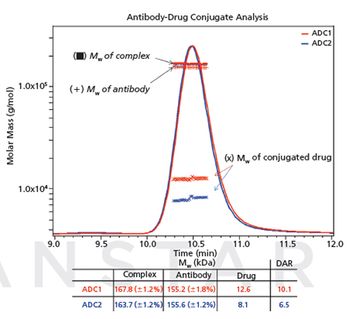
The Application Notebook
LCGC Asia Pacific
Click the title above to open the LCGC Asia Pacific March 2016 regular issue, Vol 19, No 1, in an interactive PDF format.
LCGC Europe
Click the title above to open the LCGC Europe March 2016 regular issue, Vol 29, No 3, in an interactive PDF format.
LCGC North America
Click the title above to open the LCGC North America March 2016 regular issue, Vol 34 No 3, in an interactive PDF format.
Special Issues
Click the title above to open the March 2016 issue of Current Trends in Mass Spectrometry, Volume 14, Number 1, in an interactive PDF format.
The Column
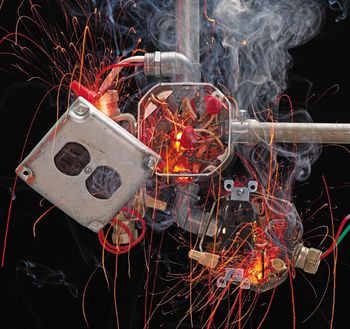
Incognito offers some advice that is not to be taken lightly!

The Column
Aflatoxins are poisonous and carcinogenic chemicals that occur in nature in soil, hay, and grains. When contaminated food is processed, aflatoxins can enter the general food supply chain and can be dangerous for humans and animals. Time- and cost-efficient analytical methods can ensure food safety. Compared to conventional manual methods the use of “supercritical” CO2 for supercritical fluid extraction (SFE) as well as chromatographic separation (supercritical fluid chromatography [SFC]) of aflatoxins offers a more efficient process while reducing solvent consumption.
The Column
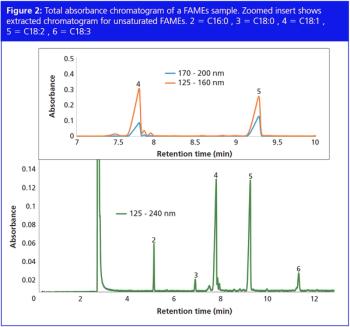
The powerful characteristics of gas chromatography (GC) with VUV (vacuum ultraviolet) detection for the analysis of saturated and unsaturated fatty acids are described.

The Column
The 9th International Symposium on Packed Column SFC (SFC 2015) was held in Philadelphia, Pennsylvania, USA, on 22–24 July 2015. Selected highlights of both the oral and poster SFC 2015 programmes are reviewed in this synopsis.

The Column
The Norwegian Institute of Public Health conducted a study into the drug use habits of nightclubbers and arrested criminals in Oslo, Norway. The study used UHPLC–MS–MS to analyze the drug-use profiles of nightclubbers and criminals arrested while under the influence of drugs to develop an understanding of drug use patterns in these groups.