

All News
Advertisement
LCGC Asia Pacific
Click the title above to open the LCGC Asia Pacific June 2016 regular issue, Vol 19, No 2, in an interactive PDF format.
Advertisement
LCGC Europe
Click the title above to open the LCGC Europe June 2016 regular issue, Vol 29, No 6, in an interactive PDF format.
The Application Notebook
Click the title above to open the LCGC North America June 2016 regular issue, Vol 34 No 6, in an interactive PDF format.
LCGC North America
Click the title above to open the LCGC North America June 2016 regular issue, Vol 34 No 6, in an interactive PDF format.

The Column
Following a successful launch last year, Shimadzu’s Lab4You program is once again accepting applications from young and enthusiastic researchers hoping to advance their research.
Advertisement

The Column
This is the third in a series of articles exploring topics that will be addressed at the HPLC 2016 conference in San Francisco, USA, from 19 to 24 June.
The Column
LGC Standards has been awarded a Responsible Sourcing status by Sedex for its Standards division in Germany. A non-profit membership organization, Sedex is dedicated to improving responsible and ethical business practices in global supply chains.

The Column
Researchers from the USA have developed a simple and derivatization-free gas chromatography (GC) method for the quantitative analysis of oleic acid and related fatty acids.
Advertisement

The Column
Researchers from Universidade Federal de Minas Gerais, Brazil, have used multiple analytical techniques including IEC and ATR‑FTIR spectroscopy to investigate bovine meat adulteration.

The Column
Incognito’s search for the Holy Grail(s) of chromatography continues.
LCGC North America

The Column
Monoclonal antibody (mAb) treatment is among the most effective method of diagnosis and treatment of a broad range of diseases, including autoimmune disorders, cardiovascular diseases, infectious diseases, cancer, and inflammation. There is an extensive development pipeline for protein and mAb therapeutics, emphasizing the need for innovative and efficient analytical tools that result in faster analysis times. This article explores the use of supermacroporous particles for the analysis of mAbs.

The Column
To mark the Chromatographic Society’s 60th birthday, The Column interviewed the current President of The Chromatographic Society, Dr. Paul Ferguson, and Associate Principal Scientist for Separation Science at AstraZeneca, Macclesfield, UK, on the past, present, and future of the Chromatographic Society - and separation science.
The Column
Click the title above to open The Column May 24, 2016 Europe & Asia issue, Volume 12, Number 9, in an interactive PDF format.
The Column
Click the title above to open The Column May 24, 2016 North American issue, Volume 12, Number 9, in an interactive PDF format.
The increased use of electronic data and computerized systems has introduced new challenges to maintaining data integrity. With regulated companies under increased scrutiny by regulatory authorities, companies need to ensure they have a thorough understanding of their regulated systems and how to assess them for gaps. Waters will provide insight on the current focus for data integrity with specific examples of how to monitor Waters Empower data. We will also provide additional tools and services that can help prepare for internal and external audits.
Researchers from the USA have developed a simple and derivatization-free gas chromatography (GC) method for the quantitative analysis of oleic acid and related fatty acids.
LCGC Europe
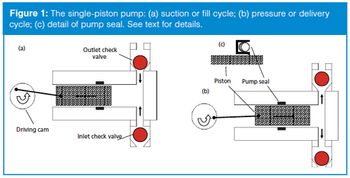
Understanding how liquid chromatography pumps operate can help streamline solving pump problems.

LCGC Europe
The International Symposium on GPC/SEC and Related Techniques will be held at the Novotel in Amsterdam, Netherlands from 27–29 September 2016.

The Column
Branching is one of the parameters chemists can adjust to produce polymer materials with optimized physical properties. Chromatography and advanced detection can help to characterize branched molecules. This instalment of Tips & Tricks explains more.

Special Issues
A brief introduction of the article presented in this supplement.

Special Issues
When selecting the optimum phase for SEC separations, several key column parameters must be considered carefully.

Special Issues
When selecting the optimum phase for SEC separations, several key column parameters must be considered carefully.

Special Issues
As clinical diagnostic assays move to LC–MS–MS, the emphasis has turned to emerging stationary phases that use alternative mechanisms of retention to separate the analyte–interference critical pairs.

Special Issues
Recent advances in chiral stationary phases have enabled higher efficiency and faster separations in studies of the differing enantiomeric activity of pesticides, their environmental transformation, and the degradation of pollutants in general.
Advertisement
Advertisement
Trending on LCGC International
1
Where LC-MS/MS Meets the ER Clock: The Case for Paper Spray-MS in Acute Drug Toxicity Screening
2
LC-MS/MS Reveals Fentanyl Tolerance in Users
3
Detecting Anabolic-Androgenic Steroids in E-cigarettes Seized from Scottish Prisons using GC–MS
4
Automated Sample Preparation for Oligonucleotide Bioanalysis Using Magnetic SPE
5