
LCGC North America
Strongly retained sample compounds can cause various changes in the appearance of a chromatogram.
LCGC North America
Strongly retained sample compounds can cause various changes in the appearance of a chromatogram.

LCGC North America
Cloud-point extraction (CPE) manipulates temperature and surfactant concentration to move aqueous solutes into a micelle phase for separation. Although CPE has been around for some time, it is still considered an emerging technique. Much of the development, and most applications, of CPE have dealt with extraction and preconcentration of inorganic solutes. More recently, attention has turned to the use of CPE in the isolation of organic solutes. This month, we review how CPE works and focus on applications for extracting organics.

LCGC North America
These GC–MS instrument setup requirements are critical to success.
LCGC Europe
Click the title above to open the LCGC Europe January 2016 regular issue, Vol 29, No 1, in an interactive PDF format.
LCGC North America
Click the title above to open the LCGC North America January 2016 regular issue, Vol 34 No 1, in an interactive PDF format.

There has been much written about the use of nitrogen as a carrier gas for capillary GC. Formerly, to say it wasn’t any good. Latterly to say that it’s pretty good and a better alternative to Helium than hydrogen from a practicality standpoint.

E-Separation Solutions
Anti-histamines and compounds used to medicate anxiety and seizures were among those identified in grocery market fish fillets using a novel gas chromatography–mass spectrometry (GC–MS) technique.

E-Separation Solutions
It is much more efficient to screen column chemistries to achieve optimum separations for a set of target analytes, than it is to play with different mobile-phase conditions on a single column. Kevin Schug explains more.
The Column
Click the title above to open The Column December 07, 2015 Europe & Asia issue, Volume 11, Number 22, in an interactive PDF format.
The Column
Click the title above to open The Column December 07, 2015 North American issue, Volume 11, Number 22, in an interactive PDF format.
Special Issues
Click the title above to open the LCGC North America December 2015 Corporate Capabilities Supplement, Vol 33 No s12, in an interactive PDF format.

LCGC North America
In the first two parts of this series we have looked at where and how a CDS fitted into a regulated laboratory and the overall requirements for the architecture of a future system. In this part we focus on new electronic ways of working for chromatographic analysis.
LCGC North America
A farewell letter from long-time LCGC columnist Ron Majors.
LCGC North America
A short guide to the do’s, don’ts and gotcha’s of eluent preparation for everyday HPLC

LCGC North America
In his final “Column Watch” article, Ron Majors looks into his crystal ball and discusses future needs in the area of HPLC/UHPLC column technology and related instrumentation. He looks at where current technology may be heading and makes a prediction that monolith-based columns may still have a rightful place in the HPLC/UHPLC laboratory .This article concludes his duration as a monthly columnist for LCGC.
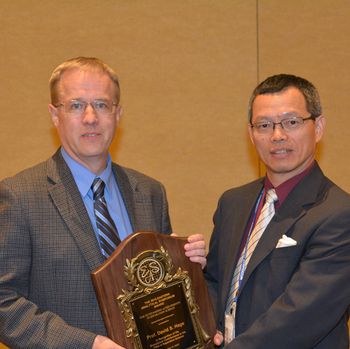
Professor David S. Hage was awarded the Outstanding Achievements in Separation Science Award at this year’s Eastern Analytical Symposium and Exposition (EAS). The award honours analytical chemists who have distinguished career achievements and advanced their fields of study with superior work by developing theory, technique or instrumentation.
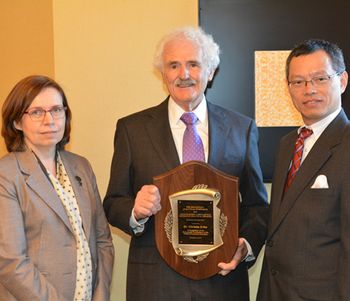
Professor Chris Enke won the Outstanding Achievements in the Fields of Analytical Chemistry Award at The Eastern Analytical Symposium and Exposition (EAS) this year. The award honours analytical chemists who have distinguished career achievements and advanced their fields of study with superior work by developing theory, technique or instrumentation.
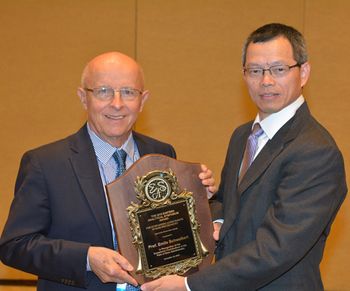
The 2015 Eastern Analytical Symposium and Exposition (EAS) Award for Outstanding Achievements in Mass Spectrometry has been awarded to Emile A. Schweikert, professor of Chemistry at Texas A&M University and Director of the University’s Center for Chemical Characterization & Analysis.
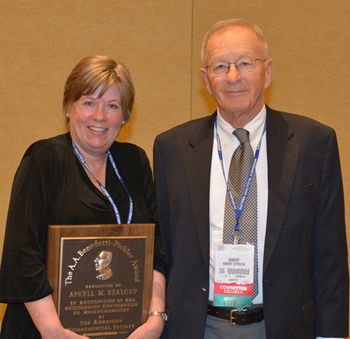
The 2015 American Microchemical Society Benedetti Pichler Award has been presented to Apryll Stalcup, Director of the Irish Separation Science Cluster and Professor of Chemical Sciences at Dublin City University, Ireland.
What does the FDA expect? How do you address lot-to-lot variability in the reference product?
Yes, the LC in LC-MS matters in metabolomics and proteomics - it's not all about the mass spec. Being an analytical chemist in a world of biological data.

LCGC Europe
In his final “Column Watch” instalment, Ron Majors looks into his crystal ball and discusses future needs in the areas of high performance liquid chromatography (HPLC) and ultrahigh-pressure liquid chromatography (UHPLC) column technology and related instrumentation.

LCGC Europe
Particulate matter from the sample or the system can cause havoc in the chromatogram.

The Column
Gel filtration chromatography (GFC) is the most widely used method for quantitating protein aggregates in therapeutic drugs. It is a simple method, but prone to error as a result of poor method development and column selection. GFC columns tend to non-specifically adsorb large proteins and aggregates resulting in poor quantitation of “true” aggregate amount. Sample “priming” and mobile phase optimization can help reduce such irregularities. Simple method development rules using new column technologies are presented that demonstrate improved accuracy for these methods.
The Column
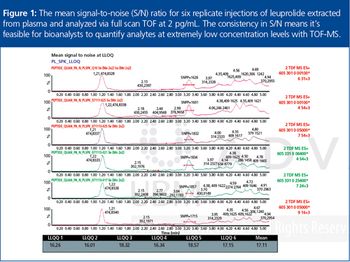
In an era where “more data in less time” is expected, bioanalytical scientists have had to become more resourceful. Consequently, bioanalytical laboratories are adopting and extending the use of high-resolution mass spectrometry (HRMS) and, in particular, time-of-flight high-resolution mass spectrometry (TOF-HRMS). One of the key benefits of TOF-HRMS is consistent resolution, sensitivity, and mass accuracy - even at high scan speeds with large molecules being analyzed.
The Column
It is with great sadness we announce the death of Professor Michel Dreux. Professor Dreux was a professor at the University of Orléans, France.

The Column
A new liquid chromatography tandem mass spectrometry (LC-MS-MS) method has been developed to study besifloxacin, which is used to treat bacterial conjunctivitis.
The Column
LGC (London, UK) has announced its acquisition of Maine Standards Company (Cumberland Foreside, Maine, USA).

The Column
Anti-histamines and compounds used to medicate anxiety and seizures were among those identified in grocery market fish fillets using a novel gas chromatography–mass spectrometry (GC–MS) technique (1).