

All News
Advertisement

The Column
Click the title above to open The Column January 2015 Europe & Asia issue, Volume 11, Number 19, in an interactive PDF format.
Advertisement
The Column
Click the title above to open The Column October 26, 2015 North American issue, Volume 11, Number 19, in an interactive PDF format.
E-Separation Solutions
Mars, Incorporated (McLean, Virginia, USA) has announced the opening of its Global Food Safety Center, a first-of-its-kind facility for pre-competitive research and training that aims to raise global food safety standards through collaboration.
Dr. Yoshio Kato, a noted researcher in chromatography, has passed away. Kato was a quiet personality who presented scientific findings in simple, understandable words, and he was a good friend. He passed away at the end of August 2015, at the age of 70.
Advertisement
In this video, Robert T. Kennedy of the University of Michigan discusses how derivatization can improve method sensitivity and speed in a study on chemical in vivo neuromonitoring using liquid chromatography–mass chromatography (LC–MS).

The LCGC Blog: Simple Visual Methods to Assess HPLC Column Performance – and Get You Out of Trouble!
A client asked me recently for a quick but "as optimized as possible" separation for some monoclonal antibody (MAb) characterization (digest) samples using LC-MS. The samples had been prepared and were awaiting analysis-typical forward planning! Actually his internal analytical department had changed their priority and he was left hanging.
EMD Millipore, the Life Science division of Merck KGaA, accepted a Silver Stevie Award for its AFS E Water Purification Systems at a banquet held on Friday, September 11, in San Francisco, California.
The 2015 Eastern Analytical Symposium and Exposition (EAS) takes place November 16–18, in Somerset, New Jersey. This year, attendees can expect plenty of educational and networking opportunities for analytical scientists.
Advertisement
The Bio-analytical contract testing company Eurofins Scientific (Luxembourg) has started a new program of start-up openings to further enlarge its footprint in its fastest-growing markets.

If you want to improve analytical methods to make them better, the sample preparation step is probably one of the best steps to target.

The Column
Tips & Tricks GPC/SEC: How to Care for your GPC/SEC Instrument
The Column
Extracts of wild blueberries (Vaccinium angustifolium Ait.) contain bioactive molecules that could be used in the development of new therapeutic treatments for the dental disease periodontitis.
The Column
Gas chromatography–mass spectrometry (GC–MS) could be used to aid the characterization of breast cancer cells.
The Column
Click the title above to open The Column October 05, 2015 Europe & Asia issue, Volume 11, Number 18, in an interactive PDF format.
The Column
Click the title above to open The Column October 05, 2015 North American issue, Volume 11, Number 18, in an interactive PDF format.

Special Issues
Advances in Biopharmaceutical Analysis

Special Issues
With the top-selling mAbs evolving out of patent there has been a growing interest in the development of biosimilars. In demonstrating comparability to the originator product, biosimilar developers are confronted with an enormous analytical challenge. This article presents a selection of state-of-the-art analytical tools for mAb characterisation and comparability assessment.
Special Issues
Click the title above to open the LCGC Europe October 2015 Advances in Biopharmaceutical Analysis Supplement, Vol 28, No s10, in an interactive PDF format.
LCGC North America
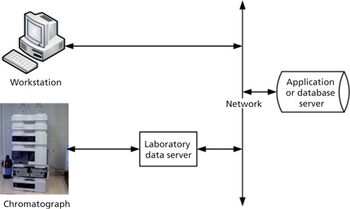
Here in the second part of this series, the key system architecture requirements for a CDS in a regulated environment are discussed.

Special Issues
Gas chromatography, ICP-MS, ICP-OES, and other bulk analysis methods applied to groundwater in proximity to unconventional oil and natural gas extraction activities.
Special Issues
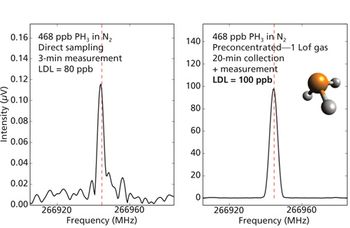
The connection of a quantum spectral fingerprint to molecular structure makes spectroscopy ideal for chemical detection. Even with the broad utility of chromatography and mass spectrometry, there is still a rigor to expand the applicability of high resolution spectroscopy by miniaturizing FT-NMR and enhancing the performance of mid-IR techniques. While IR instrumentation experts have been incorporating the latest diode lasers, molecular rotational resonance (MRR) spectroscopists have designed a digital, solid-state approach to reach subTerahertz (millimeter/submillimeter-wave) molecular spectroscopy from the radio regime. Recent innovations for FT-MRR techniques have finally brought millimeter-wave spectroscopy into the modern age. FT-MRR spectroscopy is applied here to gas analyses, air analysis, and headspace analysis for sensitive, chemically specific detection of VOCs without the need for lasers, chemometrics, or chromatography.

Special Issues
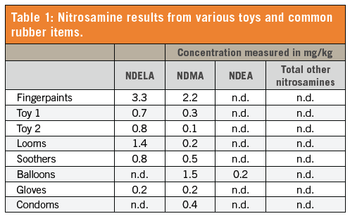
Sample pre-treatment is one of the bottlenecks in analytical chemistry specially when dealing with complex matrices like environmental samples. When performed in a batch mode, sample handling methods are tedious and time consuming. Therefore, the hyphenation of these methods with flow injection techniques yields many advantages. The possibility of automation not only increases the determination rate, but also decreases sample and reagent consumption. As a consequence, analyte separation, enrichment, and elimination of sample matrix becomes possible with an increase in selectivity and sensitivity. This is a significant contribution for the analysis of environmental samples as the analyte is usually present at trace levels in a complex matrix. In this scenario, the state of the art of solid phase spectrometry (SPS) with a focus on the lab-on-valve (LOV) platform is discussed. LOV facilitates the manipulation of bead suspension for SPS with lower reagents consumption and waste production.

Special Issues
This article describes a cost-effective and sensitive approach for quantifying waterborne arsenic based on gas-phase chemiluminescence. The approach centers on the use of laboratory-built instruments-one for laboratory use and one field-deployable version-that can quantify total arsenic as well as individually measure As(III) and As(V). The regulatory limit for arsenic in drinking water is 10 μg/L. The limits of detection of the gas-phase chemiluminescence instruments are well below 1 μg As/L and the linear range extends to >100 μg As/L. Total arsenic analysis using this approach requires 3 min.
Special Issues
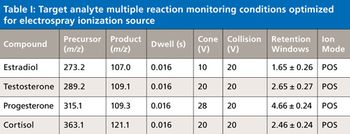
Here we highlight some of the opportunities associated with combining advanced sample preparation techniques with state-of-the-art chemical analysis techniques. This article considers the unique combination of selective pressurized liquid extraction (SPLE) with gas chromatography coupled with mass spectrometry (MS) and ultra-performance liquid chromatography coupled with tandem MS-MS (UPLC-MS-MS). We use this powerful combination to develop a novel analytical technique capable of measuring hormones and organic contaminants in whale earwax plugs. We explore the analytical challenges with such combinations and the advantages of focusing both on sample preparation as well as instrumentation associated with chemical analysis.

The Application Notebook

The Application Notebook
Advertisement
Advertisement
Trending on LCGC International
1
Where LC-MS/MS Meets the ER Clock: The Case for Paper Spray-MS in Acute Drug Toxicity Screening
2
LC-MS/MS Reveals Fentanyl Tolerance in Users
3
Detecting Anabolic-Androgenic Steroids in E-cigarettes Seized from Scottish Prisons using GC–MS
4
Automated Sample Preparation for Oligonucleotide Bioanalysis Using Magnetic SPE
5