

The Column
Click the title above to open The Column November 06, 2015 North American issue, Volume 11, Number 20, in an interactive PDF format.
The Column
Click the title above to open The Column November 06, 2015 North American issue, Volume 11, Number 20, in an interactive PDF format.

The Column
The second part of the review on the two-day symposium focusing on the characterization of biopharmaceutical molecules at AstraZeneca’s MedImmune site in Cambridge, UK.

The Column
A new method for the simultaneous determination of emerging and persistent organic pollutants (POPs) in fish bile samples has been developed using gas chromatography–mass spectrometry (GC–MS).

The Column
Accounting for the inherent heterogeneity of monoclonal antibodies is essential to ensure production of consistent and safe therapeutics and, in light of this, there is an array of chromatographic and supporting regulatory systems. Robust characterization and analysis of monoclonal antibodies is becoming a fast and straightforward process thanks to the myriad technological advances underpinning this rapidly evolving area.


Special Issues
Ron Majors’s personal recollections on the first 50 years of column development-with perspectives on what was going on behind the scenes, particularly during the exciting early days-including a summary of his early publications that contributed to development of HPLC column technology.
Special Issues
Ron Majors’s personal recollections on the first 50 years of column development-with perspectives on what was going on behind the scenes, particularly during the exciting early days-including a summary of his early publications that contributed to development of HPLC column technology.

LCGC Europe
The term dead volume often comes up in chromatography discussions and literature. This month we address the nature of this phenomenon, when it can become a problem that affects chromatographic results, and how to understand and take control of it.

LCGC Europe
Primary record is a term that was defined by the MHRA (Medicines and Healthcare products Regulatory Agency, the UK drug regulator) in data integrity guidance issued in 2015. In this instalment of Questions of Quality we explore what this term means in practice, and compare it with raw data in the European Union Good Manufacturing Practices (EU GMPs) and complete data in US Food and Drug Administration (FDA) GMPs. Why can’t we have harmonization of terms?

Special Issues
A summary of the results from a survey of 14 leading HPLC–UHPLC column experts is presented, covering the state of sub-2-?m porous particles, superficially porous (core–shell) particles, silica monoliths, and polymeric monoliths.

LCGC Asia Pacific
This article presents a method for comparing the levels of baseline interference arising from common laboratory mobile phase contamination sources and assesses different approaches for removing dissolved contaminants to generate interference-free chromatogram baselines. The authors demonstrate that recirculating mobile phase through a semi-preparative scale column using a reagent delivery pump has advantages over previously published mobile phase decontamination methods.
LCGC Asia Pacific
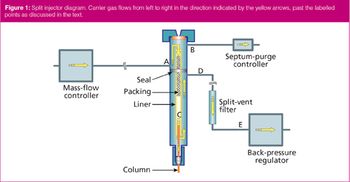
In gas chromatography (GC) split injection systems, as much as 99% or more of the injected sample never enters the column: It is released downstream of the inlet where it can encounter and possibly perturb precision gas control devices. The split-vent trap acts to prevent or at least moderate such effects. This month’s instalment addresses the operation and maintenance of split-vent traps.
LCGC Asia Pacific
Are your solvent costs too high? Here are some ideas on how to decrease the amount of mobile phase you use.

Special Issues
Throughout his career, Ron Majors always had his finger on the pulse of the latest chromatography developments, and he kept readers in the know too.

Special Issues
An unbiased summary of the state of the art up to mid-1994, which actually marked the first 27 years of HPLC.

LCGC Europe
Hamish Small spoke to AndrО Striegel about the secrets of his success in separation science, including the development of ion chromatography, and the value of vague thoughts in scientific progress.

LCGC Europe
An excerpt from LCGC’s e-learning tutorial on UV detection for HPLC at CHROMacademy.com

LCGC Europe
Paul R. Loconto shares his insights into the principles and practice of implementing and improving upon the original method to quantitate cyanide at trace concentration levels in human blood matrices using automated cryogenic trapping isotope dilution static headspace gas chromatography-mass spectrometry (GC-MS).

Special Issues
This article was the first one devoted to developments in column hardware, revealing the mysteries of key early developments, explaining how column design had changed, and providing information that is still relevant today.
LCGC Asia Pacific
Click the title above to open the LCGC Asia Pacific November 2015 regular issue, Vol 18, No 4, in an interactive PDF format.
LCGC Europe
Click the title above to open the LCGC Europe November 2015 regular issue, Vol 28, No 11, in an interactive PDF format.
LCGC North America
Click the title above to open the LCGC North America November 2015 regular issue, Vol 33 No 11, in an interactive PDF format.
Special Issues
Click the title above to open the LCGC North America November 2015 Best of Column Watch and Sample Prep Perspectives Supplement, Vol 33 No s11, in an interactive PDF format.
Sponsored Content
This podcast will discuss the capabilities of modern ultra high resolution accurate mass (HRAM) spectrometry based approaches for comprehensive lipidome identification and quantitative analysis. Examples will be given of how this instrumentation can be used to overcome many of the identification challenges for lipidomics, the advantages of HRAM approaches over traditional triple quadrupole or high resolution based methods, and the biological questions that can be addressed.


The Column
Wouldn’t it be nice if we could make nitrogen work for applications where helium is not an option?

The Column
This article discusses what recent advances in gel permeation chromatography/size-exclusion chromatography (GPC/SEC) can deliver in polymer development.

The Column