

All News
Advertisement
Seven outdated traditional practices that should not be performed without considering alternative approaches that can improve results, provide lower operation costs, or give faster run times. Instead of working harder, analytical scientists should work smarter. Learn more by clicking through the slideshow.
Advertisement

The Column
The 10th Balaton Symposium on High‑Performance Separation Methods will be held on 2–4 September 2015 at the Hotel Azúr in Siófok, Hungary.

The Column
Laser irradiation of blue tattoo ink can create toxic byproducts - including hydrogen cyanide (HCN) - according to new research published by scientists at the German Federal Institute for Risk Assessment. Pyrolysis gas chromatography–mass spectrometry (Py–GC–MS) was performed on samples of copper phthalocyanine blue to predict the decomposition products resulting from irradiation, as part of a wider on-going project assessing the safety of tattoo inks.
The Column
Researchers revisit arteriovenous profiling - comparing changes in the metabolome of arterial versus venous blood in the diagnosis of disease - using targeted and untargeted LC–MS methods.

The Column
The 39th International Symposium on Capillary Chromatography (ISCC) and the 12th GC×GC Symposium held in Fort Worth in Texas, USA, were rousing successes with nearly double the participation of the previous U.S. meetings
Advertisement

The Column
Click the title above to open The Column August 21, 2015 Europe & Asia issue, Volume 11, Number 15, in an interactive PDF format.
The Column
Click the title above to open The Column August 21, 2015 North American issue, Volume 11, Number 15, in an interactive PDF format.
Advertisement
The United States Food and Drug Administration (FDA) has issued a new guidance document, Analytical Procedures and Method Validation for Drugs and Biologics. The guidance is quite general in nature. Anyone hoping for specific recommendations on topics such as which methods to use will be disappointed. Industry experts say that i really isn’t feasible for the FDA to provide detailed recommendations about analytical methods for biopharmaceuticals, however.

When was the last time you reported your results with an estimate of the error associated with the data? You don’t need to because your method is performing within the levels defined by various agencies and which were confirmed by your validation and your daily QC checks. The person for whom you are producing the data is aware of these tolerances and therefore inherently appreciates the associated precision of the data and can make judgements based on this. Not in the world I work in!

In this new video from LCGC TV, Christian Wachsmuth from the University of Regensburg in Germany compares the performance of different ionization methods for GC–MS in metabolic fingerprinting. He also goes on to talk about how GC–MS could be applied in a clinical setting and what developments are needed for this to happen.


We recently published a study of water quality from 550 water wells in the Barnett Shale of North Texas. Using a suite of analytical techniques, we were able to find new evidence of the potential impact of unconventional natural gas extraction on environmental quality.

The Column
A team of researchers in Spain has examined the use of commercial yeast products in the production of white and rosé sparkling wines.

The Column
A team of chemists and microbiologists from the University of Leicester has developed a new method of rapidly diagnosing the infection Clostridium difficile (C. difficile).

The Column
Tetrahydrofuran (THF) - a widely used solvent in gel permeation chromatography/size-exclusion chromatography (GPC/SEC) - is set to be classified as carcinogenic as proposed by the Committee for Risk Assessment (RAC). Analytical laboratories therefore need to find ways to reduce THF solvent use and waste, far beyond the demands of green chemistry. This instalment of Tips & Tricks presents different strategies to meet this goal.

The Column
An excerpt from LCGC’s e-learning tutorial on high performance liquid chromatography (HPLC) methods for biomolecule analysis at CHROMacademy.com

The Column
How Dare You! The Emotive Matter of Questioning Chromatographic Integration…

The Column
The 43rd Symposium of HPLC and Related Techniques (HPLC 2015 Beijing Conference) will take place at the Beijing International Conference Centre, Beijing, People’s Republic of China, from 21–25 September 2015.
The Column
Click the title above to open The Column August 07, 2015 Europe & Asia issue, Volume 11, Number 14, in an interactive PDF format.
The Column
Click the title above to open The Column August 07, 2015 North American issue, Volume 11, Number 14, in an interactive PDF format.
Dr. Graeme McAlister of Thermo Fisher Scientific will discuss the advances in Orbitrap Tribrid Mass Spectrometry technology with the launch of the new Thermo ScientificTM Orbitrap FusionTM LumosTM TribridTM Mass Spectrometer. Graeme will also touch on how these advances have impacted and will continue to impact proteomics with respect to quantitation, accuracy, throughput, etc.
In this webinar, we will discuss the use of new, affordable HRMS instruments in quantitative clinical research analyses, demonstrating the sensitivity and selectivity of these instruments for this work. Examples of clinical research quantification work in HR full scan or MS-MS mode will be presented and compared with results from triple-quadrupole-MS. We will also discuss an example of Qual/Quan analysis in a study of the fate of an anti-cancer agent in humans, where over 40 metabolites were identified and quantified. We will also show metabolomics data underscoring the versatility of HRMS instruments.
LCGC Europe
Removal of Contaminant Peaks in Reversed-Phase Gradient Liquid Chromatography for Improved Detection of Pharmaceutical Impurities
LCGC North America
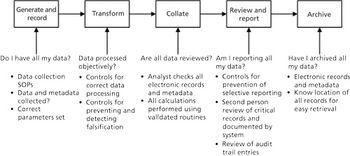
This is the first of a four part series looking at what functions and features the authors believe should be in a future chromatography data system (CDS) working within a regulated analytical laboratory. The first part of this series is aimed at setting the scene of where and how a CDS fits within the laboratory operation. In using the term CDS, in the future, this can refer to either a traditional CDS that is familiar to readers or the CDS functions could form part of another informatics solution such as Electronic Laboratory Notebook (ELN) or Laboratory information Management System (LIMS). In the next three parts we make 15 recommendations for improvements to the system architecture, the requirements for electronic working and regulatory compliance.

LCGC North America
Gain an invaluable insight into the key methods that are used for biomolecule characterization, process control, and release testing

LCGC North America
How to distinguish between LC column overload and detector overload.
Advertisement
Advertisement
Trending on LCGC International
1
LC-MS/MS Reveals Fentanyl Tolerance in Users
2
Detecting Anabolic-Androgenic Steroids in E-cigarettes Seized from Scottish Prisons using GC–MS
3
Where LC-MS/MS Meets the ER Clock: The Case for Paper Spray-MS in Acute Drug Toxicity Screening
4
Automated Sample Preparation for Oligonucleotide Bioanalysis Using Magnetic SPE
5