

LCGC Europe
An excerpt from LCGC’s e-learning tutorial on solid-phase extraction at CHROMacademy.com
LCGC Europe
An excerpt from LCGC’s e-learning tutorial on solid-phase extraction at CHROMacademy.com
LCGC Europe
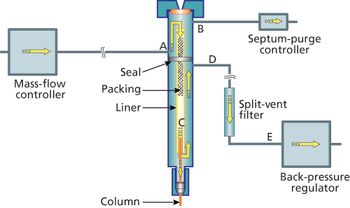
In GC split injection systems as much as 99% or more of the injected sample never enters the column: It is released downstream of the inlet where it can encounter and possibly perturb precision gas control devices. The split-vent trap acts to prevent or at least moderate such effects. This month’s instalment addresses the operation and maintenance of split-vent traps.
LCGC Europe
Given some recent, significant safety incidents, this month we step back and take a quick refresher on safety concerns to be aware of during our sample preparation activities.

LCGC Europe
The 40th International Symposium on Capillary Chromatography (ISCC) and the 13th GC×GC Symposium will once again be held in Riva del Garda, Italy, from 29 May to 3 June 2016.

LCGC North America
Are your solvent costs too high? Here are some ideas about how to decrease the amount of mobile phase you use.

LCGC North America
Are your solvent costs too high? Here are some ideas about how to decrease the amount of mobile phase you use.
LCGC Europe
Click the title above to open the LCGC Europe October 2015 regular issue, Vol 28, No 10, in an interactive PDF format.
LCGC North America
Click the title above to open the LCGC North America October 2015 regular issue, Vol 33 No 10, in an interactive PDF format.
Special Issues
Click the title above to open the LCGC North America October 2015 Advancing Environmental Analysis Supplement, Vol 33 No s10, in an interactive PDF format.
Special Issues
Click the title above to open the October 2015 issue of Current Trends in Mass Spectrometry, Volume 13, Number 4, in an interactive PDF format.

In this video, Robert T. Kennedy of the University of Michigan discusses the role of liquid chromatography–mass spectrometry (LC–MS) in the rapid development of metabolomics and the challenge of dealing with all the data. He then goes onto talk about the methods used in a recent study on glucose metabolism to analyze complex metabolic pathways and the challenges of using smaller samples.
Wheaton (Millville, New Jersey), a US-based provider of laboratory glassware and consumables, has been acquired by Duran Group (Wertheim, Germany), a European provider of laboratory glassware.
The Column
Click the title above to open The Column September 22, 2015 Europe & Asia issue, Volume 11, Number 17, in an interactive PDF format.
The Column
Click the title above to open The Column September 22, 2015 North American issue, Volume 11, Number 17, in an interactive PDF format.


The Column
A team of scientists has analyzed and evaluated the impact of salt weathering on an historical house using a combination of ion chromatography (IC), chemometrics, and thermodynamic chemical modelling.

The Column
Microbial life is possible within the Earth’s mantle, according to new research. High performance liquid chromatography–mass spectrometry (HPLC–MS) analysis of rock cores sampled from the Iberian plate margin (off the coast of Spain and Portugal) revealed the presence of lipid biomarkers indicative of microbial communities present beneath the seafloor more than 100 million years ago.
Agilent Technologies Inc. (Santa Clara, California) has agreed to support research by Steven Gross, a faculty member in the Department of Pharmacology at Weill Cornell Medical College (New York, New York), into amyotrophic lateral sclerosis (ALS), also known as Lou Gehrig’s disease.
The Column
Phenomenex (Torrance, California, USA) and the Tecan Group (Männedorf, Switzerland) have announced a new collaboration to co-market automated solid-phase extraction (SPE) products.
The Column
Purnendu “Sandy” Dasgupta, Hamish Small Chair in Ion Analysis of Chemistry and Biochemistry in the UT Arlington College of Science, has been awarded almost $1 million from NASA. The grant will support research into extension of the open-tubular capillary chromatography platform that Dasgupta developed for the detection and separation of ions.

Useful equations to improve the robustness of your separations.

In this video from LCGC TV, Mary J. Wirth of Purdue University explains the phenomenon of slip flow: what it is, how it can improve separations - particularly of proteins and monoclonal antibodies - and where it may take us in the future.
Agilent Technologies Inc. (Santa Clara, California) and Seahorse Bioscience (Billerica, Massachusetts) have signed a definitive agreement under which Agilent will acquire Seahorse Bioscience, a provider of instruments and assay kits for measuring cell metabolism and bioenergetics.

There is a shortcoming in our current educational system. There is too much rote learning, and not enough time given to let science-minded students explore a topic. Overall, when students ask their own questions (not ones given to them by instructors), they become more invested in finding the answers.
The Column
Click the title above to open The Column September 09, 2015 Europe & Asia issue, Volume 11, Number 16, in an interactive PDF format.
The Column
Click the title above to open The Column September 09, 2015 North American issue, Volume 11, Number 16, in an interactive PDF format.

The Column
Markes International (Llantrisant, Wales) has celebrated the official presentation of its Queen’s Award for Enterprise.

The Column
Researchers have published a new approach to heparin screening that allows the detection of adulteration within one hour. Published in the journal Analytical Chemistry, the study presents a screening strategy using hydrogen peroxide digestion followed by fast reversed-phase ion pairing liquid chromatography (reversed-phase IP–LC) coupled with tandem mass spectrometry (MS–MS) to detect contamination of heparin samples.