Click here to view the full European E-newsletter from 21 November.

No, this isn't a new detective novel, in fact its two concepts which were "coined" by my good friend John Hinshaw during a recent CHROMacademy webcast which we presented together on sample introduction for capillary GC.


LCGC North America proudly presents the 7th Annual Emerging Leader in Chromatography award. The Emerging Leader award recognizes the achievements and aspirations of a talented young separation scientist who has made strides early in his or her career toward the advancement of chromatographic techniques and applications. The winner will be featured on the cover of a 2014 issue of LCGC and in a interview that will be featured in our electronic newsletter, e-Separations Solutions and on the LCGC website.

Click here to view the full European E-newsletter from 14 November.

Donna Nelson, from the University of Oklahoma, USA, and scientific advisor to the hit television show Breaking Bad spoke to LCGC about her research in academia, as well as her role on the show.

Engineered nanoparticles released into the environment may affect the growth of agriculturally important crops, according to a new study published in the journal of Environmental Science and Technology.1

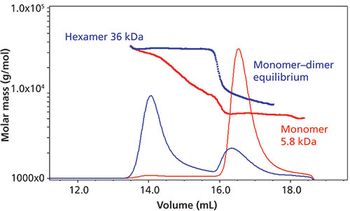
The Christian Doppler Laboratory for Biosimilar Characterization has opened at the Paris-Lodron University of Salzburg (Salzburg, Austria). Co-funded by the Austrian Federal Ministry of Economy, Family, and Youth, as well as the County of Salzburg through the Christian Doppler Society, the laboratory was established to develop and transfer to practice novel and more efficient methods to characterize the active ingredients in protein-based medicines.

The ACQUITY QDa Detector is the mass detector designed as a synergistic element of your chromatographic separations systems. It is mass detection built around the needs of your analytical scientists for their chromatographic analysis.

EMD Millipore (Billerica, Massachusetts), the Life Science division of Merck KGaA (Darmstadt, Germany) will host the first Lab Solutions Virtual Conference on Tuesday, November 19, and Friday, November 20, 2013.

Discarded silicone explants, a waste material from the cosmetic surgery industry, could be a new source of sample material for studying POP accumulation in humans.

Click here to view the complete E-Separation Solutions newsletter from November 8, 2013.

Since the introduction of UHPLC, strategies for fast method development are being discussed. A wide variety of columns with different separation properties is available, offering the user a number of columns suited to a specific application.

AB Sciex (Massachusetts, USA) has announced further expansion of its presence in Singapore, with the opening of a new research and development (R&D) centre. The centre is an addition to the company?s existing $10 million manufacturing operations in Marsiling, Singapore.

Five employees and one customer of PerkinElmer France teamed up to participate in a 24 h relay bicycle race near Tours (France) in support of cancer research. The September event benefited the ARC Foundation, a major French cancer research organization. Riding a combined 390 km (242 miles), the team won second place in the ?Companies Challenge? portion of the event. PerkinElmer France donated one euro for each kilometre ridden, with proceeds going to the ARC Foundation to help research into cures for cancer.

EVOLUTE? EXPRESS, is a novel family of 96-well plates that simplify polymer-based SPE by employing a streamlined 3-step protocol; Load-Wash-Elute. By using this novel approach and removing the conditioning and equilibration steps, necessary with traditional bio-analytical SPE procedures, processing and method development times are dramatically reduced without loss of analyte recovery or method robustness.

Diesel exhaust fumes can rapidly degrade the floral odours used by honeybees (Apis melifera) to identify flowering plants, according to results published by scientists at the University of Southampton (Southampton, UK) in the journal Scientific Reports.1

A review of the 7th International Symposium on Packed Column SFC (SFC 2013) that was held in Boston, Massachusetts, USA, on 10–12 July 2013.

Potentially dangerous levels of the methamphetamine analogue, N, ??diethyl?phenylethylamine (N, ? -DEPEA), have been detected in a widely available dietary supplement using ultrahigh-pressure liquid chromatography coupled to mass spectrometry (UHPLC–MS). The supplement, Craze, can be bought in the USA and from on-line retailers. The findings have been published in the journal Drug Testing and Analysis by a team of scientists from Harvard Medical School (Massachusetts, USA), NSF International (Missouri, USA), and the National Institute for Public Health and the Environment Health Protection Center (Bilthoven, The Netherlands).1

Engineered nanoparticles released into the environment may affect the growth of agriculturally important crops, according to a new study published in the journal of Environmental Science and Technology.1 Scientists from The Connecticut Agricultural Experiment Station (Connecticut, USA) investigated the effect of multiwalled carbon nanotubes (MWCNTs) and C60 fullerenes on plant growth. The investigation was part of a larger project funded by the US Department of Agriculture to look at the impact of nanoparticles on agriculture. The team used gas chromatography coupled with mass spectrometry (GC?MS) in this study.

The applications of liquid chromatography and mass spectrometry play a key role in pharmaceutical and biological processing.

Two different methods of calculating the LLOQ disagree. Which, if either, is correct?

Chiral separation screening has become a widely accepted approach for the rapid identification of an appropriate chiral stationary phase for use in more focused enantioseparation optimization. A set of extended screens encompassing various chromatographic modes using HPLC and SFC is presented.

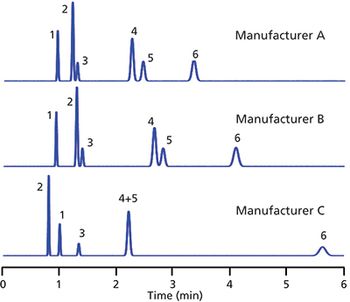
This instalment describes more popular myths or half-truths in UHPLC and provides data that contradict or even repudiate some of these commonly held beliefs.

LCGC North America Editorial Calendar

Questions about how practical proposed gas chromatography (GC) method changes are often come up during optimization for speed and resolution, or while converting to a different carrier gas. Related objective measurements such as the optimum practical carrier gas velocity were defined more than 40 years ago. This instalment reviews such metrics in the light of their relevance to today's GC challenges.

In the final part, the top 10 HPLC and UHPLC column myths are presented and attempts are made to demystify them by offering some evidence that they are untrue. This part will feature myths five to one.

There are many ways to improve retention or selectivity in reversed-phase HPLC and knowledge of the key eluent variables to achieve this is essential reading.

LCGC North America June 2013 BPA Statement