

All News
Advertisement
LCGC Asia Pacific
Click the title above to open the LCGC Asia Pacific November 2014 regular issue, Vol 17, No 4, in an interactive PDF format.
Advertisement
LCGC Europe
Click the title above to open the LCGC Europe November 2014 regular issue, Vol 27, No 11, in an interactive PDF format.
LCGC North America
Click the title above to open the LCGC North America November 2014 regular issue, Vol 32 No 11, in an interactive PDF format.
LCGC North America
LCGC, the leading resource for separation scientists, is proud to announce that Joseph Jack Kirkland and Caroline West are the winners of the eighth annual LCGC Lifetime Achievement and Emerging Leader in Chromatography Awards, respectively.
LCGC North America
In water samples, OCPs are monitored by the U.S. Environmental Protection Agency by various methods including methods EPA 508, EPA 608, and EPA 8081. The use of solid phase extraction (SPE) can rapidly increase both extraction efficiency and reduce lab solvent usage. By implementing the FMS TurboTrace® ABN system with its dual cartridge functionality, an in-line Florisil cartridge can be added to perform automated extract clean-up during the elution step.
Advertisement

The Column
This article is an overview of the different types of antibody-drug conjugates (ADC) characterization that can be performed with the light scattering toolkit to support the development of biotherapeutics.

The Column
Robin MacGeachy, the Managing Director of Peak Scientific in Inchinnan, Scotland, has been awarded the Ernst and Young UK Entrepreneur of the Year Award for Manufacturing 2014.
The Column
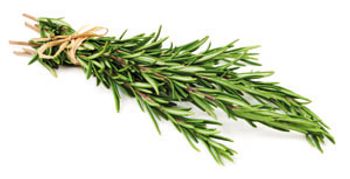
A study published in the journal Analytical Chemistry presents the application of a foodomics approach – combining transciptomics with metabolomics – to determine the anticancer mechanism of action of polyphenols contained in Rosmarinus officinalis L., commonly known as rosemary.1
The Column
A new study to be published in the journal Food Chemistry proposes 10 compounds that could be used to determine the authenticity of handmade sea salt opposed to industrial sea salt.
Advertisement

The Column
How to spot problems in your method before they become an issue.

The Column
Incognito ponders if fashion is clouding our judgement when it comes to certain tried and tested techniques.
The Column
A simple dansylation metabolite assay (DMA) for sample normalization that is similar to the bicinchoninic acid (BCA) protein assay widely used in proteomics has been presented in the journal Analytical Chemistry. The DMA assay is performed following sample extraction to determine the total metabolite concentration, which can then be used to determine the volume of sample needed to ensure that all samples contain the same concentration of metabolites.
The Column
Click the title above to open The Column October 24, 2014 North American issue, Volume 10, Number 19, in an interactive PDF format.
The Column
Click the title above to open The Column October 24, 2014 Europe & Asia issue, Volume 10, Number 19, in an interactive PDF format.
E-Separation Solutions
A team of researchers at the University of Huddersfield, UK, has investigated the potential of okra for emulsification of certain food products using size-exclusion chromatography (SEC) and fourier-transform infrared (FT-IR) spectroscopy.
The Column
Click the title above to open The Column October 05, 2014 Europe & Asia issue, Volume 10, Number 18, in an interactive PDF format.
LCGC Europe eNews
The LCGC Europe news update from October 16 2014.
E-Separation Solutions
Click here to view the complete E-separation Solutions newsletter from October 16, 2014.

The LCGC Blog
Why would one want to use a mobile phase containing 100% water? Usually to wash the analyte or old mobile phase from the column (stationary phase surface) or to help retain analytes which elute quickly using mobile phases containing only very small amounts of organic solvent (usually highly polar analytes).
LCGC Europe eNews
The LCGC Europe news update from October 9 2014.
E-Separation Solutions
Click here to view the complete E-separation Solutions newsletter from October 9, 2014.
Unconventional oil and gas (UOG) extraction, which includes processes such as horizontal drilling and hydraulic fracturing, has created major positive geopolitical and economic advantages for the United States.

The Column
The development of a column-switching technique based on on-line preconcentration and HRAM–MS to obtain fast and accurate results for the determination of algal toxins in drinking water is discussed.

The Column
Researchers from the Institute of Food Chemistry at Westfälische Wilhelms‑Universität Münster in Germany have developed an optimized high performance liquid chromatography coupled with mass spectrometry (HPLC–MS–MS) method using multiple reaction mode (MRM) and MRM3 for detecting horse and pork in highly processed food.

The Column
Scientists from CEITEC Masaryk University are collaborating with clinicians from the Department of Respiratory Diseases and TB at the University Hospital Brno (Brno, Czech Republic) to improve the diagnosis of cystic fibrosis, specifically in newborn babies. In a new study published in the Journal of Chromatography A, a new "skin wipe" sweat sampling method is presented that reduces the time required for sampling to under a minute and utilizes capillary electrophoresis (CE) to simultaneously determine chloride, sodium, and potassium ions in sweat samples.

The Column
Liquid chromatography coupled to triple quadrupole tandem mass spectrometry (LC–MS–MS) in multiple reaction monitoring (MRM) mode is widely considered as the gold standard for pesticide analysis. In this article recent developments in LC–MS–MS technology to meet increasing regulatory demands and productivity targets in quality control and contract laboratories are explored.

The Column
This article provides some tips and tricks for monitoring sample recovery and peak area using GPC/SEC.

The Column
To understand how the HPLC system works, it can be useful to first identify the basic components of virtually every system. Armed with that information, envisioning the HPLC system as comprised of three different zones - each with unique characteristics and each with its own set of requirements - can offer further guidance.
The Column
Click the title above to open The Column October 05, 2014 North American issue, Volume 10, Number 18, in an interactive PDF format.
Advertisement
Advertisement
Trending on LCGC International
1
Detecting Anabolic-Androgenic Steroids in E-cigarettes Seized from Scottish Prisons using GC–MS
2
Automated Sample Preparation for Oligonucleotide Bioanalysis Using Magnetic SPE
3
Using UHPLC-MS/MS to Help Pinpoint Time of Death
4
GC-MS Uncovers Cocoa Variety's Chocolate Aroma
5