

LCGC North America
On October 21, 2014, University of Tennessee Distinguished Scientist Georges Andre Guiochon succumbed to neuromuscular failure caused by post-polio syndrome. Here, we pay tribute to his remarkable career and life.
LCGC North America
On October 21, 2014, University of Tennessee Distinguished Scientist Georges Andre Guiochon succumbed to neuromuscular failure caused by post-polio syndrome. Here, we pay tribute to his remarkable career and life.

LCGC Europe
Click the title above to open the LCGC Europe January 2015 regular issue, Vol 28, No 1, in an interactive PDF format.
LCGC North America
Click the title above to open the LCGC North America January 2015 regular issue, Vol 33 No 1, in an interactive PDF format.

E-Separation Solutions
In this issue – I hope to outline some 'small bolts' that are commonly ignored in everyday chromatography and mass spectrometry - instrument settings that I have to come call 'lock and leave' parameters. We can generate data without changing them or paying them any attention, but how much better could our data be if we bothered to optimise them.
LCGC Asia Pacific eNews
Büchi Expands into Malaysia and Singapore
![Thomas Borch June 2014[1].jpg](https://cdn.sanity.io/images/0vv8moc6/chroma/db8ed42509631b49d91c8b0ad3ca80e7af55fc14-150x225.jpg?w=350&fit=crop&auto=format)
The Kendrick mass defect combined with liquid chromatography quadrupole time-of-flight mass spectrometry (LC–qTOF-MS) can offer a variety of benefits to analysts investigating groundwater contamination. LCGC spoke to Thomas Borch from Colorado State University in Colorado, USA, about his work in this area to find out more.
The Column
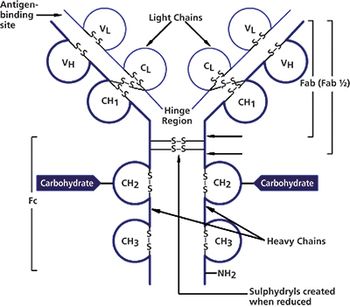
The biopharmaceutical industry continues to focus on the development of biotherapeutic monoclonal antibody (mAbs) drugs. In this article, the compatibility of SEC coupled with HRAM–MS for the analysis of mAbs is demonstrated.
The Column
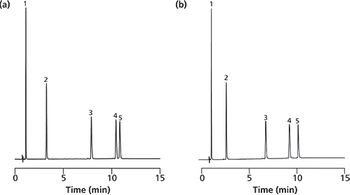
In this article, the application of silica monoliths with bimodal pore structure (macro and mesopores) is described for the chromatographic analysis of biomolecules including peptides, proteins, and antibodies.

The Column
How to transfer a chromatogram into the molar mass distribution.
The Column
Click the title above to open The Column December 15, 2014 North American issue, Volume 10, Number 22, in an interactive PDF format.
The Column
Click the title above to open The Column December 15, 2014 Europe & Asia issue, Volume 10, Number 22, in an interactive PDF format.

The Column
Scientists at the Norwegian Defence Research Establishment (Kjeller, Norway) are working in collaboration with the University of Oslo (Oslo, Norway) to develop new methods to detect the illicit use of nerve agents. In a recent study published in the journal Analytical Chemistry, the team presented a novel method for the quantification of nerve agent metabolites in human serum and urine by combining salting-out assisted liquid–liquid extraction (SALLE) and on-line solid-phase extraction–liquid chromatography–tandem mass spectrometry (SPE–LC–MS–MS).
The Column
A new study published in the Journal of Chromatography A presents metabolite profiling of tea (Camella sinensis) harvested from the Bulang Mountains in Yunnan, China, using multidimensional gas chromatography–mass spectrometry (GC×GC–MS) to determine the impact of seasonal changes.

The Column
A new study published in the journal Analytical Chemistry presents a drug metabolism strategy based on microsome mesoporous organosilica nanoreactors coupled with high performance liquid chromatography–mass spectrometry (HPLC–MS) to screen for potential drug toxicity.
The Column
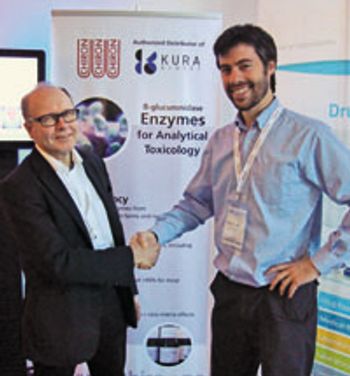
Chiron (Trondheim, Norway) has signed an agreement with Kura Biotec (Patagonia, Chile) to distribute their range of enzymes for analytical toxicology.

The Column
The 3rd African Liquid Chromatography Workshop was held on 6–10 October 2014 in Nairobi, Kenya, at the ChromAfrica Training Centre.

E-Separation Solutions
A program was formulated to help educate public opinion leaders on the fundamentals of unconventional natural gas and oil extraction, to convey the current state of research on the topic, and to disseminate and discuss prospective regulations that have been formulated over the past two to three years.
LC columns and column accessories
New GC products - including gas chromatographs, systems, accessories and columns
LCGC North America
LCGC Magazine is pleased to announce the addition of Douglas E. Raynie to its editorial advisory board.

The Application Notebook
UCT, LLC


LCGC Europe
Synthetic oligonucleotides have become increasingly popular as a result of the recent discovery of ribonucleic acid interference (RNAi), a natural process for silencing gene expression.
LCGC Europe
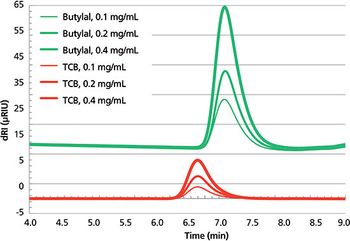
This study presents results of gel permeation chromatography (GPC) and analytical temperature rising elution fractionation (TREF) of polyethylene in butylal (dibutoxymethane, a halogen-free solvent).