

LCGC's "Earth Day" coverage examines a advanced mass spectrometry method to accurately measure PFAS and trace pharmaceuticals in wastewater.
LCGC's "Earth Day" coverage examines a advanced mass spectrometry method to accurately measure PFAS and trace pharmaceuticals in wastewater.
Our "Earth Day" coverage continues with a look at how LC-HR-MS/MS can track how human-made chemical pollution is harming ocean ecosystems.

Our "Earth Day" coverage examines a study using fluorinated ionic liquid stationary phases to analyze forever chemicals.
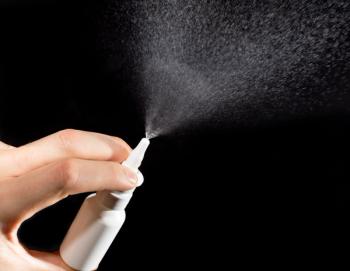
Drug testing of non-biological samples revealed a new nitazene opioid, N-pyrrolidino fluetonitazene, in a nasal spray. Researchers used gas chromatography-mass spectrometry (GC-MS) and liquid chromatography-quadrupole time-of-flight mass spectrometry (LC-QTOF-MS) alongside other methods to confirm its identity. The finding highlights evolving drug trends, serious health risks, and the need for up-to-date analytical techniques despite limited sample size.

Andrea Hochegger from Graz University of Technology, Austria describes the benefits that comprehensive two-dimensional GC (GC×GC–MS) offers over conventional GC–MS to resolve complex mixtures from recycled packaging materials. Andrea will present on this topic at Extech 2026, which will take place at the University of Liege, Gembloux, Belgium from July 6–9 2026.
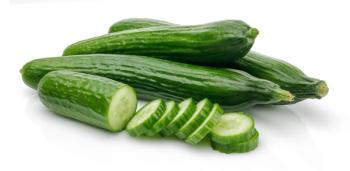
Liquid chromatography–mass spectrometry (LC-MS) enabled comprehensive profiling of metabolites produced by cucumber glandular trichomes across developmental stages. Analysis identified 744 compounds, dominated by flavonoids, and revealed ecotype-specific variations. Chromatographic insights into trichome secretions link metabolite composition to fruit bloom formation and support future crop improvement and natural product applications.

Sébastien Rolle examines four levels of manufacturer sustainability impact and questions whether the analytical chemistry industry is moving fast enough across all fronts.

Ion chromatography and 16S rRNA sequencing were applied to evaluate seasonal nutrient removal and microbial dynamics in an A2O wastewater treatment plant. Results showed temperature-dependent nitrifier reductions impacting efficiency, while downstream monitoring revealed transient microbial influence on river systems, highlighting chromatography’s role in linking nutrient chemistry with ecological outcomes.

The 28th International Symposium on Advances in Extraction Technologies (ExTech 2026) will take place on July 6–9 2026 in the historic town of Gembloux, Belgium.

A research study recently introduced a streamlined, chromatography-compatible workflow for the rapid analysis of RNA modifications by integrating solid-phase enzymatic digestion with downstream liquid chromatography–mass spectrometry (LC–MS). LCGC International spoke to Yixuan (Axe) Xie, an assistant professor at Fudan University (Shanghai, China) and one of the authors of a paper resulting from this study.

Gauthier Eppe discusses the vast data complexity that arises when ion mobility is layered on top of HRMS in non-targeted contaminant screening workflows.

Researchers explored the potential of Prunus laurocerasus (cherry laurel) and Prunus cerasifera (cherry plum) fruit pits as natural food additives. Liquid chromatography-tandem mass spectrometry (LC-MS/MS) revealed that the extracts were found safe for healthy cells, selectively targeted certain cancer cells, and showed strong antioxidant and enzyme-inhibiting activities, including anti-browning effects. These findings highlight the pits’ promise as sustainable, functional food ingredients.

This week on ChromatographyOnline.com, we highlight sustainable sample preparation alongside the transformative impact of AI and machine learning in chemical analysis, and explore advanced methodologies like ion mobility-HRMS and HPLC for tackling complex real-world challenges.

A study identified invasive Burmese pythons as effective biological sentinels for monitoring chemical pollution in the Florida Everglades. Researchers analyzed liver samples from 67 pythons using high-performance liquid chromatography-tandem mass spectrometry (HPLC-MS/MS) to track 30 per- and polyfluoroalkyl substances (PFAS).
Gauthier Eppe discusses how applicable the SWIM approach is beyond halogenated POPs.

André Striegel recently published a book called "Macromolecular Separations". In this segment, he highlights the most significant technological advances and changes in macromolecule analysis in the last ten years.

German researchers used gas chromatography-mass spectrometry (GC–MS) and liquid chromatography-mass spectrometry (LC–MS) to analyze urinary and plasma steroid hormones in a female athlete, revealing cycle-dependent fluctuations in androgen levels during a natural menstrual cycle, with peaks around ovulation and declines in the luteal phase. In contrast, hormonal contraceptive use suppressed androgen variability, demonstrating the value of chromatographic techniques for sensitive monitoring of endocrine changes relevant to athletic performance and physiology.

LCGC International spoke to Mary Ellen McNally about green and sustainable chromatographic approaches and sample preparation.
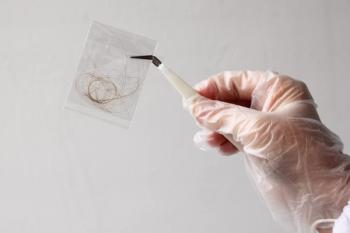
To investigate how permanent chemical hair straightening influences the accuracy of hair drug testing using liquid chromatography–tandem mass spectrometry (LC-MS/MS), researchers analyzed hair samples before and after treatment with an alkaline straightener (ammonium thioglycolate), measuring levels of the endogenous compound gamma-hydroxybutyrate and the drug alprazolam. The study emphasizes the need for careful interpretation of LC-MS/MS hair analysis results and systematic documentation of cosmetic treatments in forensic and toxicological investigations, particularly when detecting low-level substances.
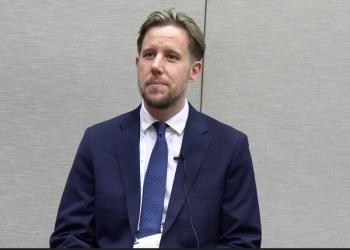
At Pittcon 2026, LCGC International Emerging Leader Award Winner, Bob Pirok, discussed the barriers to fully automated method development using machine learning in chromatography and if "intuition" can be incorporated.

The sliding windows in ion mobility (SWIM) approach leverages predictable correlations between retention time and collision cross-section values to improve confidence in identifying semi-volatile contaminants by GC-IMS-HRMS.
André Striegel examines the major hurdles facing macromolecular separations today and discusses how chromatographers can work to overcome them.
At Pittcon 2026, LCGC International Emerging Leader Award Winner, Bob Pirok, emphasized the importance of incorporating chromatographic expertise into machine learning approaches for successful automated method development.

A mass balance and pharmacokinetic study of fezolinetant in healthy postmenopausal women employed high-performance liquid chromatography (HPLC) with radioactivity detection alongside liquid chromatography–tandem mass spectrometry (LC–MS/MS) to enable detailed metabolite profiling and structural elucidation. Overall, chromatographic techniques were central to quantifying drug disposition, identifying metabolic routes, and supporting the clinical development of this non-hormonal therapy for vasomotor symptoms.

To address the need for objective and non-invasive methods to measure workplace stress, a recent study evaluated metabolite profiling of mouth-rinsed water. Researchers using capillary electrophoresis-mass spectrometry (CE-MS) and liquid chromatography-mass spectrometry (LC-MS) analyzed 559 analytes from 32 participants categorized into high-stress and control groups.
At analytica 2026, Gauthier Eppe described adding ion mobility–HRMS to GC–HRMS workflows to support analysis of environmental pollutant mixtures.

Saer Samanipour from the University of Amsterdam, The Netherlands used machine-learning (ML)-predicted retention time indices to estimate true-match probabilities to boost identification confidence when retention time calibrants are unavailable.
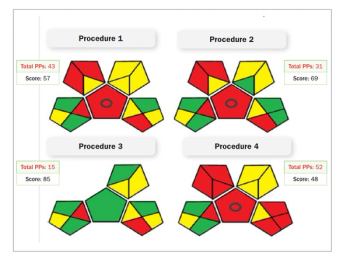
Because sample preparation uses the most solvents, it is typically the least environmentally friendly step of the process. While completely eliminating sample preparation is the ideal "green" scenario, it is rarely practical. Therefore, over the next few columns, "Sample Prep Perspectives" will evaluate various tools developed over the past decade to gauge the sustainability of these methods, with the ultimate goal of helping the scientific community adopt a universal, practical standard for measuring analytical "greenness."

Controlling the "heat" or pungency levels in chili peppers (Capsicum annuum) is a major challenge for breeders due to complex genetic inheritance. To address this, researchers are using high-performance liquid chromatography (HPLC) to precisely quantify capsaicin and dihydrocapsaicin levels. By combining these accurate chemical measurements with genomic prediction (GP) models, scientists can now better predict the spice levels of offspring based on parental data.

Gas chromatography-mass spectrometry (GC–MS), liquid chromatography-mass spectrometry (LC–MS), and inductively coupled plasma (ICP)-based techniques were applied to characterize extractables and potential leachables from polyurethane-insulated deep brain stimulation probes, comparing polyether urethane (PEU) and polycarbonate urethane (PCU) after prolonged exposure to a brain phantom.