In the first section of our interview with Christian Bleiholder of Florida State University, he discusses his award-winning research that earned him the ASMS 2025 Ron Hites Awared.

In the first section of our interview with Christian Bleiholder of Florida State University, he discusses his award-winning research that earned him the ASMS 2025 Ron Hites Awared.

A joint study between the University of Tennessee (Knoxville, Tennessee) and the University of Pennsylvania School of Veterinary Medicine (Philadelphia, Pennsylvania) compared directly measured vitamin K1 (vitK1) concentrations in healthy dogs and dogs with chronic enteropathy (CE) using liquid chromatography tandem mass spectrometry (LC–MS/MS); they also investigated whether supplementation of vitK1 in dogs with CE would significantly increase vitK1 concentrations.

A study by researchers from Bonn-Rhein-Sieg University of Applied Sciences and the University of Duisburg-Essen reported on the development of a GC–IMS method for the detection of nine N-nitrosamines in drinking water.

A study by researchers from Bonn-Rhein-Sieg University of Applied Sciences and the University of Duisburg-Essen reported on the development of a GC–IMS method for the detection of nine N-nitrosamines in drinking water.

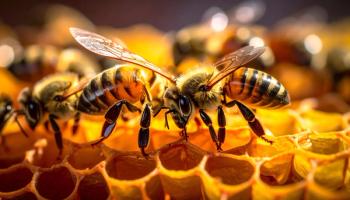
A study conducted by the Agriculture Research Centre of Giza, Egypt, and Jilin Agricultural University in China, evaluated the efficacy of stinging nettle extract, nettle smoke, and formic acid in the controlling of Varroa mites, a major threat to honeybee colonies, with a focus on mite infestation reduction, honeybee mortality, and biochemical responses. Gas chromatography–mass spectrometry (GC–MS) was used to identify key bioactive compounds in the stinging nettle extract.

Peter Boler, Vice President of Marketing at VUV Analytics, explains the importance of vacuum ultraviolet (VUV) detection and new technology that has emerged to support this methodology.

Click here to access the LCGC International May 2025 Europe PDF in an interactive format.

Click here to access the LCGC International May 2025 North America PDF in an interactive format.

An Australian study used pyrolysis coupled to gas chromatography-mass spectrometry (Pyr-GC–MS) to analyze the presence of plastic polymers in commercial and homemade composts. LCGC International spoke to Simran Kaur—a PhD candidate at the Queensland Alliance for Environmental Health Sciences (QAEHS) at The University of Queensland in Woolloongabba, Australia—to find out more about her team’s findings.

Here is some of the most popular content posted on LCGC International this week.

Merck has launched its 2025 Curiosity Cube tour, bringing hands-on STEM experiences to students across the world.

Based on their hypothesis that smelling anxiety chemosignals can, like visual anxiety induction, lead to an increase in odor sensitivity, a joint study between the University of Erlangen-Nuremberg (Erlangen, Germany) and the Fraunhofer Institute for Process Engineering and Packaging (Freising, Germany) combined behavioral experiments, odor profile analysis by a trained panel, and instrumental analysis of odorants (gas chromatography-olfactometry) and volatiles (gas chromatography-mass spectrometry).

Scientists from the University of Santiago de Compostela developed a liquid chromatography quadrupole time-of-flight mass spectrometry (LC–QTOF-MS) operated in data-independent acquisition (DIA) mode for pesticide quantification in agriculturally impacted waters.

A pilot study investigating whether nicotinamide adenine dinucleotide kinase (NADK) expression is selectively diminished in alcohol-associated liver cirrhosis (AC), as well as evaluating its potential as a biomarker for this condition, measured AC and non-AC (NAC). Nicotinamide adenine dinucleotide (NAD+) and nicotinamide adenine dinucleotide phosphate (NADP+) levels in human liver samples were measured using liquid chromatography-mass spectrometry (LC-MS).

A joint study between the University of Oklahoma Health Sciences Center (Oklahoma City, Oklahoma) and the UC Davis West Coast Metabolomics Center (Davis, California) identified differentially regulated lipids in type 2 diabetes (T2D) and obesity through the application of reversed-phase liquid chromatography-accurate mass tandem mass spectrometry (RP-LC-accurate MS/MS).

LCGC EAB member Paul Ferguson has been named a professor by special appointment at the Faculty of Science at the University of Amsterdam.

Polyamides can be difficult to characterize, despite their use in various aspects of everyday life. Vrije Universiteit Amsterdam researchers hoped to address this using a reversed-phase liquid chromatography (RPLC)-based approach.

Saba Aslani from the University of Texas at Arlington spoke to LCGC International about a collaborative project with Northwestern University, the University of Hong Kong, and BioTools, Inc., investigating mirror-image cyclodextrins using ultra-high performance liquid chromatography–tandem mass spectrometry (UHPLC–MS/MS) and vibrational circular dichroism (VCD).

In the final section of our interview with Vilmos Kertesz of Oak Ridge National Laboratory, he imparts the most important lessons he would like future generations of scientists to learn.

In the penultimate section of our interview with Vilmos Kertesz of Oak Ridge National Laboratory, he reflects on the people who guided him throughout his scientific career.

In the third part of our interview with Vilmos Kertesz of Oak Ridge National Laboratory, he discusses his time creating new liquid extractions and his feelings on seeing his work used around the world.

In the second part of our interview with Vilmos Kertesz of Oak Ridge National Laboratory, he discusses the most notable aspects of his previous research efforts.

A novel method called quantitative marinating (QM) was developed to reduce industrial waste during the processing of crayfish meat, with the taste, flavor, and aroma of crayfish meat processed by various techniques investigated. Headspace-gas chromatography-ion mobility spectrometry (HS-GC-IMS) was used to determine volatile compounds of meat examined.

In the first part of our interview with Vilmos Kertesz of Oak Ridge National Laboratory, he reflects on his winning the 2025 Al Yergey MS Scientist Award and previews what his awards lecture will discuss.

Researchers developing a plant microbial consortium that can repair in-situ high concentration TNT (1434 mg/kg) contaminated soil, as well as overcome the limitations of previous studies that only focused on simulated pollution, used untargeted metabolone gas chromatography-mass spectrometry (GC-MS) to measure their success.

Researchers developing a plant microbial consortium that can repair in-situ high concentration TNT (1434 mg/kg) contaminated soil, as well as overcome the limitations of previous studies that only focused on simulated pollution, used untargeted metabolone gas chromatography-mass spectrometry (GC-MS) to measure their success.

A non-invasive wearable sampler combined with UHPLC–IMS-HRMS has been developed to identify biomarkers for TB using human skin

When analyzing samples using liquid chromatography–high-resolution mass spectrometry, there are various ways the processes can be improved. Researchers created new methods for prioritizing these strategies.

In the final part of our interview with Michael Shortreed, he shares the most important lessons he would like the next generation of mass spectrometrists to learn.

In the second part of our interview with Michael Shortreed, he reflects on how his work is used in laboratories worldwide and discusses those who mentored him throughout life.