
Jef Focant considers how far we are from fully automated, standardized GC×GC data processing pipelines accessible to labs without specialist chromatography knowledge.
Jef Focant considers how far we are from fully automated, standardized GC×GC data processing pipelines accessible to labs without specialist chromatography knowledge.

Ultra-performance liquid chromatography–high-resolution mass spectrometry (UPLC-HRMS) was used to profile metabolomic changes during papain- and bromelain-mediated hydrolysis of gourami fish proteins. Distinct time- and enzyme-dependent profiles revealed differences in proteolysis and metabolite release, highlighting strategies to optimize bioactive peptide production and enhance the nutritional functionality of fish-derived food products.

Researchers used gas chromatography-mass spectrometry (GC-MS) and chemometric analysis to identify 54 metabolites in commercial lavender oils, identifying quality markers like linalool and detecting potential adulteration with synthetic additives.

André Striegel gives an update on the evolution of macromolecular separation science and the rationale behind recently publishing his aptly named reference text book: "Macromolecular Separation Science".
Camilla Liscio from Da Vinci Laboratory Solutions, UK discusses hert talk at HTC-19, which will focus on the challlenges and solutions of automating hyphenated techniques into an integrated system. HTC-19 will take place from 26–29 May 2026 in Leuven, Belgium.
Drew Szabo from the Centre of Excellence in Mass Spectrometry at the University of York, UK discusses his talk at HTC-19, which will focus on developments in non-targeted screening (NTS) for environmental analysis. HTC-19 will take place from 26–29 May 2026 in Leuven, Belgium.

Small extracellular vesicles (EVs) from pericardial fluid (PF) of patients with and without CAD alter the lipid profile of human coronary artery endothelial cells. Using untargeted liquid chromatography–mass spectrometry (LC-MS), 1043 lipid species were identified, with changes in glycerophospholipids, glycerolipids, and sphingolipids. These results suggest PF EVs can influence endothelial lipid metabolism and may impact coronary artery function.

Researchers utilized advanced chromatography techniques to reveal that disrupted metabolic pathways and oxidative stress cause flavor deterioration and unpleasant off-taste in wooden breast chicken meat.
Jef Focant on what methodological and study design changes will drive volatolomics from promising biomarker discovery results to clinically actionable tests.

Researchers used liquid chromatography-high resolution mass spectrometry (LC-HRMS) to identify blood metabolites linked to teen mental health, offering a potential objective tool for early risk detection and preventive care.

Researchers at the Technical University of Applied Sciences Mannheim developed a green, high-throughput HS-GC-IMS method using hydrogen carrier gas to rapidly and efficiently profile VOCs in cocoa liquor while reducing solvent use, preparation time, and energy consumption. LCGC International spoke to Philipp Weller and Lukas Bodenbender, two of the authors of a paper resulting from this study, about their work.
Jef Focant discusses where comprehensive two-dimensional gas chromatography fits in a clinical setting increasingly demanding rapid, low-cost diagnostic solutions.
Sébastien Rolle outlines how the environmental footprint of analytical instruments and methods can be quantified across the full product life cycle.

ChromatographyOnline.com marked Earth Day with environment-focused content and expert interviews while also highlighting advances in chromatography, including sustainable methods, GC×GC–MS for complex materials, and managing HRMS data complexity.

Researchers developed a solid phase extraction liquid chromatography-electrospray ionization-tandem mass spectrometry (LC-ESI-MS/MS) method enabling sensitive chromatographic separation and quantification of eight steroid hormones in ≤50 mg whale blubber. The approach achieved low detection limits, reliable measurements across species, and supports conservation by assessing stress, metabolism, and reproductive status from minimal sample material.
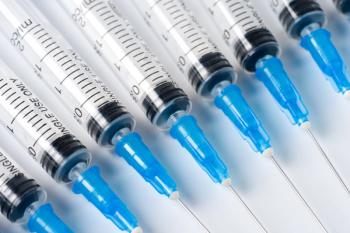
Liquid chromatography–mass spectrometry (LC-MS) was used to evaluate the stability of ethanol-free buprenorphine formulations in compounded oral syringes over 60 days. Chromatographic analysis showed no degradation products and consistent drug concentrations, supporting formulation stability and safety while highlighting the role of LC–MS in pediatric pharmaceutical quality assessment.
Sébastien Rolle explores the practical barriers preventing wider adoption of SFE and SFC, and what instrument manufacturers can do to lower them.

Researchers used high-performance liquid chromatography-tandem mass spectrometry (HPLC-MS/MS) to demonstrate that atmospheric cold plasma (ACP) effectively removes up to 82.5% of toxic fenvalerate residues from shiitake mushrooms. The study identified degradation pathways like hydroxylation and ester bond cleavage. ACP offers a promising, non-thermal solution to enhance food safety and preserve mushroom quality during storage.
Sébastien Rolle discusses the trade-offs between greener instrument design and analytical performance, addressing sensitivity, throughput, and method robustness for laboratory scientists.

Submit your latest chromatography products—including HPLC, GC, columns, and software—for inclusion in our upcoming new products article.
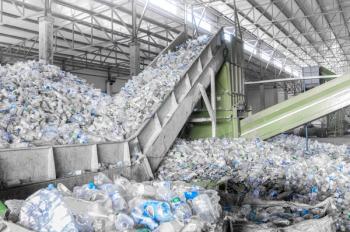
Researchers developed an advanced gas chromatography approach that allows direct analysis of recycled plastics with minimal preparation. This method uses thermal desorption to efficiently detect volatile contaminants, making it faster and more practical for routine quality control.

High-performance liquid chromatography (HPLC) was utilized by researchers to measure plasma hydrogen sulfide (H₂S) in patients with schizophrenia. The study revealed that after antipsychotic treatment, elevated H₂S levels—accurately determined via HPLC—correlated significantly with improved memory, highlighting H₂S signaling as a key factor in understanding cognitive impairment.

With open access to GreenSOL, Elia Psillakis describes how laboratories are adopting it in practice.
The first assessment of deuterated solvents reveals significant, often overlooked environmental burdens tied to essential analytical reagents.

Researchers used tandem mass tagged quantitative liquid chromatography tandem mass spectrometry (TMT-LC-MS/MS) to analyze plasma from exposed loggerhead and Kemp's ridley turtles, identifying altered immune proteins as biomarkers for brevetoxicosis, aiding diagnosis amid intensifying blooms.

Dr Victoria Samanidou from the School of Chemistry at the Aristotle University of Thessaloniki, Greece, gives a detailed overview of applying green metrics tools in the "real world."
As we celebrate Earth Day 2026, LCGC revisits the archives and looks back at the content that remains as relevant as ever.
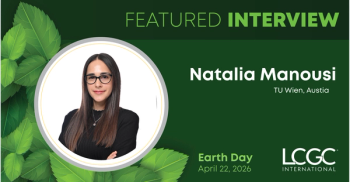
Natalia Manousi from TU Wien, Austria, describes the value of combining the Blue Applicability Grade Index (BAGI) with established metrics to develop methods that are reliable, efficient, and suitable for "real-world" applications.
Elia Psillakis challenges the assumption that bio-based solvents are always greener, urging labs to adopt evidence based choices over simple origin claims.
Elia Psillakis discusses how a life cycle view of solvents exposes unexpected impacts in chemicals long considered safe, challenging entrenched ideas of greenness in analytical labs.