

Liquid chromatography-tandem mass spectrometry (LC-MS/MS) reveals how soccer training intensity shifts athletes' hormone levels.
Liquid chromatography-tandem mass spectrometry (LC-MS/MS) reveals how soccer training intensity shifts athletes' hormone levels.

Gas chromatography-mass spectrometry (GC-MS) analysis of 90 basil varieties identifies top chemotypes for industrial use.
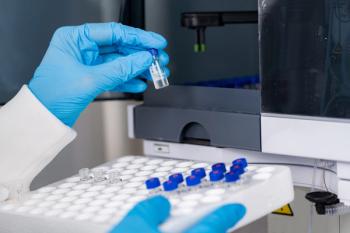
Liquid chromatography LC troubleshooting for oligonucleotides: fix peak splitting, denaturation smearing, and metal-surface adsorption to boost recovery.

Hans-Gerd Janssen explores the reality of real-time analytical measurement.

Liquid chromatography-tandem mass spectrometry (LC-MS/MS) urinary analysis ties volatile organic compound (VOC) and polycyclic aromatic hydrocarbon (PAH) exposure to oxidative stress in children.

This gas chromatography-quadrupole orbital trap high-resolution mass spectrometry (GC-Q-Orbitrap HRMS) method detects 215 pesticides in high-fat peanut matrices reliably.

Capillary liquid chromatography (CapLC) offers compelling advantages in sensitivity, solvent reduction, and compatibility with modern mass spectrometry, yet remains underutilized in routine analytical workflows. This article synthesizes expert discussions from a Pittcon 2026 networking session to examine why CapLC adoption has lagged despite decades of development. Key themes include educational gaps, instrumentation limitations, robustness concerns, detection challenges, and supply‑chain constraints. The discussion highlights areas where CapLC already delivers clear value—such as proteomics, oligonucleotide analysis, and high‑throughput screening—and outlines practical pathways for broader adoption through targeted applications, improved instrumentation, and redefined expectations of “routine” chromatography.

30% of GC–MS peak annotations and integrations have been observed to be inaccurate. Hans-Gerd Janssen highlights some of the most promising strategies to improve data reliability and reduce errors.
Hans-Gerd Jansses discusses problems associated with LC–MS peptide identification data with sensory perception and the identification of specific tastants for food analysis.

A non-targeted high-resolution mass spectrometry strategy was developed to detect PFAS in food beyond the limits of conventional targeted methods. A non-targeted high-resolution mass spectrometry strategy was developed to detect PFAS in food beyond the limits of conventional targeted methods. Using a single extract for both approaches, data prioritization and ion mobility mass spectrometry helped identify previously unsuspected PFAS, expanding analytical coverage for food safety monitoring.

Liquid chromatography-mass spectrometry (LC-MS) tracks gut bacteria activity before and after cognitive behavioral therapy treatment for social anxiety disorder.

Mass spectrometry–based techniques, including cross-linking and covalent labeling, were used to show how phosphorylation and oxidation alter alpha-synuclein structure, providing insight into how these modifications may influence aggregation and neurodegenerative disease. LCGC International spoke to Ian Webb, corresponding author of a paper that resulted from this research.

"GC Connections" column editor Nicholas Snow offers a basic GC maintenance tools and supplies overview.

Gas chromatography-mass spectrometry (GC-MS) headspace analysis identifies dimethyl disulfide as a microbial marker in spacecraft wastewater.

ASMS 2026 highlighted AI-driven MS software, faster/deeper proteomics, spatial biology imaging, biopharma characterization tools, PFAS monitoring, and greener instrumentation.

This week’s LCGC International website offerings span AI, food, forensics, and clinical therapy.

Gas chromatography coupled with mass spectrometry and ion mobility spectrometry was used to identify volatile compounds shaped by fermentation time and drying temperature in black tea.
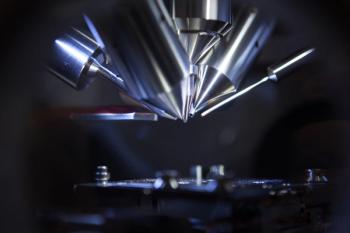
2026 ASMS awards honor advances in native MS, single-cell proteomics, metabolomics, and instrumentation, spotlighting mass spectrometry's scientific impact.

ASMS 2026 highlights a potential paradigm shift in metabolomics, as new evidence suggests many unknown signals are ESI artifacts.
Hans-Gerd Janssen highlights the important innovations and challenges remaining using hyphenated separation science techniques in food analysis.

Liquid chromatography-tandem mass spectrometry (LC-MS/MS) reveals fasting alters phthalate levels, with higher exposure linked to type 2 diabetes.

HPLC 2026 session on AI in separations science, covering LC–MS, modelling, peak integration and digital method development.

A two-part session on biopharmaceutical analysis will be held at HPLC 2026 on Monday, June 8.

Bo Zhang from Xiamen University, Xiamen, China discusses his upcoming lecture at HPLC 2026 that reveals a new way to design and manufacture chromatographic materials. This new approach indicates that chromatographic media can be intentionally engineered rather than developed through “trial-and-error” synthesis. By independently controlling particle morphology and pore architecture, separation materials can be rationally designed and optimized for specific applications
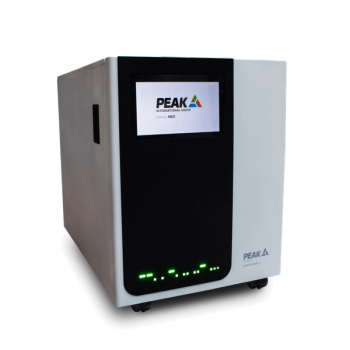
This week at the ASMS Annual Conference, Peak Scientific unveiled its latest nitrogen generator, the Genius NEO, describing it as the most advanced product in the company's history

High-performance liquid chromatography (HPLC) reveals how cherry variety, tissue type, and freezing method affect beneficial compound levels.

A dual isotope dilution tandem mass spectrometry (IDMS) method reliably detects 24 pesticides in cucumbers, revealing widespread safety limit breaches.

High-performance liquid chromatography (HPLC) measured blood dopamine in Parkinson's patients on LCE or LB, revealing no significant difference.

Gas chromatography-tandem mass spectrometry (GC-MS/MS) reveals first-trimester phthalate exposure impairs fetal growth, worsened by maternal stress.
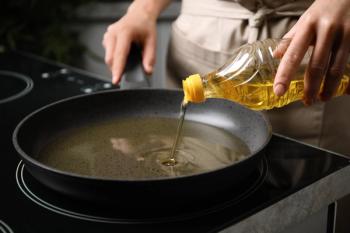
Chromatography and spectrometry techniques reveal how high-heat cooking alters fatty acid profiles in three vegetable oils.