

André Striegel discusses how work in industry, academia, and government has shaped his view of innovation in separation science and practical impact.
André Striegel discusses how work in industry, academia, and government has shaped his view of innovation in separation science and practical impact.

Researchers used high-performance liquid chromatography–mass spectrometry (HPLC–MS) to perform targeted metabolomic analysis of urine samples from children with autism spectrum disorder (ASD) and healthy controls. By focusing on metabolites associated with the microbiota–gut–brain axis, researchers identified distinct biochemical patterns that differentiate ASD from typical development. The chromatography-based approach enabled precise and reliable measurement of seven key metabolites, highlighting its value over broader, non-targeted methods.
Click here to access the LCGC International April 2026 European PDF in an interactive format.
Click here to access the LCGC International April 2026 North American PDF in an interactive format.

A recent paper introduced what the authors described as “an uncertainty-aware graph-based neural network that predicts retention times across multiple column chemistries and buffer pH conditions. LCGC International spoke to some of the authors of this paper, including corresponding author Pankaj Aggarwal, about their work.
At Pittcon 2026, Dal Nogare Award winner André Striegel discusses unresolved chromatography fundamentals and outlines research paths for progress.

Rasmus Bro shows how generative AI extends chemometrics by automating curation, linking analytical data with text knowledge, and improving interpretation.

Top articles published this week include a two part discussion on slalom chromatography, a look at the current analytical procedure lifecycle practices, and the utility of liquid chromatography coupled with mass spectrometric detection (LC–MS) for analysis of oligonucleotides (ONs).

Headspace solid-phase microextraction coupled with GC–MS (HS-SPME/GC-MS), integrated with machine learning, enabled comprehensive profiling of 127 volatile compounds across multiple vinegar types. Random Forest modeling achieved high classification accuracy, identifying key aroma markers and demonstrating the power of chromatographic–data science workflows for differentiating fermented food products.

At Pittcon 2026, Mary Ellen McNally discussed sustainable chromatography, highlighting SFC, low-solvent LC, and greener sample prep to cut waste in industrial labs.

A dual-injection, single-run liquid chromatography–high-resolution mass spectrometry (LC-HRMS) method enabled simultaneous profiling of phenolic and lipophenolic compounds in olive oil by-products. The approach achieved efficient separation and identification of over 40 compounds, overcoming solubility challenges and advancing high-throughput characterization of bioactive metabolites for sustainable valorization applications.

Gas chromatography–mass spectrometry (GC–MS) analysis of cotton headspace volatiles showed that plant growth-promoting rhizobacteria consortia alter emission profiles linked to reduced Spodoptera exigua oviposition. Key compounds, including terpenes and green leaf volatiles, mediated pest avoidance behavior, highlighting GC–MS as a tool for advancing integrated pest management strategies.

Dwight Stoll and Martin Gilar describe the utility of liquid chromatography coupled with mass spectrometric detection (LC–MS) for analysis of oligonucleotides (ONs), discuss recommended LC modes and mobile phases, and highlight challenges encountered in these applications, along with potential solutions.

PEAK International Group recently unveiled its new brand identity at Analytica Munich 2026. The rebrand aligns PEAK Scientific, Noblegen Cryogenics and PEAK Gas Generation under the PEAK International Group umbrella, empowering the unique identity of each brand, supported by direct service throughout the globe as part of the PEAK International Group.

Kevin Schug identifies the key challenges preventing wider uptake of molecular encoding and machine learning tools in everyday analytical laboratory settings.

Headspace gas chromatography–mass spectrometry (GC-MS) analysis of paired maternal and umbilical cord blood demonstrated that induction-to-delivery time strongly influences fetal sevoflurane exposure. While maternal anesthetic levels did not predict fetal concentrations, longer delivery intervals increased transfer, highlighting timing as a critical factor in managing anesthetic exposure during cesarean delivery.

Researchers utilized high-resolution liquid chromatography coupled with tandem mass spectrometry (LC-HRMS/MS) and chemometric modeling to profile the leaf metabolomes of three taxonomically complex Brazilian Vanilla species. By identifying 17 core discriminating biomarkers, this untargeted metabolomic approach successfully established species-specific metabolic fingerprints, providing a robust new strategy for chemotaxonomic classification and species authentication.
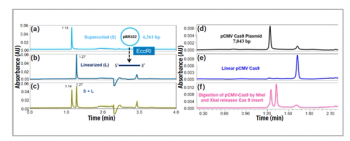
Slalom chromatography speeds mRNA QC—separating plasmid forms and spotting dsRNA impurities in minutes with higher sensitivity than gels or ELISA.
Kevin Schug examines how models trained on known compounds perform when applied to unseen molecules or transferred to new experimental setups.

Researchers using gas chromatography–mass spectrometry (GC-MS) to study the gases released from heat-treated spruce wood found that heating the wood—especially at higher temperatures—greatly reduces the amount of these gases, which can affect indoor air quality.
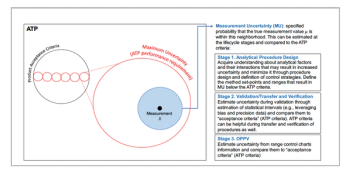
LCGC presents the first in a series of articles exploring the current analytical procedure lifecycle practices with multiple industrial and regulatory experts and consultants in the field, and addresses if this is a great opportunity to develop a greater understanding of method performance to ensure continuous improvement and regulatory flexibility, or if it is just additional challenges, complexity, and headaches.

As more people choose plant-based milks like oat, almond, soy, and coconut, new challenges arise in ensuring these drinks are safe—especially in preventing accidental allergen exposure. While factory checks are standard, they don't address risks at the point of consumption. A recent study proposed a "digital nose" using AI to "smell" and verify milk quality in real-time. To calibrate these sensors, researchers used gas chromatography-mass spectrometry coupled with solid-phase microextraction (GC-MS-SPME) as the gold-standard reference to accurately identify the unique scent profiles of each milk type.

The 55th International Symposium on High Performance Liquid Phase Separations and Related Techniques (HPLC 2026) conference will convene June 6–11, 2026, in Indianapolis, Indiana.

Mary Ellen McNally, column editor for LCGC International’s “Sample Prep Perspectives” column was recently named a 2026 Outstanding Delaware Woman in STEM by Million Women Mentors Delaware.
Kevin Schug outlines the criteria used to select machine learning methods for analytical problems and how success is defined and evaluated.

To address the growing challenge of trace contaminants surviving standard water treatment, Portuguese researchers have developed and validated a highly sensitive solid-phase extraction ultra-high performance liquid chromatography coupled to tandem mass-spectrometry (SPE-UHPLC-MS/MS) method to monitor 23 microscopic pollutants—including pharmaceuticals, pesticides, and UV-filters—in drinking water. The method successfully identified four target compounds at safe residual levels, providing vital data to support emerging European Union water safety directives and filling a critical gap in regional water monitoring.

Researchers combined gas chromatography-ion mobility spectrometry (GC-IMS), headspace solid-phase microextraction (HS-SPME), stir bar sorptive extraction (SBSE), and gas chromatography-olfactometry-mass spectrometry (GC-O-MS) to characterize volatile compounds in cigar tobacco leaves from different regions. Fifteen key aroma-active compounds were identified, defining sensory profiles such as fruity, citrus, and chocolate notes, supporting improved raw material selection and future predictive models for cigar aroma development.
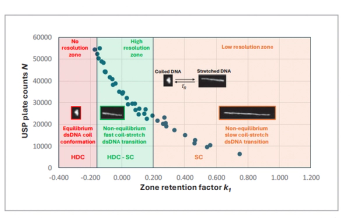
Part 1 of this two-part article series reviews the history of slalom chromatography (SC), the rationale for its recent revival, and the updated mechanistic framework of this technique. Rooted in the fundamental physical properties of deoxyribonucleic acid/ribonucleic acid (DNA/RNA) biopolymers and laminar flow dynamics in packed chromatographic beds, SC is highlighted for its most promising applications in cell and gene therapy. Recent two-year experimental investigations have revealed that SC operates through an out‑of‑equilibrium mechanism, coupling the entropic elasticity of double‑stranded deoxyribonucleic acid/ribonucleic acid (dsDNA/RNA) with the extension and shear forces generated within the interparticle spaces of ultrahigh-pressure liquid chromatography (UHPLC) columns. In contrast to gel permeation chromatography (GPC) or hydrodynamic chromatography (HDC), SC functions at high speed and uniquely elutes smaller dsDNA fragments first, followed by progressively larger ones. Unlike agarose gel electrophoresis (AGE), SC achieves separations of large DNAs in less than three minutes, with nearly twice the resolution power of typical AGE. These findings paved the way for the recent design of a new SC column intended for use in cell and gene therapy as an alternative to standard AGE. Further applications of this new SC column within cell and gene therapy workflows will be discussed in Part 2.

A recent study shows that integrating multipass cyclic ion mobility spectrometry into liquid chromatography-high-resolution mass spectrometry improves detection and separation of toxic plant-derived pyrrolizidine alkaloids, including previously indistinguishable epimers, in complex food samples. LCGC International spoke to Laura Carbonell-Rozas, lead author of that paper, about the study.

Peter Tranchida on the robustness of enantiomeric ratio profiling across food types.