

Discover how women in chromatography are breaking barriers, fostering community, and inspiring the next generation in STEM through mentorship and courage.
Discover how women in chromatography are breaking barriers, fostering community, and inspiring the next generation in STEM through mentorship and courage.
Explore the complexities of GLP-1 impurity detection using HPLC/UHPLC and innovative strategies to enhance analysis and regulatory compliance.

Researchers focused on the early stages of developing innovative plant-based active ingredients for skincare, using HPLC to determine which species should be shortlisted for phytochemical profiling.


Giulia Mazzoccanti spoke to LCGC International about the development and application of electrostatic repulsion-reversed phase (ERRP) chromatography for peptide separations.

Metabolomic profiling and the identification of metabolomic markers following HPAI H5N1 infection in chicken was performed in an Indian research study, with metabolite extracts analyzed using LC-MS/MS.

Torgny Fornstedt, Jörgen Samuelsson, and Martin Enmark discuss a novel machine learning workflow for oligonucleotide analysis that is helping to enhance method development and impurity profiling efficiency.

Discover innovative LC–HRMS methods for analyzing RNA-based therapeutics, enhancing biopharma development and regulatory compliance in drug characterization.
Static and dynamic electrostatic repulsion-reversed phase (ERRP) has been compared for the separation of peptide impurities.


Researchers evaluated the antidiabetic potential of peanut oil, known for its high phytochemical content and medicinal properties, using GC-MS to collect and classify fatty acid compounds within the oil.
This episode of Behind the Peaks focuses on the importance of sound statistical practices in chromatographic analysis.

The advancements in HILIC–MS for oligonucleotide analysis are discussed, highlighting its potential as a viable alternative to traditional methods.

The second part of our interview with Annika van der Zon and Andrea Gargano regarding their research developing poly(acrylamide-co-N,N-methylene-bis(acrylamide) monolithic hydrophilic interaction chromatography columns optimized for protein separation.
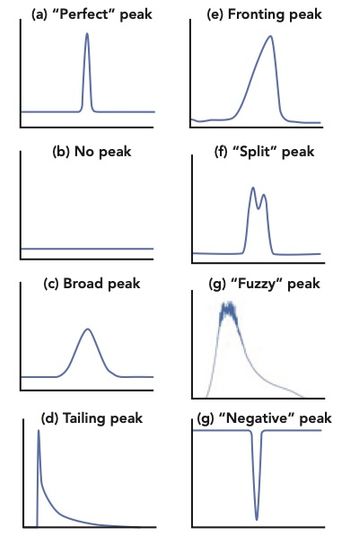
Master LC troubleshooting techniques to optimize your analysis and resolve issues with confidence.
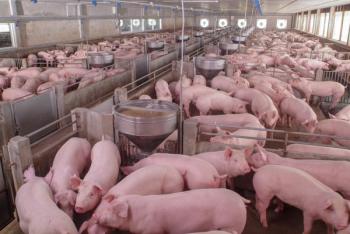
Researchers assessed ivermectin (IVM) residues in intensive swine farms—from animal treatment to slurry, soil, and wastewater—to evaluate potential environmental contamination. IVM concentrations were quantified using LC–MS/MS.

In a study conducted at the van 't Hoff Institute for Molecular Sciences at the University of Amsterdam (the Netherlands), researchers developed poly(acrylamide-co-N,N-methylene-bis(acrylamide) monolithic HILIC columns optimized for protein separation.LCGC International spoke to Annika van der Zon and Andrea Gargano, both from the van 't Hoff Institute and corresponding authors of the paper, to learn more about their research
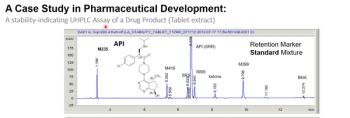
LCGC International Column Editor Michael Dong concludes his three-part series on HPLC fundamentals for practicing scientists with a case study concerning pharmaceutical development using UHPLC.

Recent developments in lipidomics and metabolomics have highlighted persistent challenges in data processing, statistical analysis, and visualization—areas that often hinder reproducibility, transparency, and accessibility within the field. A newly published guideline addresses these issues by presenting a comprehensive, code-based framework for the statistical treatment and graphical representation of omics data using R and Python. LCGC International spoke to Michal Holcapek and Jakub Idkowiak about the rationale behind this research and the benefits it offers separation scientists.
This past week, LCGC International published a variety of articles on hot topics in separation science.

Thermo Fisher Scientific has released the Orbitrap Exploris EFOX Mass Detector, a high-resolution mass spectrometry system for environmental and food safety testing.

Michael Bartlett, Torgny Fornstedt and Mark Dickman conclude the series with their expert insights into what the future of oligonucleotide analysis could involve.

The panel discuss the innovations in sample preparation that are being developed for oligonucleotide analysis.
The sensitivity and selectivity of high resolution mass spectrometry (HRMS) for oligonucleotide analysis is discussed.

Researchers used GC-IMS technology to analyze the volatile flavor compounds in different plum varieties and the changes in flavor during the salting process.

Key aspects involved in manufacturing high-quality packed capillary columns, including fritting, column packing, and parallel fabrication, are discussed.
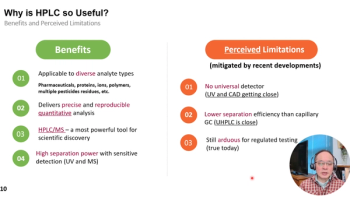
In this second part of a series on fundamentals of HPLC for practicing scientists, LCGC International column editor Michael W. Dong discusses the benefits and limitations of the technique.

Mark Dickman shares his views on analyzing larger oligonucleotides, including mRNAS.

A study to illustrate the metabolic changes in the adipose tissue metabolome of Holstein dairy cows transitioning from one lactation cycle to the next integrated liquid chromatography, flow injection, and electrospray ionization triple quadrupole MS.

The panel explore the potential of multidimensional chromatography for the analysis of oligonucleotides.