
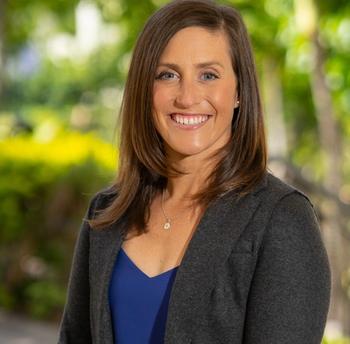
Chemist Katelynn Perrault Uptmor discussed her work using comprehensive two-dimensional gas chromatography (GC×GC) to improve complex chemical analysis, forensic investigations, and laboratory accessibility at the 2025 Eastern Analytical Symposium
Chemist Katelynn Perrault Uptmor discussed her work using comprehensive two-dimensional gas chromatography (GC×GC) to improve complex chemical analysis, forensic investigations, and laboratory accessibility at the 2025 Eastern Analytical Symposium

This edition of LCGC International’s “Equipment Roundup” spotlights Shimadzu’s i-Series LC-2070/LC-2080 Integrated High-Performance Liquid Chromatographs, and recent software upgrades to their ACD/Labs Spectra and Percepta platforms.

Chip Cody discusses his work in mass spectrometry, including DART ion source innovations and insights on chromatography integration.

Researchers from Italian institutions investigated how the storage and transport of cocoa beans in jute bags from 15 countries contribute to mineral oil hydrocarbon (MOH) contamination, finding—using advanced chromatographic techniques including GC×GC-FID/MS.

At the Eastern Analytical Symposium (EAS) in Plainsboro, New Jersey, Purdue researchers presented data suggesting that microscopic flaws in drug crystals—rather than just chemical composition or particle size—play a critical role in carcinogenic nitrosamine formation.

A Purdue University team published a comprehensive review highlighting two decades of research advancing desorption electrospray ionization-mass spectrometry (DESI-MS) as a rapid, sensitive, and clinically valuable tool for improving surgical precision and patient outcomes in neuro-oncology.

Researchers at Fairleigh Dickinson University (Florham Park, New Jersey) published a study in Analytica that investigated the retention mechanisms of 16 native and modified nucleosides on a bare silica column in hydrophilic interaction liquid chromatography (HILIC). LCGC International spoke to Yong Guo, Professor of Pharmaceutical Science and Chair of the Department of Pharmaceutical Sciences at the Fairleigh Dickinson’s College of Pharmacy and Health Sciences, and corresponding author of the paper, about the group’s findings.
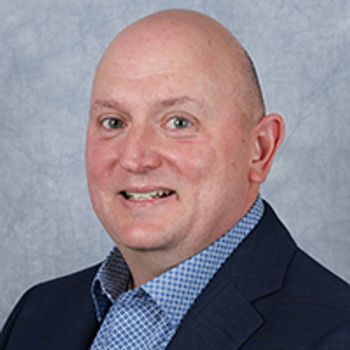
To mark Restek’s 40th anniversary, LCGC spoke with Bill Arrowsmith, the company’s head coach and president, about how employee ownership shapes Restek’s culture, drives innovation, and supports its global growth in a rapidly evolving analytical landscape.

Top articles published this week include an interview with 2025 Eastern Analytical Symposium Award recipient David S. Hage and a blog entry about the work that the American Chemical Society’s Subdivision on Chromatography and Separations Chemistry (ACS SCSC) is doing.

Researchers have developed a sensitive and selective GC–MS method for the simultaneous qualitative and quantitative analysis of multiple sterols in pre-prepared dishes.

A study focusing on the identification and characterization of a novel antioxidant peptide from black soybean aqueous extracts, targeting myeloperoxidase (MPO), a key enzyme in oxidative damage profiled the peptide components using LC-MS/MS.
David S. Hage discusses how emerging chemists are trained to evaluate data critically, validate methods rigorously, and apply analytical techniques to practical, real-world challenges.

A multinational research study assessed microplastic concentrations in the drinking water supply system of Amsterdam from source to tap using pyrolysis gas chromatography-mass spectrometry (Py-GC-MS).

A multinational research group developed and validated an in-house sample preparation procedure and liquid chromatography with tandem mass spectrometry (LC-MS/MS) method to monitor the suspected carcinogen acrylamide (AA) in 113 potato chip samples from Iranian brands during two periods: 2016-2017 and 2020-2021.
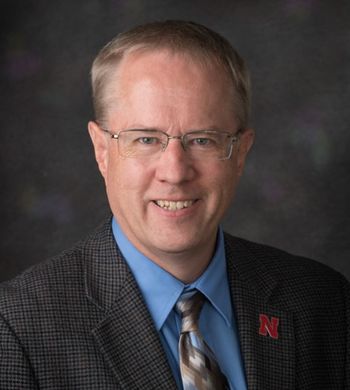
David S. Hage discusses the key trends and emerging topics in separation science and bioanalysis that are driving innovation in analytical chemistry and its applications to complex biological systems.

Researchers from the United Kingdom’s National Measurement Laboratory (NML) developed and evaluated a tailored mass spectrometry (MS)-based workflow for the detailed characterization and quantification of rAAV serotype 9 (rAAV9) capsid proteins.LCGC International spoke to Theodoros Kontogiannis from the NML and the lead author of the paper that resulted from this work, about the group’s findings.
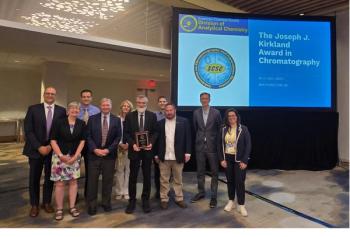
This LCGC blog highlights the ACS SCSC’s initiatives, events, and awards that connect and support the global separation science community across academia, industry, and government.
David S. Hage discusses how recent developments in immobilization chemistry and materials science are enhancing the performance and versatility of affinity-based separations.
David S. Hage shares how his team is applying microfluidics and miniaturized separation systems to improve speed, reproducibility, and real-world applicability in analytical and bioanalytical chemistry.
This past week, LCGC International published a variety of articles on hot topics in separation science. We discuss how mass spectrometry (MS) unveiled new insights into how music modulates protein networks in lipid nanoparticle delivery and how gas chromatography (GC) can be sed to identify aroma types in unburnt cannabis. Also, we make a call for nominations for the 2026 HTC Innovation Award.
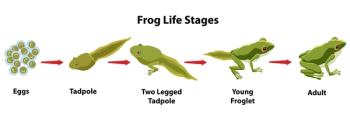
Researchers have developed an enhanced LC-MS/MS method capable of quantifying 18 steroids—including key corticosteroid and sex steroid hormones, as well as intermediates involved in corticosteroid synthesis—in plasma and tail samples collected during the transition of tadpoles into frogs.
David S. Hage, James Hewett University Professor at the University of Nebraska–Lincoln, discusses how advances in affinity-based separations are shaping the future of personalized medicine and transforming clinical diagnostics.
Laura Carbonell-Rozas, a post-doctoral researcher at the University of Granada (Granada, Spain), discusses the potential of natural deep eutectic solvents (NADES) in food analysis as sustainable solvents in sample preparation.

Research focused on the cooking process of marinades used headspace solid-phase microextraction gas chromatography-mass spectrometry to analyze changes and volatilization characteristics of flavor compounds at different cooking times.

Sponsored
Sean Jameson, SVP of Business Development at VUV Analytics, discusses the newly released ASTM D8519 method. This method extends established VUV-based hydrocarbon analysis into the pyrolysis oil range, enabling automated, scalable characterization of complex recycled and biomass-derived feedstocks up to C64.

A study conducted by a multinational research group investigated the potential of audible sound waves (in the form of music, specifically Pink Floyd’s "Another Brick in the Wall, Part 1") in enhancing nanoparticle neuronal uptake and brain penetration.
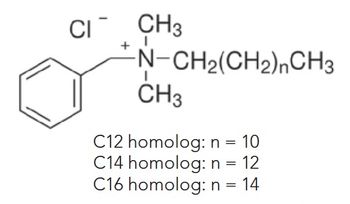
Benzalkonium chloride (BAK) is a common preservative composed of quaternary ammonium compounds with 8–18 carbon alkyl chains, mainly C12, C14, and C16 homologs. Because BAK can adsorb to surfaces, this study highlights the challenges of predicting adsorption behavior and the importance of conducting a vial compatibility assessment early in HPLC method development for dilute solutions of BAK and analytes with similar physicochemical properties.

Researchers at Oregon State University and Dow Neurobiology developed a standardized aroma lexicon for characterizing the aromatic attributes of Cannabis inflorescence with an associated sensory method that included the use of gas chromatography in data analysis.

LCGC International and the HTC-19 Scientific Committee celebrate innovation in separation science with the 2026 HTC Innovation Award. Previous winners include Bob Pirok, Szabolcs Fekete, Ryan Kelly and Caroline Huhn.
Researchers at the University of Buffalo used combined middle-up and bottom-up LC–MS/MS to characterize the HIV-1 broadly neutralizing antibody PGT 121. They identified multiple Fc and site-specific glycoforms and an unexpected N-terminal serine, revealing significant structural heterogeneity. This integrated approach enhances understanding of bNAb structure, supporting quality control and clinical development. LCGC International spoke to Troy Wood, corresponding author of the paper resulting from this research.