

A study investigating the use of lard-derived diacylglycerol (DG) as a fat replacer on the flavor characteristics of frankfurters detected 50 volatile compounds in the samples analyzed using gas chromatography-mass spectrometry (GC-MS).
A study investigating the use of lard-derived diacylglycerol (DG) as a fat replacer on the flavor characteristics of frankfurters detected 50 volatile compounds in the samples analyzed using gas chromatography-mass spectrometry (GC-MS).

After two and a half years at LCGC International, I reflect on my journey of growth, learning, and deep appreciation for the chromatography community and the people who make it thrive.

In the sixth part of this roundtable discussion focused on the experiences, challenges, and contributions of women in chromatography, LCGC International spoke to Susanne Boye, Daniela Held, and Claudia Zielke about the practical skills needed to lead a lab.
Jessica Lin and Zhenqi (Pete) Shi from Genentech describe a novel machine learning approach to predicting retention times for small molecule pharmaceutical compounds across reversed-phase high performance liquid chromatography (HPLC) columns.
Andrew Anderson shares insights on the factors that may shape the next major advance in pharmaceutical informatics strategy.

Researchers developed a technique optimizing the extraction process of six cannabinoids in cannabis oil and marijuana samples, as well as an analytical validation of a quantitative and qualitative method for seven cannabinoids, using ultrahigh-performance liquid chromatography coupled with low-resolution mass spectrometry (UHPLC-LTQ-MS).

How might the relationship between human and machine evolve over the coming years?

Responding to a lack of sensitive analytical methods for detecting associated medications in complex wastewater matrices, researchers at the University of Louisville developed and validated a liquid chromatography-tandem mass spectrometry (LC-MS/MS) method using multiple reaction monitoring for 10 common respiratory pharmaceuticals.

In the fifth part of this roundtable discussion focused on the experiences, challenges, and contributions of women in chromatography, LCGC International spoke to Susanne Boye, Daniela Held, and Claudia Zielke about the power of networking.

This article explores the diverse career paths where analytical sciences PhDs create impact in fundamentally different ways than traditional research roles, and provides practical guidance on how to pursue them.

Andrew Anderson, VP of innovation and informatics strategy at ACD/Labs, explores the interplay between human expertise and AI capabilities.

A research team comprised of members of the University of Liège and the College of William & Mary developed a robust analytical workflow to profile volatile organic compounds (VOCs) emitted during accelerated thermal aging of smokeless powders formulated with those green stabilizers. Headspace solid-phase microextraction coupled with comprehensive two-dimensional gas chromatography–time-of-flight mass spectrometry (HS-SPME–GC×GC–TOFMS) provided high peak capacity and sensitive VOC detection. LCGC International spoke to Pierre-Hugues Stefanuto of the University of Liège about this workflow and its potential implications for future research.

Discover the latest advancements in supercritical fluid chromatography and extraction at SFC/SFE Japan 2026.

What steps should be taken when reactivating your gel permeation chromatography/size-exclusion chromatography (GPC/SEC) instrument after an extended shutdown period?
In the fourth part of this roundtable discussion focused on the experiences, challenges, and contributions of women in chromatography, LCGC International spoke to Susanne Boye, Daniela Held, and Claudia Zielke about how best to navigate challenges in chromatography.
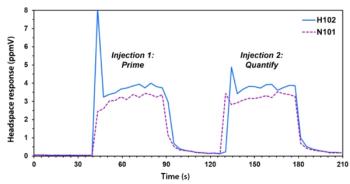
Selected ion flow tube mass spectrometry (SIFT-MS) offers potential for rapid screening of volatile nitrosamines and their amine precursors in a single run.

Anderson details how ACD/Labs ensures that data are AI-ready and FAIR-compliant across diverse systems common in pharma R&D.
To detect estrogen and its metabolites in the ovarian-type stroma of pancreatic mucinous cystic neoplasm (MCN) tumors, researchers applied a novel liquid chromatography–tandem mass spectrometry (LC-MS/MS) method.

Top articles published this week include several clips from a recent panel discussion featuring female chromatographers and an inside look at how artificial intelligence (AI) is impacting separation science.
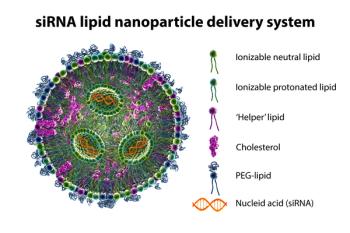
A fast, selective, and quantitative liquid chromatography (LC) method was developed for lipid nanoparticles (LNPs) analysis, using evaporative light scattering for sensitive detection of the analytes of interest.
In the third part of this roundtable discussion focused on the experiences, challenges, and contributions of women in chromatography, LCGC International spoke to Susanne Boye, Daniela Held, and Claudia Zielke about how to position yourself for leadership.

Researchers investigating how beer and the hepatopancreas influence the flavor of red swamp crayfish assessed the effects of cooking with or without the hepatopancreas in beer or water on crayfish quality using sensory analysis, electronic nose technology, and gas chromatography–ion mobility spectrometry (GC-IMS).
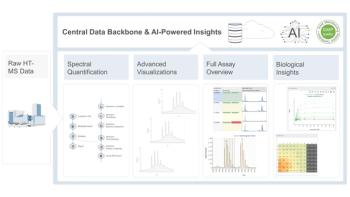
High-throughput mass spectrometry (HT-MS) is becoming a driving force in modern drug discovery. This article explains how a purpose-built digital ecosystem—featuring structured data, automation, artificial intelligence (AI)-driven analytics, and cloud scalability—is essential to translate massive HT-MS data sets into reproducible, actionable decisions.

In the second part of this roundtable discussion focused on the experiences, challenges, and contributions of women in chromatography, LCGC International spoke to Susanne Boye, Daniela Held, and Claudia Zielke about the best strategies to advance your career in chromatography.

A look at the biggest technical barriers preventing full digital integration

Researchers aiming to determine the optimal harvest time for maximum essential oil and linalool yields from basil hydro distilled the dried leaves of gathered plant samples for extraction of essential oil and subjected the resulting produce to gas chromatography-mass spectrometry (GC-MS) analysis to determine the variance in chemical compounds composition.
In the first part of this roundtable discussion focused on the experiences, challenges, and contributions of women in chromatography, LCGC International spoke to Susanne Boye, Daniela Held, and Claudia Zielke about their route into separation science.

Researchers investigating the prevalence of vitamin D deficiency and insufficiency in individuals with chronic spinal cord injury assessed participants’ vitamin D levels using high-performance liquid chromatography-tandem mass spectrometry (HPLC-MS/MS).

This month's LCGC Blog from Jonathan Shackman from the American Chemical Society (ACS) reflects on how early experiences with computer programming shaped the author’s understanding of fundamental logic, and how today’s artificial intelligence (AI) tools similarly shift the balance between mastering low-level processes and focusing on analytical goals.

Andrew Anderson, VP of innovation and informatics strategy at ACD/Labs, talks about how the scientific method is being redefined and the role the AI-digital-physical DMTA cycle plays.