

During a presentation at the conference in Denver, Colorado scientists from Merck and Novilytic spoke about chromatography techniques used for different kinds of pharmaceutical analysis.
During a presentation at the conference in Denver, Colorado scientists from Merck and Novilytic spoke about chromatography techniques used for different kinds of pharmaceutical analysis.

At HTC-18 in Leuven, Executive Editor of LCGC International, Alasdair Matheson, spoke to this year’s winner of the 2024 HTC-18 Innovation Award, Bob Pirok from the University of Amsterdam, about his innovative research on automated LC method development.

At HTC-18 in Leuven, Executive Editor of LCGC International, Alasdair Matheson, spoke to Leon Barron from Imperial College London about his innovative research focusing on modern chromatographic techniques for analyzing contaminants of emerging concern in drinking water.

At HTC-18 in Leuven, Executive Editor of LCGC International, Alasdair Matheson, spoke to Chiara Cordero from the University of Turin about the evolving role of AI and its effect on GCxGC in foodomics.

PEAK Scientific, a provider of laboratory gas generation solutions, has opened a new facility in South Korea.

Research by Himanshi Upadhyaya & John V. Goodpaster of the Department of Chemistry and Chemical Biology, Indiana University Indianapolis has focused on using an odor-permeable membrane device (OPMD) to determine any changes in the odor of dynamite and have utilized gas chromatography–mass spectrometry in negative chemical ionization mode in all analysis.

Tarun Anumol of Agilent Technologies discusses the biggest challenges laboratories are experiencing in PFAS testing along with some potential solutions.

Keynote speakers at HPLC 2024 in Denver, Colorado will deliver talks on method development in liquid chromatography (LC), miniaturizing LC columns, and more.

At HTC-18 in Leuven, Executive Editor of LCGC International, Alasdair Matheson, spoke to Martina Catani from the University of Ferrara about her recent research focusing on novel green preparative methods used for biopharmaceutical purification.

Researchers at the University of Wolverhampton have utilized gas chromatography-mass spectrometry (GC-MS) in their efforts to create new scent enrichments in their efforts to trigger mating behaviors of zoo-housed lemur species.

Researchers at the Cleveland Clinic, using liquid chromatography tandem mass spectrometry (LC-MS/MS), determined that xylitol may be a risk factor related to a major adverse cardiovascular event.

This article explores three case studies where autosampler injection programs help to (i) reduce the carry-over observed for large nucleic acids during anion-exchange chromatography (AEX), (ii) reduce peak distortion and breakthrough for monoclonal antibodies (mAbs) during hydrophilic-interaction chromatography (HILIC), and (iii) facilitate dissolution of lipid nanoparticles (LNPs) so that a size-exclusion chromatography (SEC) method can be applied for ribonucleic acid (RNA) payload analysis.

LCGC International spoke with Shawn Anderson, Associate Vice President of Digital Lab Innovations at Agilent Technologies; Marco Kleine, Head of the Informatics Department at Shimadzu Europa GmbH; Trish Meek, Senior Director, Connected Science, Waters Corporation and Todor Petrov, Senior Director, QA/QC, Waters Corporation; and Crystal Welch, Product Marketing Manager at Thermo Fisher Scientific about the latest trends in data handling.

Researchers have evaluated the possibility of analyzing finger sweat through liquid chromatography-mass spectrometry (LC-MS) to ensure medication adherence and as a semi-quantitative tool in therapeutic drug management assessment and report positive results.
Kevin A. Schug of The University of Texas at Arlington and his team partnered with The Lummus Technology (Pasadena, TX) to develop a method of pyrolysis based on supercritical fluid chromatography (SFC) with ultraviolet (UV) detection. Schug spoke to us about the process and the paper that resulted from its development.

The NASA Perseverance Mars Rover and its spectrometer is once again fully functional after six months of not being operational.

LCGC International spoke with Quang-Dong Bui, a second-year PhD student at Vrije Universiteit Brussels to discuss his work in oligonucleotide analysis.
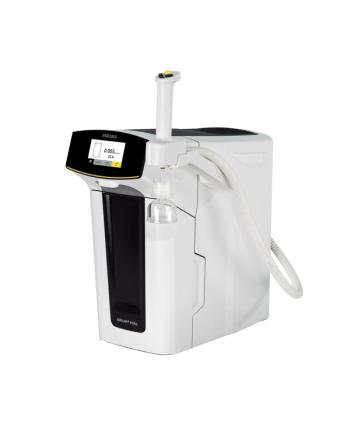
In this “Equipment Roundup,” the editors of LCGC International feature new instruments from Sartorius and Shimadzu.

Researchers in Western Australia have used high-performance thin layer chromatography (HPTLC) to authenticate Jarrah flower nectar and honey.

Research published in Frontiers in Environmental Science, utilizing high-resolution mass spectrometry, reports that chemical substances from tire wear have found their way into the food chain.

Scientists in France took 122 swabs from the smartphones of music festival goers to test for a variety of illicit drugs including cocaine and MDMA.

In this edition of “Inside the Laboratory,” Lee Blaney of the University of Maryland Baltimore County (UMBC) discusses his laboratory’s work with using liquid chromatography (LC) techniques to analyze and measure contaminants of emerging concern (CECs) in water, soil, and environmental samples.

The editors of BioPharm International spoke with Christine Rozanas, PhD, global product marketing manager at Cytiva, to discuss the advantages and persistent challenges with implementing continuous downstream chromatography.

In this equipment roundup, the editors of LCGC International highlight new instruments from Bruker and Shimadzu.

Maria Concheiro of John Jay College (New York City) spoke to LCGC International about her research identifying and quantifying pharmaceuticals and drugs of abuse in river water samples collected from the Hudson and East Rivers in New York City, as well as investigating the possible source of these micropollutants

The global chromatography food testing market is estimated to exhibit a compound annual growth rate (CAGR) of 6.27% during the forecast period of 2023-2031, states a recent market assessment report on the subject.

The instrument manufacturer highlighted its new Stellar Mass Spectrometry solution at the conference in Anaheim, California, alongside other updates to its existing product line.

The company launched its new Xevo MRT instrument and highlighted new certifications for its chromatography columns during the conference in Anaheim, California.

LCGC’s Senior Technical Editor uses artificial intelligence (AI) platform ChatGPT to answer questions about the role of AI in separation science. Do you agree with ChatGPT?

A recent study from the University of Lyon demonstrated how mass spectrometry techniques, when coupled to data-independent acquisition (DIA), can advance omics research.