
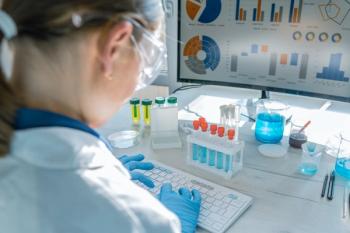
Experts from academia discussed the use of gradient boosting machine learning and AI in life sciences and medicine.
Experts from academia discussed the use of gradient boosting machine learning and AI in life sciences and medicine.

A technique to measure total phenolic content (TPC) in vegetable oils through analysis of images captured by a cellphone may prove to be easier to utilize than the traditional methods of ultraviolet/visible (UV-vis) spectrophotometry, high-performance liquid chromatography (HPLC), and gas chromatography (GC).

A recent paper introduced a compressed fluid-based separation process that combines carbon dioxide and ethanol to isolate portisins previously hemi-synthesized from blueberry surplus anthocyanins. The performance of the two-step separation process was compared favorably to centrifugal partitional chromatography (CPC) and conventional reversed-phase liquid chromatography (RPLC) findings that were reported in terms of portisins content in the extract, process throughput, process efficiency, and total solvent used.
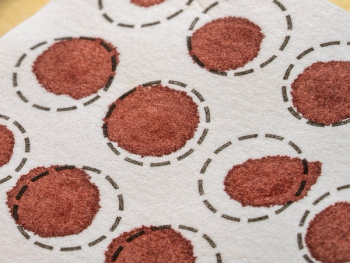
Researchers investigated the use of electric field in dried blood spot (DBS) sample preparation for the detection of steroids in newborns using liquid chromatography-tandem mass spectrometry (LC-MS/MS) using both regular electroporation cuvettes and a custom vial setup.

A recent paper discusses advances in hydrophilic interaction chromatography (HILIC) in the analysis of therapeutic oligonucleotides and their impurities.

The editors of LCGC International highlighted five sessions set to take place at the American Society for Mass Spectrometry conference in Anaheim, California.

In this article, the editors of LCGC highlight some newly released laboratory products from instrument manufacturers around the world.

Exum Industries, producers of the first laser ablation laser ionization time of flight mass spectrometer (LALI-TOF-MS), announced a partnership with Edge Scientific to better promote and distribute their products.

The global portable spectrometer market is expected to reach over $4 million by 2030, according to a new market research report.

This year the conference will honor the work of nine scientists working across industry, academia, and government.
Researchers propose a suite of batch effect removal neural networks in large liquid chromatography-mass spectrometry experiments to maximize sample classification performance between conditions.
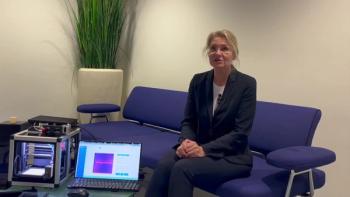
Gertrud E. Morlock, chair of food science at Justus Liebig University Giessen sat down with LCGC International to discuss the 2LabsToGo portable technology.

The 72nd American Society for Mass Spectrometry Conference on Mass Spectrometry and Allied Topics will take place 2–6 June 2024 in Anaheim, California.

The North Carolina Collaboratory’s partnership with Thermo Fisher Scientific’s mass spectrometry instruments is designed to further research into per- and polyfluoroalkyl substances (PFAS).

Researchers have utilized ultra-high performance liquid chromatography-tandem mass spectrometry (UH PLC-MS/MS) to monitor 5-Fluorouracil, a medication used to treat various cancers, in dried blood spots. This process offers a simpler, more efficient method than those in place involving the monitoring of plasma.

An examination of how chromatography could be used to solve the water crisis in the American southwest.

American researchers are moving their laboratories more frequently than ever before. Here’s how that process works, according to scientists who have done it.
A report estimates that the market for chromatography software will grow at an 8.92% CAGR between 2023 and 2033.

In this edition of “Inside the Laboratory,” Paola Tiedemann, PhD, an assistant professor of chemistry at Texas Tech University, discusses her laboratory group’s work using headspace sampling techniques like solid phase microextraction coupled to gas chromatography-mass spectrometry (SPME-GC–MS) to chemically characterize odor volatiles from a range of forensic specimens.

A report estimates that the market for high performance liquid chromatography equipment will grow at a 4.61% CAGR between 2023 and 2033.

Companies including Bristol Meyers Squibb and Pfizer have been laying off workers, which could be worrisome for analytical scientists.

A recent study used ultrahigh-pressure liquid chromatography (UHPLC) to identify traces of drugs on smartphones.

LCGC International sat down with Jeff Zonderman, senior vice president of Bruker Applied MS at Analytica, to discuss sustainability, PFAS analysis, and the company’s year-old mass spectrometry division.

LCGC International sat down with Zacariah Hildenbrand, chief science officer of Infinity Water Solutions and Partner of Medusa Analytical, to discuss the latest trends and challenges in cannabis analysis.

To commemorate Earth Day, LCGC International is profiling several chromatographers and their recent work in environmental analysis. We compile the Q&A interviews here for your enjoyment and ease of accessibility.

Experts from academia and industry present on the innovative research projects they are working on.
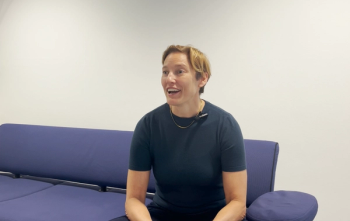
Bendt, of SLING, or Singapore Lipidomics Incubator, spoke with LCGC at Analytica 2024 about her research in the field of lipidomics, and about her work laying the ground for the Females in Mass Spectrometry group.

From new anion exchange chromatography systems to purification tools and size-exclusion chromatography columns, here are some of the new products vendors showcased at the world’s largest laboratory and analysis industry trade fair.

Gradient boosting machine learning can be applied to analyze DNA and RNA images using AI and other analytical techniques.

Causon, of the University of Natural Resources and Life Sciences in Austria, spoke with LCGC at Analytica 2024 about his newest ion mobility–mass spectrometry (IM-MS) project, MobiliTraIN.