

A concise summary and celebration of the role of sample preparation for quantitative analysis in bioanalytical applications.
A concise summary and celebration of the role of sample preparation for quantitative analysis in bioanalytical applications.

Researchers analyzed 31 different brands of hand sanitizers using headspace gas chromatography-mass spectrometry (GC–MS) to assess volatile impurities and ethanol content in ethanol-based hand sanitizers.

As data volumes and expectations for fast scientific discovery continue to increase, laboratory-based research organizations can no longer rely on a siloed approach to data management. To remain competitive, scientific organizations need to connect all their data, from discovery through manufacturing, in a unified informatics platform.

To gain insight into the effect of drying temperature on its composition, headspace solid-phase microextraction-gas chromatography-mass spectrometry (HS-SPME-GC–MS) was used for the identification of volatile organic compounds (VOCs) of 86 mushroom samples that were divided into five groups and dried at different temperatures.
A recent journal article provided an overview of a dataset that includes 10,000 experimental retention times, derived from 30 different reversed-phase liquid chromatography (LC) methods.

Researchers from the University of British Columbia have introduced an assay developed and validated to measure steroids in human primary teeth using liquid chromatography-tandem spectrometry (LC-MS/MS).
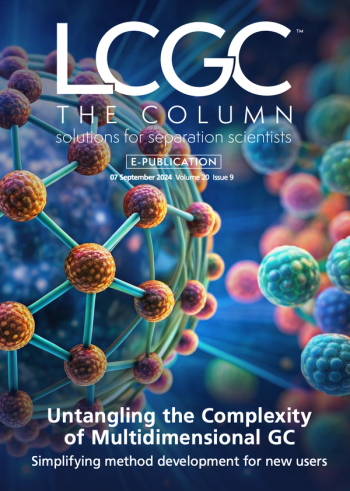
Click here to download the North America PDF of The Column September 2024 issue.
Click here to download the Europe PDF of The Column September 2024 issue.

Plasma samples from 47 patients with stages 1– 4 chronic kidney disease were analyzed with liquid chromatography-mass spectrometry to identify early biomarkers of the disease’s progression through metabolic pathway analysis.
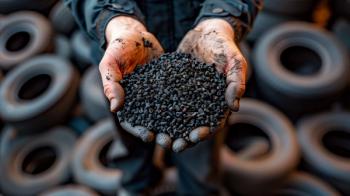
A multi-faceted approach consisting of targeted quantitation, chemical profiling, and suspect screening via ultra-high performance liquid chromatography-high-resolution mass spectrometry (UHPLC-HRMS) determined the environmental and health risks stemming from crumb rubber recycled from end-of-life tires and repurposed for a variety of uses, including artificial turf fields.

A recent study of 56 Italian ciders utilizing comprehensive two-dimensional gas chromatography coupled to time-of-flight-mass spectrometry (GC×GC–TOF-MS) detected the presence of approximately 130 semi-volatile organic compounds.

A recent study analyzed nearly 100 CBD products to test the accuracy of advertised cannabinoid content.

In a new study, researchers explored the dynamics of immune gene expression, ruminal metabolome, and gut microbiota in cows.

At HTC-18 in Leuven, Executive Editor of LCGC International, Alasdair Matheson, spoke to Brett Paull from the University of Tasmania and HyTECH about his talk entitled: “Analytical Performance and Disruptive Potential of Fully Portable Portable and Field Deployable LC–MS Technology.”

Using nanoflow liquid chromatography electrospray ionization in tandem with mass spectrometry (LC-ESI-MS), researchers were able to assess baleen whale blubber and proteins extracted from that blubber.

The Agricultural Biotechnology Research Institute of Iran (Tabriz, Iran) recently utilized gas chromatography-mass spectrometry (GC-MS) to explore the impact of different animal sources and regions in Iran on the metabolome profiles of traditional yogurts.

A recent study used liquid chromatography tandem-mass spectrometry (LC-MS/MS) for a targeted proteomics analysis to establish cerebrospinal fluid-based proteomic panels for accurate primary central nervous system lymphoma diagnosis and differentiation.

A recent report from Frost & Sullivan predicts that the expanding use of chromatography in pharmaceuticals, especially in drug development and clinical research, coupled with the food and beverage industry’s heavy reliance on chromatography for quality control, is expected to accelerate market expansion to $6.60 billion in 2028.

LCGC International recently asked analytical scientists in industry and academia to share how mentorship has impacted their careers.

The editors of LCGC International explore how chemists can set themselves apart in an ever-competitive job market, highlighting the latest data in salary and employment statistics.
The article discusses the classification and characterization of GC×GC column sets based on polarity and orthogonality, introducing a standardized approach using a reference mixture called the Century Mix to evaluate the selectivity and performance of these column sets.
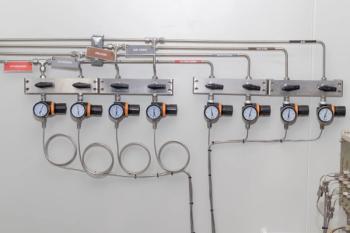
In this article, we discuss the fundamentals of headspace extraction, including static versus dynamic extraction, establishing equilibrium in the vial, consequences of the partition coefficient, temperature, pressure, and transfer to the gas chromatograph.

A rapid, accurate, and quantitative method for the analysis of glucosinolates (GSLs) has been achieved through the combining of column-free liquid chromatography (LC) with direct-infusion mass spectrometry (DIMS).

Recent research utilizing tandem mass spectrometry has yielded a complete set of expressed globulin genes, which code for the main storage protein in oats as well as their chromosomal positions.

The 28th International Symposium on Separation Sciences (ISSS 2024) will be held in Messina, Italy, on September 22–25, 2024.

Researchers at the Guangdong Key Laboratory for Veterinary Drug Development and Safety Evaluation have developed a high-performance liquid chromatography tandem mass spectrometry (HPLC-MS/MS) method for the precise detection of dimetridazole (DMZ) and its metabolite 2-hydroxymethyl-1-methyl-5-nitroimidazole (HMMNI).
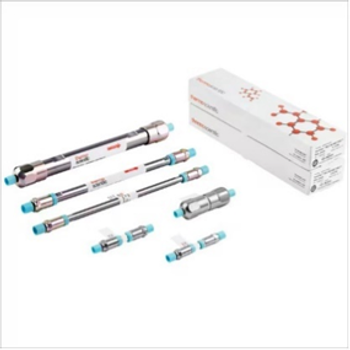
In this “Equipment Roundup,” the editors of LCGC International feature new instruments from Thermo Fisher and Waters, and news from Knauer regarding the environmental impact of their best-selling HPLC systems, as recently assessed by My Green Lab.

In a new study, researchers analyzed serum proteomics of advanced adenoma (AA) and colorectal cancer (CRC) using liquid chromatography-mass spectrometry/mass spectrometry (LC-MS/MS) and data independent acquisition methods, screening for a variety of differentially expressed proteins.

LCGC International spoke to Silvia Valverde and Ana María Ares of the University of Valladolid about their research focusing on determining nine plasticizers in honey samples by gas chromatography–mass spectrometry (GC–MS).

At HTC-18 in Leuven, Executive Editor of LCGC International, Alasdair Matheson, spoke to Jef Focant from the University of Liege about his talk entitled, “Targeted Blood Lipidomics of Colorectal Cancer."