




Biological, Medical, and Clinical Analysis
Latest News
Advertisement
Latest Videos



Advertisement
More News

To better detect cardiovascular diseases in people, researchers used high-performance liquid chromatography–tandem mass spectrometry (HPLC–MS/MS) to simultaneously quantify metabolites in human plasma.

A recent study created a new technique for quantifying propylene glycol, a notable substance found in electronic cigarettes, using gas chromatography–mass spectrometry (GC–MS).

Best of the Week: Forensic Chromatography, Precision in Ethanol Testing, Analyzing Plant-Based Bioactives
Published: | Updated:
In this article, you’ll find some of the top content that was published on LCGC this week, including our upcoming forensic science content series and an interview on preanalytical factors for ethanol testing.

Researchers at the Institute of Marine Research in Bergen, Norway used liquid chromatography–mass spectrometry to analyze resolvins in fish and human cells.

A new approach for purifying immunoglobulin-based therapies was created by Pfizer researchers.

Antiretroviral drug residues were monitored in breastmilk samples using ultrahigh-performance liquid chromatography–tandem mass spectrometry (UHPLC–MS/MS).

To detect popular party drugs in human waste, researchers combined headspace solid-phase microextraction and solid-phase microextraction to detect these substances and their metabolites.
University of Geneva researchers led a collaboration for testing different size-exclusion chromatography columns to compare the capability for characterizing mRNA.

Bioactive compounds extracted from plants are revered for their abilities to enhance human health. However, due to the complex matrices of plant foods, the qualitative and quantitative analysis of metabolites in plant foods requires a prior separation step.
University of Barcelona researchers created a new method for detecting sepsis in patients, based on capillary electrophoresis-mass spectrometry (CE-MS).

To better analyze components from chaga (Inonotus obliquus) mushrooms, researchers created a supercritical fluid chromatography (SFC)-based approach to collecting and quantifying chaga components.

Researchers at LUT University highlight challenges in calculating adsorption values during aqueous chromatography and explore new methods to close this knowledge gap.

Universitat de Barcelona researchers have developed a new method for characterizing solute-solvent interactions in electrokinetic systems.

Continued helium use in gas chromatography–mass spectrometry/flame ionization detection has proven problematic. To combat this, alternative efforts are being tested.

To better analyze polyphenols, scientists from Sapienza University of Rome examined the capabilities of supercritical fluid chromatography (SFC), comparing it to traditional methods.
In this article, you’ll find some of the top content that was published on LCGC this week, including details on the recent merger between Waters Corporation and BD Biosciences.

Salvia is an herb that is utilized in various industries. High-performance thin-layer chromatography was used to analyze different Salvia extracts.

Countercurrent chromatography systems were tested and combined to optimize their capacity for handling non-polar and polar substances.

Researchers tested immobilized metal affinity chromatography’s potential for broad applications.

To better conduct the analysis of nucleoside analogues, hydrophilic interaction liquid chromatography–tandem mass spectrometry (HILIC-MS/MS) was used to quantify antitumor prodrugs and their metabolites.

A new cancer detection test to analyze volatile organic compounds through urine analysis, was granted the Breakthrough Device Designation status by the U.S. FDA. The system, which is built on gas chromatography–mass spectrometry (GC–MS) and proprietary AI, generates real-time cancer risk scores.

Using two-dimensional liquid chromatography–mass spectrometry, a new workflow was developed to characterize phosphorodiamidate morpholino oligomers, which can help treat infectious diseases.

Gas chromatography–mass spectrometry was used alongside quality control systems to analyze amino acids present in urine samples.

To quantify antibiotics in ICU patients’ blood, dried blood spot analysis was sued alongside UHPLC–MS/MS to monitor these substances in a more convenient matter.
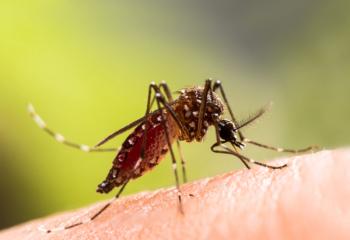
A new gas chromatography-based approach involving skin-contact sampling bands was used to detect potential malaria infections.
Advertisement
Advertisement
Trending on LCGC International
1
GC-MS Profiles Nano Garlic and Lemon Oils
2
Industry Roundup: Shimadzu Debuts GCMS-TQ RX Series, Tackling Helium Shortage and Laboratory Throughput Pressures
3
HPLC-FLD Confirms Aflatoxins in Peanuts, Pistachios
4
UHPLC-HRMS Maps Herbal Compounds in Brain Tissue
5