






Northwest University and Shaanxi Institute for Food and Drug Control scientists recently tested a new means of separating bioactive compounds from herbal extracts.
Northwest University and Shaanxi Institute for Food and Drug Control scientists recently tested a new means of separating bioactive compounds from herbal extracts.

Analyzing functional foods reveals numerous health benefits. These foods are rich in bioactive compounds that go beyond basic nutrition, boosting the immune system and improving overall wellness. However, analyzing these compounds can be challenging. This article discusses AI algorithms to support automated method development for liquid chromatography, simplifying the process, enhancing labor efficiency, and ensuring precise results, making it accessible to non-experts for tea analysis.

Here is some of the most popular content posted on LCGC International this week.

Scientists from Institut de Combustion, Aérothermique, Réactivité et Environnement (ICARE-CNRS) in Orléans, France and Chromatotec in Saint-Antoine, France recently created a new algorithm for detecting volatile organic compounds (VOCs) in ambient air.

As part of our ISC 2024 coverage, we recently interviewed Anneli Kruve of Stockholm University about her scientific background and her presentation about eludicating toxic chemicals' structures using LC/HRMS.

Scientists from around the world presented their groundbreaking technologies for in-field chromatography analysis during the International Symposium on Chromatography (ISC) in Liverpool, U.K.
Here is some of the most popular content posted on LCGC International this week.

Analyzing biological samples is crucial for disease diagnosis and treatment, public safety, and forensic examination.

At the AOAC International 2024 Annual Meeting & Exposition in Baltimore, Maryland, scientists were recognized for their contributions to analytical chemistry.

ETHZ and Agroscope scientists tested a new means of analysis against secondary electrospray ionization (SESI) coupled to high-resolution-mass spectrometry (HRMS) for exhaled breath analysis.
In this LCGC Blog, Kevin Schug discusses the potential machine learning has in helping predict physicochemical properties of molecules and optimizing chemical analysis processes.

Universidad Católica del Maul scientists reviewed advancements made in using machine learning and MALDI-TOF-MS for predicting antimicrobial resistance in different materials.
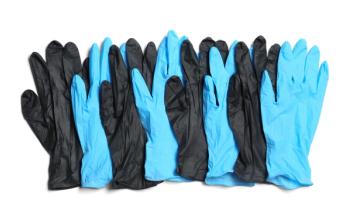
Supercritical fluid extraction (SFE) was combined with supercritical fluid chromatography (SFC) hyphenated to mass spectrometry (MS) to analyze plastic additives that could be transferred into the environment from laboratory gloves.

Scientists from Tianjin universities and Cleveland State University investigated how to characterize a potent chemical compound in Platycodon grandiflorus roots.
Here is some of the most popular content posted on LCGC International this week.

Hangzhou Dianzi University scientists recently tested a new metal–organic framework (MOF)-based system for extracting benzodiazepines (BZPs) from urine.

University of Tehran scientists determined multiclass pesticides in water samples using a new type of novel nanofibrous double-layered biosorbent.

In a new study, scientists reflected on different advancements made in extracting, purifying, and quantifying kaempferol, a natural product present in various sources.
Here is some of the most popular content posted on LCGC International this week.


Stockholm University scientists used liquid chromatography coupled with high-resolution mass spectrometry (LC-HRMS) to characterize recycled textile products and detect harmful chemicals.

Scientists from the Guangdong Academy of Sciences and the Guangdong University of Technology used nanospray laser-induced plasma ionization mass spectrometry (nLIPI-MS) to analyze broad polarity organic pollutants under ambient and open-air conditions.
Here is some of the most popular content posted on LCGC International this week.

Dokuz Eylul University scientists tested dispersive micro solid-phase extraction (D-µSPE)’s effectiveness for detecting polycyclic aromatic hydrocarbons (PAHs) in fruit juice and environmental water samples.
Lausanne University Hospital scientists recently tested ultrahigh-performance supercritical fluid chromatography hyphenated to tandem mass spectrometry (UHPSFC–MS/MS) for detecting urinary endogeneous steroids.