


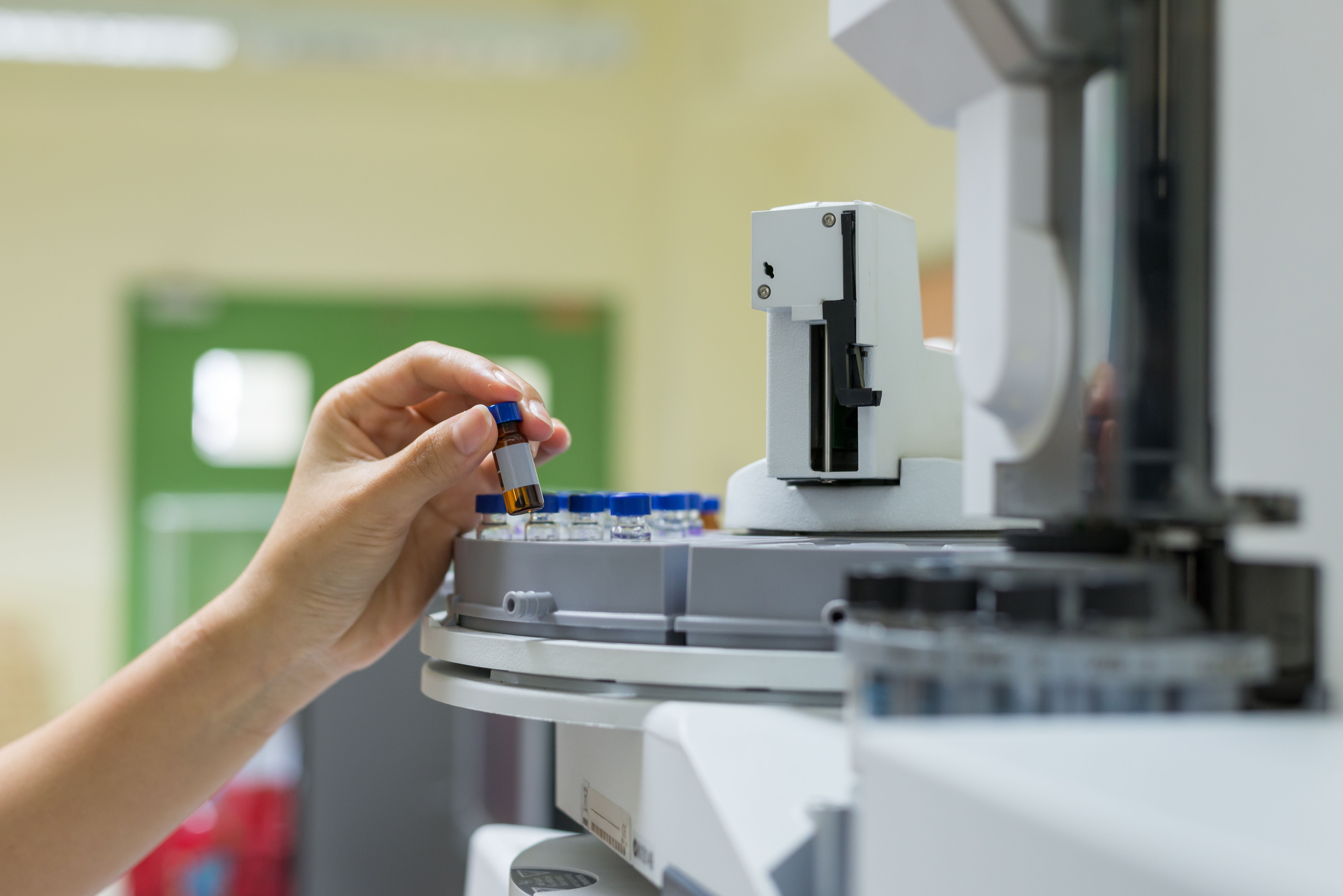


Scientists from Shanghai Jiao Tong University and the Sichuan China Tobacco Industry Company used gas chromatography-ion mobility spectrometry (GC-IMS) to analyze the flavor profiles of different cigars.

Scientists from Shanghai Jiao Tong University and the Sichuan China Tobacco Industry Company used gas chromatography-ion mobility spectrometry (GC-IMS) to analyze the flavor profiles of different cigars.

Scientists from Universidad Autónoma del Estado de Hidalgo recently tested a new dispersive solid phase micro-extraction (DSPME) technique for removing naphthol isomers from water samples.

National Institute of Pharmaceutical Education and Research (NIPER) scientists recently highlighted LC–MS’s use in improving drug modalities.

Scientists from the Federal University of Santa Catarina reviewed recent advancements made in the chromatographic analysis of endocannabinoids and phytocannabinoids in biological samples.

Connecticut Agricultural Experiment Station scientists recently used gas chromatography with flame ionization detection (GC-FID) to measure different components in cannabis hemp samples.

University of Messina scientists recently used GC-based techniques to help characterize essential oil from Piper gaudichaudianum Kunth, a plant native to Brazil.

Mankind Research Centre scientists recently tested a new solid phase extraction (SPE)-based approach coupled with GC–MS for analyzing small molecule N–nitrosamine impurities in antitussive syrups.

São Paolo State University scientists recently used pyrolysis gas-chromatography–mass spectrometry and dispersive liquid-liquid microextraction to determine flame retardants in sewage.

Here are the top five articles published on LCGC International this week.

Scientists from the Institute of Environmental Assessment and Water Research developed and optimized a method for determining various pesticides in human urine.

Tianjin Centers for Disease Control and Prevention scientists used chromatography techniques to determine bisphenol analogues (BPs) in human urine.

Dalian Maritime University scientists recently used high-performance liquid chromatography tandem triple quadrupole mass spectrometry HPLC-MS/MS to help detect amphetamine-type drugs in water.

Scientists from Università Politecnica delle Marche reported on baseline separation of isotopologoues of some amphetamine (AMP) derivatives on achiral and polysaccharide-based chiral columns.

Chinese Academy of Inspection and Quarantine scientists recently used gas chromatography–tandem mass spectrometry (GC–MS/MS) to create a new detection method for screening hazardous substances in teethers.

Carol Robinson of the University of Oxford has received the European Inventor Award 2024 for Lifetime Achievement from the European Patent Office for her work bringing mass spectrometry to structural biology.

Scientists from Chemisches und Veterinäruntersuchungsamt Münsterland-Emscher-Lippe recently tested a new method for determining PFAS in food and food contact materials.
Here are the top five articles that the editors of LCGC International published this week.
Scientists from the University of Valencia reviewed the environmental applications of miniaturized liquid chromatography (LC) over the last 15 years.

Scientists from the Zheijiang University of Technology published a review article on the extraction of terpenoids from essential oils to determine what techniques can optimize enantiomer separation.

This article describes a comprehensive study on optimizing ion-pair reversed-phase liquid chromatography for analysing protected and unprotected single-stranded DNA oligonucleotides.
Scientists from Naif Arab University recently used a new approach to protect amide-based synthetic cannabinoids from degradation and esterification during GC–MS analysis.
Scientists from the University of Geneva in Geneva, Switzerland and AstraZeneca in Mölndal analyzed how HILIC is related to the connections between oligonucleotide structures and diastereomer separation.

Scientists from the National Veterinary Research Institute used UHPLC-MS/MS as part of a new antimicrobial detection method in edible pig tissue.

Scientists from the Universidade Federal do Paraná recently tested a new extraction device for determining carcinogenic aromatic amines in smoker urine.
Scientists from Roche Diagnostics in Germany are testing a new liquid chromatography (LC)-based approach for advancing process analytical technology (PAT) in biopharmaceutical processing.