




Scientists from Tabriz University and the University of Tabriz explored cellulose acetate-UiO-66-COOH as an affordable coating sorbent for thin film extraction of biogenic amines from cheese and alcohol-free beverages using HPLC-MS/MS.
Scientists from Tabriz University and the University of Tabriz explored cellulose acetate-UiO-66-COOH as an affordable coating sorbent for thin film extraction of biogenic amines from cheese and alcohol-free beverages using HPLC-MS/MS.

Using pyrolysis-gas chromatography and mass spectrometry, scientists from Fudan University and the Putuo District Center for Disease Control and Prevention detected and quantified microplastics in newborn stool samples.

Here is some of the most popular content posted on LCGC International this week.

Cation exchange chromatography was tested for its effects on the elution behavior of the vesicular stomatitis virus, which is a contagious disease among livestock.

A new solid-phase microextraction-based technique has been developed for extracting triazole residues from environmental samples including water and juice.

High-performance liquid chromatography with diode-array detection (HPLC-DAD) was tested for detecting antibiotic residues in environmental samples.
Here is some of the most popular content posted on LCGC International this week.
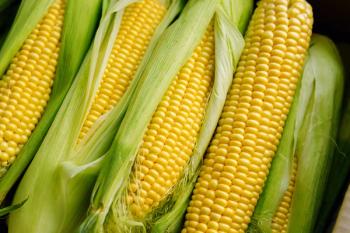
Aflatoxins are a family of toxins made by certain fungi that are found on agricultural crops, such as maize (corn), peanuts, and cottonseed.
Here is some of the most popular content posted on LCGC International this week.
Here is some of the most popular content posted on LCGC International this week.
Here is some of the most popular content posted on LCGC International this week.

A team of researchers has evaluated approaches in exposome research, highlighting sample preparation, MS-based platforms, and data acquisition strategies.

Researchers have produced a review of chromatography media and purification processes for handling complex and super-large biomolecules.

A review of recent trends and remaining challenges in bispecific antibody (bsAb) production has been published.
Here is some of the most popular content posted on LCGC International this week.

New methods have been developed to determine polar emerging contaminants with hydrophilic interaction liquid chromatography (HILIC) techniques.

Scientists from the Henan Academy of Sciences recently developed a new technique for the determination of hydroxyl polycyclic aromatic hydrocarbons (OH-PAHs) from urine.

A new process for tracking targeted and non-targeted fluorinated residuals using liquid chromatography–high-resolution mass spectrometry (LC–HRMS) has been created.

Scientists from the National Institutes for Food and Drug Control have characterized antibody-drug conjugates (ADCs) using various mass spectrometry (MS)-based techniques.
Here is some of the most popular content posted on LCGC International this week.

Using ultra-performance liquid chromatography-tandem mass spectrometry (UHPLC-MS/MS), China Pharmaceutical University scientists developed a new method for analyzing compounds found in wastewater.
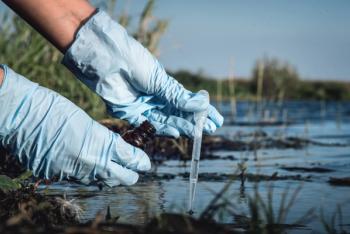
Scientists from the China University of Sciences combined magnetic solid-phase extraction (MSPE) with gas chromatography–mass spectrometry (GC–MS) to analyze perfluoro carboxylic acids (PFCAs) in different water environments.

Scientists from the Shandong Academy of Sciences recently created a new approach for performing magnetic solid-phase extraction on trace triazine herbicides.
Here is some of the most popular content posted on LCGC International this week.
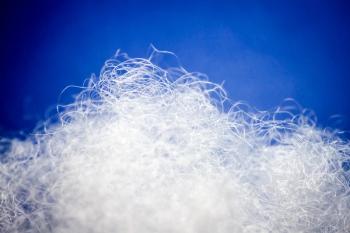
University of Valencia scientists recently developed a method using solid-phase extraction (SPE) followed by high-performance liquid chromatography coupled to high-resolution mass spectrometry (HPLC–HRMS/MS) for detecting microplastics and other harmful substances in textiles.