Food and Beverage Analysis

Latest News


Samantha Duong-1.jpg

A balanced diet is one step closer to a healthy lifestyle. Samantha Duong from the Australian Government’s National Measurement Institute (NMI) has used gas chromatography with flame ionization detection (GC–FID) to measure phytosterols in fortified food. She recently spoke to us about this research.

Frink-figures-1_web.jpg

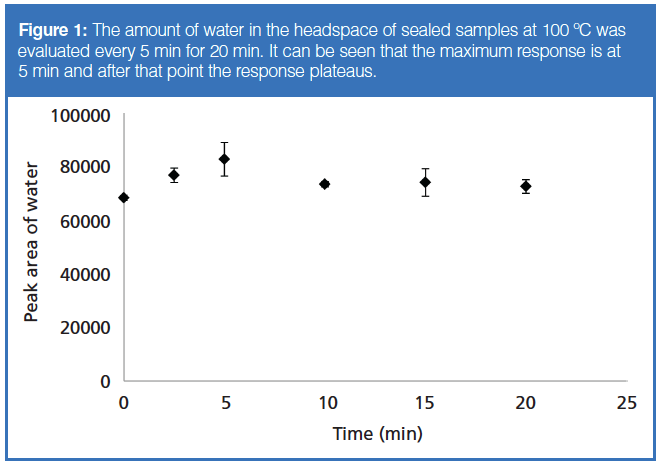
An automated method for determination of water in liquid sweeteners was developed utilizing headspace gas chromatography (GC) and ionic liquid-based capillary GC columns. This method allowed for the rapid determination of water with minimal sample pretreatment. In addition to providing fast analysis time for the samples, the headspace GC method was found to be accurate and precise for the measurement of water in 16 liquid sweeteners. This method was shown to be widely applicable for sugar and sugarless based sweeteners and likely, more accurate than Karl Fischer titration.

Valente-figures-3_web.jpg

A method based on salting-out assisted liquid-liquid extraction for the analysis of α-dicarbonyls in wines was developed. The sample preparation procedure consists in a single step, involving the simultaneous extraction and derivatization of the analytes using an o-phenylenediamine–acetonitrile solution with NaCl as the salting-out agent. The obtained organic phase is collected and directly analyzed by liquid chromatography with spectrophotometric detection. The studied α-dicarbonyls were determined in eight wines.

Table2-web.jpg

Using an LC–MS method in conjunction with two complementary types of chromatographic retention modes-reversed phase and aqueous normal phase-various compounds present in mesquite flour extracts were identified. Because of the diverse types of chemical constituents found in such natural product extracts, a single chromatographic mode may not be sufficient for a comprehensive characterization. However, the combination of reversed phase and aqueous normal phase LC can encompass a wide range of analyte polarity. This characterization of the composition of mesquite flour could be used in future studies elucidating the beneficial health effects of their consumption.

baby.jpg

Babies and infants experience rapid growth within a short timeframe and the nutrition that they absorb is therefore of the utmost importance. María Mateos-Vivas from the Department of Analytical Chemistry, Nutrition, and Food Science at the University of Salamanca, Spain, has used hydrophilic interaction liquid chromatography (HILIC) coupled to tandem mass spectrometry (MS/MS) to investigate the role of nucleotides on infant health. She recently spoke to The Column about this research.

figure 1 S.jpg

Carotenoids are a class of natural pigments, widely distributed in vegetables and fruits. A comprehensive two-dimensional liquid chromatography (LC×LC) method, based on the use of a cyano and an octodecylsilica column, placed in the first and second dimension, respectively, was applied to evaluate carotenoid composition and stability in selected overripe fruits representing the waste generated by a local food market. This research also evaluates if post-climacteric biochemical changes are linked to carotenoid degradation in the investigated fruits. A total of 22 compounds was separated into seven different chemical classes in the two-dimensional space, and identified by photodiode array (PDA) and mass spectrometry (MS) detection. The results prove that the waste generated by the large distribution of food still represent an important source of bioactives that could be used for other purposes.

Monitoring of Glyphosate in crops and water is mandated in many countries. Pickering offers a sensitive and robust HPLC method for analysis of Glyphosate in soy beans, corn and sunflower seeds. This method utilizes a simplified sample preparation procedure that has proven to be effective even for challenging matrices.

figure 21471001333929.jpg

Adequate detection of trans-resveratrol in wine is complicated by two factors: relatively low levels and interferences from matrix components. Here, we present two useful approaches to overcoming these issues depending on the instrumentation available. For high performance liquid chromatography (HPLC) analyses with ultraviolet (UV) detection, matrix peaks can be removed by microextraction using a packed sorbent while simultaneously concentrating the trans-resveratrol peak by a factor of two. For liquid chromatography–mass spectrometry (LC–MS), the extracted ion chromatogram for the [M + H]+ analyte ion can be used to obtain specificity without prior extraction procedures.

A group of researchers has studied the migration of monomers and plastic additives from plastic food packaging in microwave heated homemade food and packed liquid food using QuEChERS and gas chromatography coupled to mass spectrometry (GC–MS).

Babies and infants experience rapid growth within a short timeframe and the nutrition that they absorb is therefore of the utmost importance. María Mateos-Vivas from the Department of Analytical Chemistry, Nutrition, and Food Science at the University of Salamanca, Spain, has used hydrophilic interaction liquid chromatography (HILIC) coupled to tandem mass spectrometry (MS/MS) to investigate the role of nucleotides on infant health. She recently spoke to us about this research.

key points.jpg

Carotenoids are a class of natural pigments, widely distributed in vegetables and fruits. A comprehensive LC×LC method, based on the use of a cyano and an octodecylsilica column, placed in the first and second dimension, respectively, was applied to evaluate carotenoid composition and stability in selected overripe fruits representing the waste generated by a local food market.

Breidbach-Figure-2-web.jpg

Superficially porous particles with their favorable chromatographic properties were a great advance for liquid chromatography. The speed they enable is exemplified by a LC–MS method of analysis for four mycotoxins, spanning log P values from -0.7 to 3.6, with an analysis time of just over 8 min and excellent performance. Another issue is the separation of closely related mycotoxins, like 3- and 15-acetyldeoxynivalenol. With the common C18 chemistries they coelute and identification and quantification can only be achieved through differing MS-MS signals. Now, with the newer pentafluorophenyl chemistries these two mycotoxins can be separated by LC and MS quantification of them has become much more precise.