This application note demonstrates how comprehensive 2D-LC can be used to resolve the complex mixture of hydrophilic phenols found in virgin olive oil and investigates differences in the phenol composition of several olive oils.

This application note demonstrates how comprehensive 2D-LC can be used to resolve the complex mixture of hydrophilic phenols found in virgin olive oil and investigates differences in the phenol composition of several olive oils.

Kate Mosford of The Column spoke to Rosa Perestrelo of Centro de Química da Madeira located in Madeira University, Portugal, about wine analysis. She reveals the science behind winemaking and offers her tips for selecting the best analytical method.

Vicinal diketones (VDKs) are naturally produced compounds in the fermentation process. The monitoring of VDK levels is of great importance as the concentration of these compounds can greatly alter the flavor of a beverage.


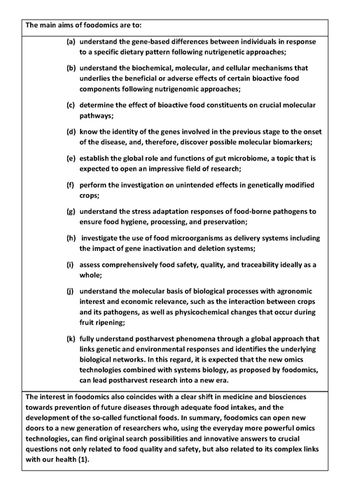
Finding Answers With Foodomics

HPLC and post-column derivatization method for analysis of antioxidants in foods and dietary supplements using Folin-Ciocaltea and 2,2’-azinobis(3-ethylbenzothiazoline)- 6-sulfonate (ABTS).

HPLC and post-column derivatization method for analysis of thiamine and its biologically active phosphorylated derivatives in foods and dietary supplements.

HPLC and post-column derivatization method for analysis of thiamine and its biologically active phosphorylated derivatives in foods and dietary supplements.

HPLC and post-column derivatization method for analysis of antioxidants in foods and dietary supplements using Folin-Ciocaltea and 2,2’-azinobis(3-ethylbenzothiazoline)- 6-sulfonate (ABTS).

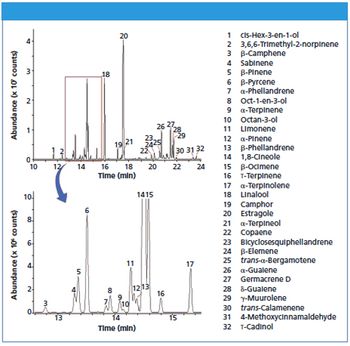
A new study published in the Journal of Chromatography A presents metabolite profiling of tea (Camella sinensis) harvested from the Bulang Mountains in Yunnan, China, using multidimensional gas chromatography–mass spectrometry (GC×GC–MS) to determine the impact of seasonal changes.

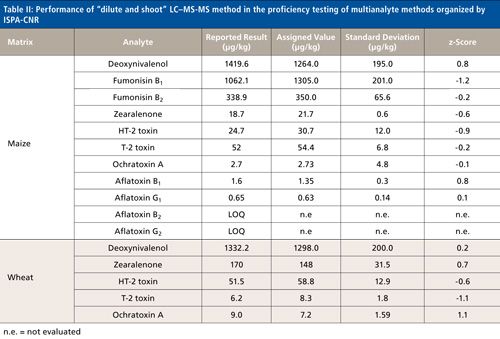
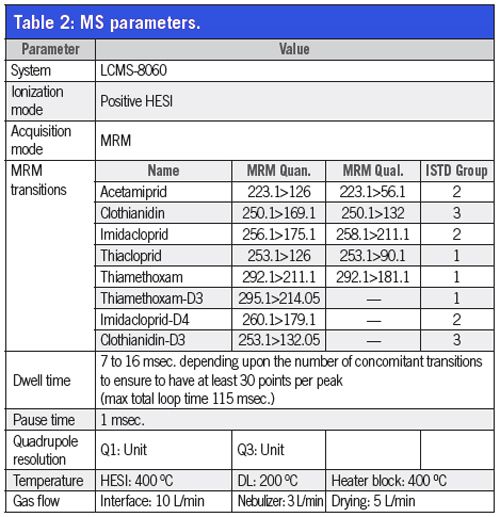
Pesticides can be very effective at protecting food crops; however, there are food safety concerns over the levels of pesticide residues found in foods for human consumption. This article discusses the advantages and limitations of mass spectrometry (MS) applied to the detection of pesticide residues in food.

A brief overview of the advantages of core–shell technology for liquid chromatography (LC) separations with practical advice for chromatographers focused on developing or improving food testing methods is presented.

Dr Kevin Cooper of the Institute for Global Food Security at Queen's University Belfast, Northern Ireland, spoke to Kate Mosford of The Column about the importance of accuracy, reliability, and stability in food safety analysis and the role of ultrahigh-pressure liquid chromatography tandem mass spectrometry (UHPLC–MS–MS) in his research.

This review illustrates the benefits of LC?C in food analysis and discusses the combination of LC modes used in the two dimensions, and the nature of the samples analyzed.

This method allows for quick sample preparation of fish samples for the fast analysis of almost 200 targeted contaminants, including PAHs, PCBs, PBDEs, and flame retardants.

In this instalment, guest authors Jeff Hurst and Kendra Pfeifer from Hershey Foods explore high performance liquid chromatography (HPLC), ultrahigh-pressure liquid chromatography (UHPLC), and mass spectrometry (MS) approaches being adopted to keep ahead of the food adulteration game.

In this instalment, guest authors Jeff Hurst and Kendra Pfeifer from Hershey Foods explore high performance liquid chromatography (HPLC), ultrahigh-pressure liquid chromatography (UHPLC), and mass spectrometry (MS) approaches being adopted to keep ahead of the food adulteration game.

Click here to view the complete E-separation Solutions newsletter from October 28, 2014.

LCGC spoke to Rosa Perestrelo of Centro de Qu?mica da Madeira located in Madeira University (Portugal) about wine analysis. She reveals the science behind winemaking and offers her tips for selecting the best analytical method for analysis.

The top five adulterated foods, the latest contaminants found in them, and the methods to detect those compounds

A team of scientists from the University of Muenster and the University of Siegen in Germany has demonstrated the use of low temperature plasma desorption/ionization orbitrap high-resolution mass spectrometry (LTP–Orbitrap–HR–MS) for the analysis of pesticide residues in fruit.

This article discusses the liquid chromatography instrumentation (columns, mobile phases, and detectors) that can be applied to determine different carbohydrates in human food and animal feeds.

A review of the analytical methods available to chromatographers for the determination of sources of off-flavours and food taints.

A novel system for fully automated comprehensive two-dimensional liquid chromatography is presented.

Food provides the body with energy, and good food is indispensable for a healthy life. With a worldwide population of over seven billion people, it is clear that state-of-the art technology is needed to provide food of a sufficient high quality.