





The level of uncertainty provided by most forensic laboratories for reported blood alcohol results has been woefully underassessed. Not only is this bad science, but someone’s civil liberties may be at stake.
The level of uncertainty provided by most forensic laboratories for reported blood alcohol results has been woefully underassessed. Not only is this bad science, but someone’s civil liberties may be at stake.

Forensic laboratories need to revise their procedures for uncertainty assessment in blood alcohol determinations. We explain why.

Giorgia Purcaro of the University of Liège discusses the advantages offered by the liquid chromatography–comprehensive multidimensional gas chromatography time-of-flight mass spectrometer/flame ionization detector (LC–GCxGC–TOF-MS/FID) method in the analysis of mineral oil.

Scientists at NACRW discussed using CE–MS to analyze highly polar agrochemicals.
Webcasts
Webinar Date/Time: Tue, Aug 22, 2023 11:00 AM EDT

A separation science team has developed a green and cost-effective method, called feather fiber-supported liquid extraction (FF-SLE), for determining synthetic antioxidants in edible oils.

Researchers have developed an ultrahigh-pressure liquid chromatography (UHPLC)—tandem mass spectrometry (MS/MS) method for the simultaneous determination of 10 aminoglycoside antibiotics in aquatic products.

This blog addresses the essential role software has in shaping the present and future of chromatography for the better.

In Alejandro Cifuentes's keynote lecture at HPLC 2023, he discussed the research he and his team have done to explore how foodomics can be effective in combating Alzheimer's disease.

At HPLC 2023, Paola Dugo held a lecture on how combining two-dimensional liquid chromatography (LC×LC) with mass spectrometry (MS) can help scientists analyze food samples.

Applying headspace-SIFT-MS to untargeted screening of food products and ingredients.

In this LCGC Blog, Tony Taylor performs various experiments with ChatGPT to test how useful the AI technology can be in aiding chromatographers' work.
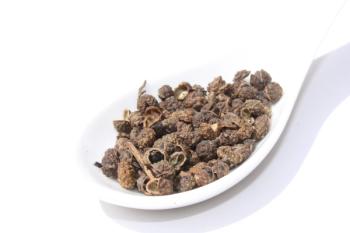
Researchers achieve a breakthrough in countercurrent chromatography, successfully separating three types of sanshools from Zanthoxylum bungeanum oleoresin, paving the way for enhanced purification and isolation of valuable compounds.

A new study introduces a comprehensive two-dimensional liquid chromatography coupled with tandem mass spectrometry (2D-LC–MS/MS) method for the analysis of 112 pesticides in corn-based products. The method exhibits high precision, lower limit of quantification values, and successful detection of trace levels of pesticides in real samples, offering promise for the analysis of complex matrices.

Innovative gas chromatography (GC) study combines computer vision and chromatographic fingerprinting to uncover diagnostic signatures in food volatilome.

A recent study analyzed the composition and metabolism of steroidal alkaloids in Solanum nigrum fruits of different maturities and identified steroidal glycoalkaloids and steroidal alkaloids, providing a foundation for further research on biosynthesis and discovery of new steroidal alkaloid anticancer drugs.

A new published study introduces a simple and fast way to differentiate between animal species based on their hair. The in-sample digestion method coupled with mass spectrometry analysis was successfully tested on multiple species.

A new approach for identifying isomeric and isobaric metabolites has been developed using liquid chromatography (LC) with high-resolution ion mobility spectrometry (IMS) and cryogenic infrared (IR) spectroscopy, allowing for faster, more accurate, and cost-effective metabolomics workflows.

Webcasts
Webinar Date/Time: Wed, Jun 28, 2023 1:00 PM EDT

This article highlights an advantage of porous graphitic carbon columns, that is their resistance at high temperatures, for the analysis of parabens in foodstuffs.
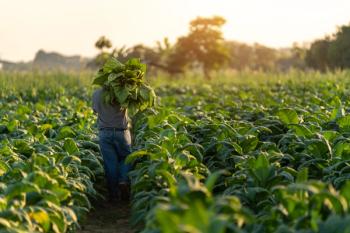
Researchers have developed a new method for detecting pyrethroid pesticide residues in tobacco using Schiff base networks (SNWs) coated stir bar sorptive extraction (SBSE) coupled with high performance liquid chromatography-ultraviolet detection (HPLC-UV), which exhibited high extraction efficiency and good mechanical stability even when reused more than 50 times.

The combination of an untargeted approach using ultrahigh pressure liquid chromatography–quadrupole time-of-flight mass spectrometry (UHPLC–QTOF) and a targeted approach using UHPLC–tandem mass spectrometry (MS/MS) are presented as an ideal method for detecting per- and polyfluroalkyl substances (PFAS) in fast-food packaging.

A newly published review reveals insights into the history of capillary electrophoresis, from its development to its current state-of-the-art applications, through a comprehensive bibliometric analysis of publications between 1980 and 2021.

New article reviews the progress in suppression techniques for ion chromatography from 1981 to 2022, with an emphasis on the last ten years, and discusses the current challenges and future prospects regarding suppressors.

This year, the American Oil Chemists Society will convene in Denver, Colorado, for a conference filled with exciting talks about the latest developments related to edible oils, fats, surfactants, and related materials.