Food and Beverage Analysis

Latest News


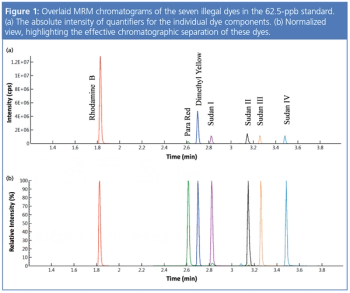
figure 1 L1508417326914.png

A method based on salting-out assisted liquid–liquid extraction for the analysis of α-dicarbonyls in wines was developed. The sample preparation procedure consists of a single step, involving the simultaneous extraction and derivatization of the analytes using an o-phenylenediamine–acetonitrile solution with sodium chloride as the salting-out agent. The obtained organic phase is collected and directly analyzed by liquid chromatography with spectrophotometric detection. The studied α-dicarbonyls were determined in eight wines. The developed methodology substantially reduces the complexity of the sample matrix, which is a very important aspect in routine analysis, especially to ensure long-lasting and reliable functioning of the chromatographic systems, while being a new and attractive methodology for the analysis of α-dicarbonyls.

Abdel.jpg

Accurate quantification of sugars in saline solution is now possible using a new high performance liquid chromatography (HPLC) method. The Column spoke to Abdelrahman Saleh Zaky from the School of Biosciences at the University of Nottingham (Nottingham, UK) about this method.

Carbo.jpg

Food carbohydrate content is routinely analyzed to ensure food quality and taste. Over the years many analytical techniques, including thin-layer chromatography (TLC), enzymatic analysis, and gas liquid chromatography (GLC), have been developed that allow qualitative and quantitative analysis of sugars, organic acids, and alcohol in food. Amongst these, ion‑moderated partitioning high performance liquid chromatography (HPLC) has emerged as a very valuable tool and has been used in thousands of published studies. This article describes the various considerations for selecting and optimizing the use of ion-moderated partitioning HPLC analytical columns for carbohydrate analysis in various types of food samples.

figure 1.png

The growing popularity of extra virgin olive oil (EVOO), thanks in part to its presumed health benefits, has resulted in an increased incidence of product adulteration to achieve higher financial gains. This adulteration, through dilution with less expensive oils, has created demand for product authenticity testing. Olive oil testing based on traditional methods is slow, labour-intensive, and requires large amounts of organic solvents. This article reviews the challenges in the accurate analysis of olive oil and discusses new methods that can improve this testing.

figure 11505480083069.png

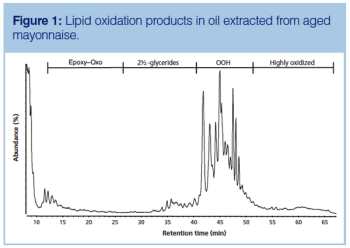
Monitoring lipid oxidation during the shelf life of lipid-containing food emulsions, such as mayonnaise, is challenging. It is, however, essential for the development of improved, consumer-preferred products. Determining the nonvolatile lipid oxidation products (NONVOLLOPS), the precursor compounds for rancidity, is required to determine the effectiveness of product stabilization technologies. A method based on normal-phase liquid chromatography with atmospheric pressure photo ionization-mass spectrometry (LC–APPI-MS) was developed for this purpose. The inclusion of a size-exclusion chromatography (SEC) step was needed to remove interfering diacylglycerides and free fatty acids from the samples. The combined SEC and normal-phase LC–APPI-MS method allowed the identification of a wide range of oxidized species including hydroperoxides, oxo-2½ glycerides, epoxides, and other oxidized species. The method was found to be more suitable for the analysis of large sample sets. The relative levels of NONVOLLOPS from bo

Rogers.jpg

Fresh fruit and vegetables have a limited shelf life and so there is a need to ensure that the products reach the shelf in a timely manner and with as little spoilage as possible. Volatile organic compounds (VOCs) are an easily accessible way of monitoring changes in fresh produce. Hilary J. Rogers and Carsten T. Müller from the School of Biosciences at Cardiff University, Cardiff, Wales, UK, investigate these VOCs in fruit and vegetables using gas chromatography–mass spectrometry (GC–MS). They recently spoke to The Column about this research.

Olive oil.jpg

A method to determine the quality of olive oil has been developed using a novel atmospheric pressure chemical ionization (APCI) source in combination with gas chromatography (GC) coupled to hybrid quadrupole time-of-flight mass spectrometry (QTOF-MS) and a metabolomics strategy.

figure 1 L.png

Food testing laboratories worldwide are responsible for checking the presence of regulated pesticide residues on food products because these chemicals can be harmful to health and the environment. These laboratories have traditionally relied on gas chromatography coupled with mass spectrometry (GC–MS) for rapid and reliable pesticide detection in large sample numbers. However, changing regulations and increasingly diverse pesticides are driving the need for alternative liquid chromatography tandem mass spectrometry (LC–MS/MS)- based methods for comprehensive screening.

figure 1 L1503414383468.png

This article describes the application of liquid chromatography tandem mass spectrometry (LC–MS/MS) and enhanced multiple reaction monitoring (MRM) spectrum libraries for multi-pesticide residue analysis. Using these methods, a high number of fragment ion transitions of target compounds can be examined to increase specificity and reporting confidence, reducing the risk of false positive or false negative detection.

Figure-1_web-New-1499867412422.jpg

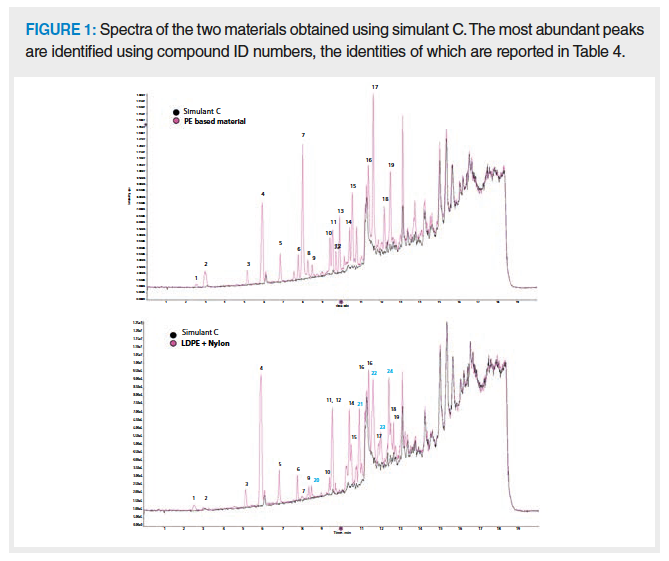
In this study, general extract screening of food storage materials was done with nontargeted analytical methods to understand what analytes could potentially leach into food or beverages. GC and mass spectral deconvolution effectively separated analytes within the complex mixture and TOF-MS provided full mass range spectral data for identification. This workflow can be used for confident characterization of components present as extractables from food packaging materials.

carrots.jpg

LCGC spoke to Rudolf Krska from the University of Natural Resources and Life Sciences in Vienna, Austria, about the latest analytical techniques and challenges facing analysts involved in the evolving field of mycotoxin analysis.

Elementar Logo.jpg

Honey is a high-value commodity, whose quality is defined both by its botanical and geographical origin. This generates a strong consumer demand for certain, premium-priced products, which have become the target for adulterations. A useful tool to detect the addition of sugar to honey products is based on the well-documented difference in δ13C values between C3 (natural honey) and C4 (added sugar) plants. Coupling high performance liquid chromatography (HPLC) with isotope ratio mass spectrometry (LC–IRMS) has the unrivaled advantage of the simultaneous determination of δ13C values from glucose, fructose, di-, tri-, and oligo-saccharides, allowing the detection of more sophisticated honey adulteration with a simple user-friendly analytical system.

Traditional extraction methods for food samples, such as liquid-liquid extraction and Soxhlet extraction, are often time-consuming and require large amounts of organic solvents. Therefore, one of the objectives of analytical food safety studies currently has been the development of new extraction techniques that can improve the accuracy and precision of analytical results and simplify the analytical procedure.

Non-targeted screening approaches are an essential element of food safety strategies, detecting novel or unexpected food contaminants and adulterants. However, the development and implementation of generalized and non-targeted screening workflows for food matrices is challenging. The inherent sample complexity and diversity as well as large analyte concentration ranges represent significant obstacles.

Drinks.jpg

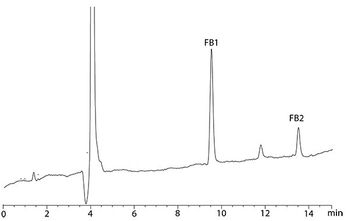
The analysis of hazardous mycotoxins is crucially important in food to ensure the health of humans and animals. Here, a simple and fast analysis including the sample preparation and purification of mycotoxins within food is presented. Ten different mycotoxins were investigated simultaneously in 14 min. The method was applied to the analysis of mycotoxins in apple juice, grape juice, and two different batches of the same branded beer.

figure 11488892639984.png

This article describes a space-saving, quick, and inexpensive sample preparation technique followed by a high performance liquid chromatography (HPLC) method with a 100% water mobile phase and photodiode array (PDA) detection for quantifying acetamiprid and its N-desmethyl metabolite, IM-2-1, in cow’s milk. The analytes were extracted from the sample and deproteinized using a handheld ultrasonic homogenizer with 5% (w/v) trichloroacetic acid solution, purified using a centrifugal monolithic silica spin minicolumn, and quantified within 20 min per sample. The accuracy and precision are well within the international method acceptance criteria.

figure 11484744648503.jpg

Using a liquid chromatography–mass spectrometry (LC–MS) method in conjunction with two complementary types of chromatographic retention modes - reversed phase and aqueous normal phase - various compounds present in mesquite flour extracts were identified. Because of the diverse types of chemical constituents found in such natural product extracts, a single chromatographic mode may not be sufficient for a comprehensive characterization. However, the combination of reversed-phase and aqueous normal phase LC can encompass a wide range of analyte polarity. This characterization of the composition of mesquite flour could be used in future studies to elucidate the beneficial health effects of its consumption.