






Latest from LCGC International
2 months ago
Breaking Into Industry2 months ago
Onboarding New LC Users: A Top Ten ListLatest Content







Advertisement
Shorts
0:34
3 Biggest Advances in GC and GC-MS
19 days ago
by
Caroline Hroncich
0:22
Essential Skills for Aspiring Lab Leaders
20 days ago
by
Kate Jones

0:38
The Technical Barriers to Peak Identification
a month ago
by
Kate Jones
0:34
How AI is Revolutionizing the DMTA Cycle
a month ago
by
Kate Jones

0:49
How to Tell a Story with Your Research
a month ago
by
Caroline Hroncich

0:30
Finding Your Foothold in Chromatography
3 months ago
by
Kate Jones
0:17
Mastering the Fundamentals
3 months ago
by
Kate Jones
0:51
An Inside Look at Bacterial Discrimination
3 months ago
by
Will Wetzel

0:56
What Were the Changes in Chapter 1251 of the USP?
3 months ago
by
Will Wetzel
0:43
Net Zero Emissions in Chromatography
3 months ago
by
Will Wetzel
The Present and Future of Automation in Analytical Laboratories
Where Are We Heading?

LCGC International October Issue
Read the Latest Cutting-Edge Articles from LCGC

Challenges and Solutions in Oligonucleotide Analysis
An Overview of LC Methods and Applications

The Column September Issue
A Look at the Latest Applications, Articles, and Interviews from the World of Chromatography

Chromatography Basics
Mastering Theoretical Plates for Better Separations

Podcasts

Videos






Advertisement
All Content
Advertisement

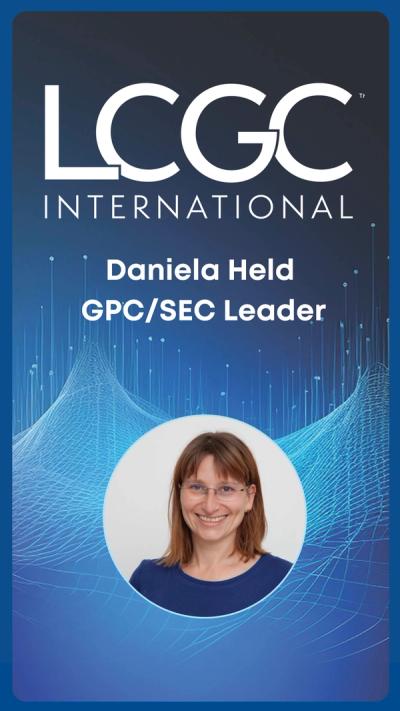
In the fourth part of this roundtable discussion focused on the experiences, challenges, and contributions of women in chromatography, LCGC International spoke to Susanne Boye, Daniela Held, and Claudia Zielke about how best to navigate challenges in chromatography.
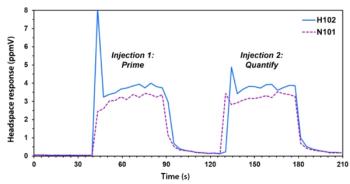
Selected ion flow tube mass spectrometry (SIFT-MS) offers potential for rapid screening of volatile nitrosamines and their amine precursors in a single run.

Anderson details how ACD/Labs ensures that data are AI-ready and FAIR-compliant across diverse systems common in pharma R&D.
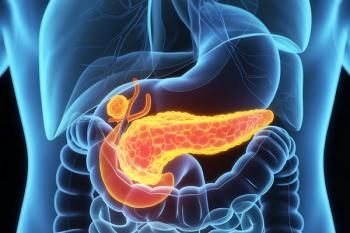
To detect estrogen and its metabolites in the ovarian-type stroma of pancreatic mucinous cystic neoplasm (MCN) tumors, researchers applied a novel liquid chromatography–tandem mass spectrometry (LC-MS/MS) method.

Top articles published this week include several clips from a recent panel discussion featuring female chromatographers and an inside look at how artificial intelligence (AI) is impacting separation science.
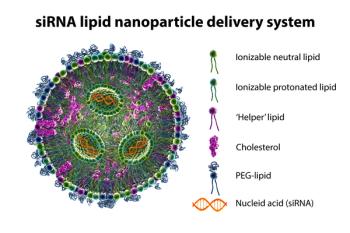
A fast, selective, and quantitative liquid chromatography (LC) method was developed for lipid nanoparticles (LNPs) analysis, using evaporative light scattering for sensitive detection of the analytes of interest.

In the third part of this roundtable discussion focused on the experiences, challenges, and contributions of women in chromatography, LCGC International spoke to Susanne Boye, Daniela Held, and Claudia Zielke about how to position yourself for leadership.

Researchers investigating how beer and the hepatopancreas influence the flavor of red swamp crayfish assessed the effects of cooking with or without the hepatopancreas in beer or water on crayfish quality using sensory analysis, electronic nose technology, and gas chromatography–ion mobility spectrometry (GC-IMS).
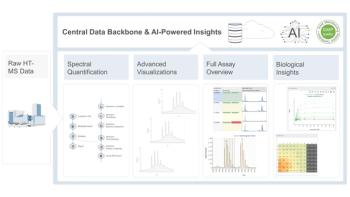
High-throughput mass spectrometry (HT-MS) is becoming a driving force in modern drug discovery. This article explains how a purpose-built digital ecosystem—featuring structured data, automation, artificial intelligence (AI)-driven analytics, and cloud scalability—is essential to translate massive HT-MS data sets into reproducible, actionable decisions.

In the second part of this roundtable discussion focused on the experiences, challenges, and contributions of women in chromatography, LCGC International spoke to Susanne Boye, Daniela Held, and Claudia Zielke about the best strategies to advance your career in chromatography.
Advertisement

A look at the biggest technical barriers preventing full digital integration

Researchers aiming to determine the optimal harvest time for maximum essential oil and linalool yields from basil hydro distilled the dried leaves of gathered plant samples for extraction of essential oil and subjected the resulting produce to gas chromatography-mass spectrometry (GC-MS) analysis to determine the variance in chemical compounds composition.
In the first part of this roundtable discussion focused on the experiences, challenges, and contributions of women in chromatography, LCGC International spoke to Susanne Boye, Daniela Held, and Claudia Zielke about their route into separation science.

Researchers investigating the prevalence of vitamin D deficiency and insufficiency in individuals with chronic spinal cord injury assessed participants’ vitamin D levels using high-performance liquid chromatography-tandem mass spectrometry (HPLC-MS/MS).

This month's LCGC Blog from Jonathan Shackman from the American Chemical Society (ACS) reflects on how early experiences with computer programming shaped the author’s understanding of fundamental logic, and how today’s artificial intelligence (AI) tools similarly shift the balance between mastering low-level processes and focusing on analytical goals.
Advertisement
Advertisement
Trending on LCGC International
1
High-throughput Headspace Analysis of Volatile Nitrosamines and their Secondary Amine Precursors
2
GC-IMS Profiling of Flavor and Quality Changes in Cooked Crayfish
3
Streamlined Method Development for Efficient and Reliable Lipid Nanoparticle Analysis
4
Forging a Path in Analytical Science
5
