


Sponsored Content
Measure ethylene oxide and other air toxics using US EPA Method 327, achieving 10 ppt detection limits without liquid cryogen.
Sponsored Content
Measure ethylene oxide and other air toxics using US EPA Method 327, achieving 10 ppt detection limits without liquid cryogen.
Sponsored Content
Methodology for assessing PFAS emissions from food contact materials under typical usage conditions using dynamic headspace sampling and TD-GC-MS/MS.
Sponsored Content
Understand the consumer aroma experience of fragrance-release products with automated time-resolved VOC sampling
Sponsored Content
Automated pairwise chromatogram comparison identifies key differences between GC-MS and GC×GC-MS data in minutes, simplifying data processing and reporting.
Sponsored Content
Large-volume extraction with TD-GC-MS enables reproducible, mass-based measurement of microplastics across wastewater treatment stages.
Sponsored Content
Enhance SPME sensitivity using multi-step enrichment for improved VOC and SVOC profiling and more effective short-duration sampling.
Sponsored Content
BioAccord LC-MS System with ACQUITY Premier - Product Brochure
Optimizing sample preparation is critical for generating high-quality, reproducible analytical data, particularly when working with complex matrices. Yet, it often demands significant time and effort. Traditional methods, including solid phase extraction (SPE), supported liquid extraction (SLE), filtration, and nucleic acid (NA) extraction, rely on column- or plate-based protocols and can face limitations in throughput, reproducibility, and the handling of difficult samples. Conventional approaches such as centrifugation and vacuum manifolds introduce further challenges, from added manual intervention and inconsistent flow to difficulty processing viscous samples. Positive pressure instrumentation uses controlled gas flow to push liquids through columns or plates, maintaining constant pressure across all positions to improve analyte recovery, reduce matrix effects, and support automation. This whitepaper examines how positive pressure compares to conventional methods and how Tecan's Resolvex platforms apply the technology across manual, semi-automated, and fully automated workflows.
See how IC-ICP-MS differentiates Cr(III) and Cr(VI) in water with reliable separation, sensitive detection, and streamlined software control.
This application note explores the use of positive pressure processing for plasmid DNA extraction by automating key preparation steps in a large-volume purification workflow. Performed in a compact benchtop format, this automated approach helps improve consistency, reduce hands-on time and streamline plasmid DNA purification for molecular biology and genomics applications.
This application note demonstrates an automated workflow for the analysis of trypsin-digested bovine serum albumin (BSA), combining on-column digestion and peptide clean-up using solid phase extraction (SPE) within a single column. Using automated positive pressure processing, the workflow streamlines sample preparation, reduces hands-on time and delivers consistent, reproducible peptide recovery for downstream analysis.
This poster highlights an enhanced workflow for automated monoclonal antibody (mAb) purification using positive pressure processing with AffinEx™ Protein A SPE columns ranging from 1 ml to 50 ml. The study evaluates purification performance across multiple column sizes, demonstrating a scalable approach that helps laboratories improve throughput, maintain consistency and streamline mAb purification from development through larger-scale applications.
This webinar recording provides a practical introduction to positive pressure processing for sample preparation, highlighting its advantages in achieving more consistent flow rates, improving reproducibility and reducing variability across samples. Learn how positive pressure technology can support reliable, high-quality results while streamlining everyday sample preparation workflows.
This poster explores automated and semi-automated workflows that leverage positive pressure processing for small-volume sample preparation using micro-elution plates. The study evaluates how positive pressure technology can improve flow consistency, maximize analyte recovery from limited sample volumes and deliver the reproducible performance needed for accurate and reliable analytical results.
Gas chromatography is a powerful tool for volatile and semi-volatile species in battery materials, but its application faces significant challenges. Many electrolyte components and degradation products are thermally labile or highly reactive, leading to on-column decomposition and poor quantification.
Discover how the new PDMS/HLB and PDMS/DVB/CWR GERSTEL Twister® coatings expand chemical coverage beyond traditional PDMS for GC-MS profiling of lemon–lime beverages. The study compares extraction performance, repeatability, and formulation differentiation using multivariate analysis, helping laboratories select the optimal sorbent phase for flavor and formulation studies.
Explore how GERSTEL Vacuum In-Tube Extraction (V-ITEX) enables highly reproducible profiling of volatile chocolate aromas. This application demonstrates automated extraction, PCA-based product differentiation, and reliable quality control across multiple chocolate formulations, making V-ITEX an ideal solution for food and flavor analysis.
Learn how GERSTEL Twister® Stir Bar Sorptive Extraction (SBSE) combined with Thermal Desorption GC-MS/MS enables highly sensitive determination of 16 polycyclic aromatic hydrocarbons (PAHs) in coffee, tea, and whiskey. Discover a fully automated workflow delivering ultra-trace detection, excellent linearity, and reliable food safety analysis.
EGCG, or epigallocatechin gallate, is a high-value green tea polyphenol with strong relevance in nutraceutical, botanical, and natural product research. This application note presents a liquid-liquid chromatography workflow for EGCG purification from green tea polyphenol extract using centrifugal partition chromatography. The note demonstrates how support-free separation can help isolate target polyphenols from complex plant-derived matrices where conventional solid-phase chromatography may face limitations.
Crude aqueous vegetable leaf extracts often contain a complex mixture of proteins, alkaloids, terpenes, and pigments such as chlorophyll. This application note shows how centrifugal partition chromatography can support chlorophyll remediation by separating unwanted organically soluble compounds from water-soluble protein fractions. The workflow uses LiLiChro’s midiLiLi equipment with a water-based buffer / water-saturated MTBE solvent system, UV detection at 280 nm, and ascending mode operation.
Flavoring materials from biological samples often come from complex natural matrices, where target compounds may be present alongside pigments, lipids, proteins, and other interfering components. This application note presents a fast liquid-liquid chromatography workflow for purifying flavoring-related compounds from a biological sample. Using centrifugal partition chromatography, the method demonstrates how support-free separation can help isolate valuable compounds from natural sources without relying on a solid stationary phase.
Ionisable lipids are important in advanced pharmaceutical and biotech workflows, but their hydrophobic character can make purification challenging, especially when water-free conditions are required. This application note demonstrates how centrifugal partition chromatography can be applied to ionisable lipid purification using a support-free liquid-liquid chromatography approach. The workflow shows how CPC can offer an alternative separation strategy for sensitive, hydrophobic compounds where traditional solid-phase chromatography or aqueous methods may create limitations.
Cyclosporine purification can be challenging when crude material contains closely related impurities that require selective fractionation before final polishing. This application note presents a liquid-liquid chromatography workflow using LiLiChro’s miniLiLi CPC equipment for cyclosporine pre-purification. The method demonstrates how centrifugal partition chromatography can support pharmaceutical purification workflows through support-free separation, UV-based fraction collection, and recovery-focused processing.
Nitrosamines have become one of the defining challenges in pharmaceutical analysis, and this eBook from LCGC International captures the field at a pivotal moment. Inside, a roundtable of leading voices examines a discipline progressing rapidly, yet still grappling with analytical, toxicological, and regulatory uncertainties, a survey maps the latest chromatographic and risk-modeling research, and a featured study reveals how NDSRIs can even form after a drug is swallowed, under simulated gastric conditions. Add in a practical guide to formation pathways and mitigation strategies, and you get a comprehensive look at where nitrosamine detection, regulation, and risk management stand today. Whether you're developing methods for trace-level impurity detection or want to understand where the regulatory and scientific landscape is headed, this eBook delivers the research and expert insight to keep you ahead of a genuinely moving target.
Corteva accelerates chromatography method development using AutoChrom to automate workflows, improve efficiency, and reduce method development time.
How Pfizer improved HPLC method transfer outcomes using method development software to enhance consistency, efficiency, and reproducibility in workflows across labs.
Merck streamlines chromatographic method development using in silico modeling to improve efficiency, reduce experimentation, and accelerate decision-making.
Potency testing workflows and key factors affecting quantitative accuracy, with a case study led guide to producing reliable, defensible data.
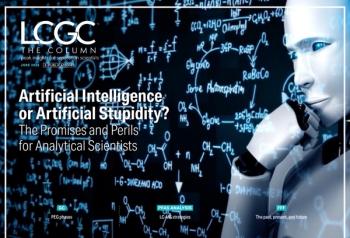
Artificial Intelligence or Artificial Stupidity? The Promises and Perils for Analytical Scientists
Artificial Intelligence or Artificial Stupidity? The Promises and Perils for Analytical Scientists